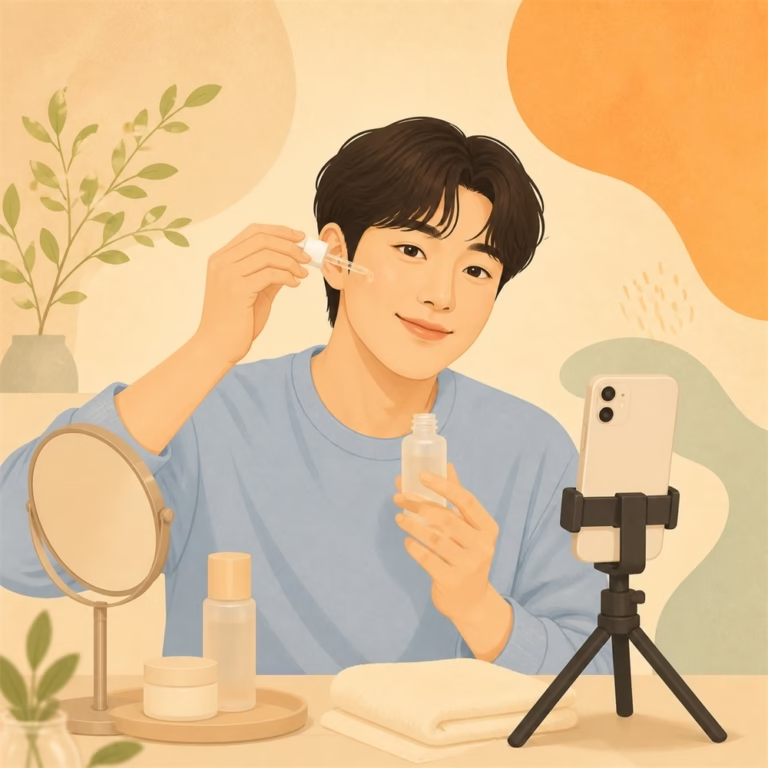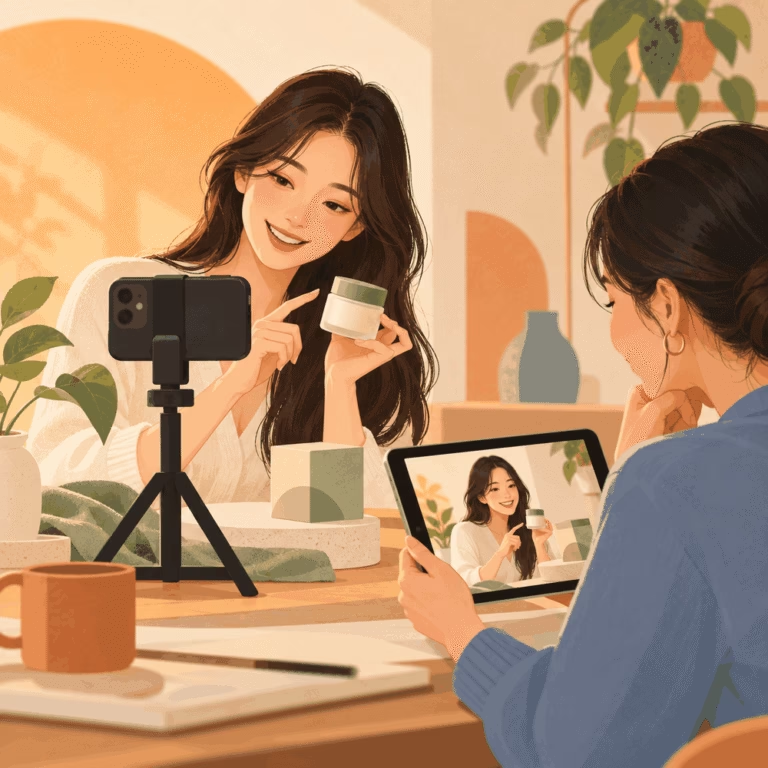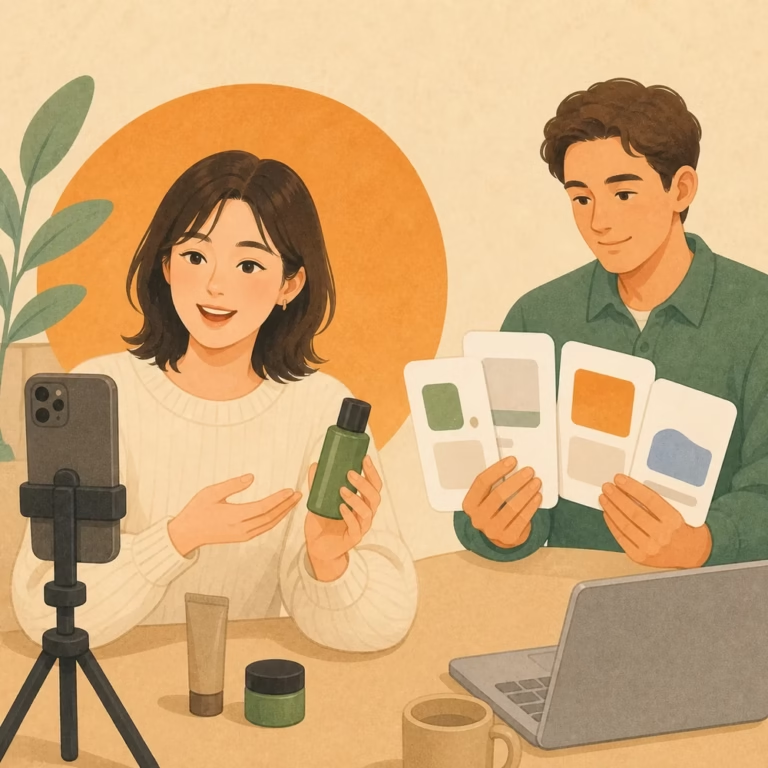
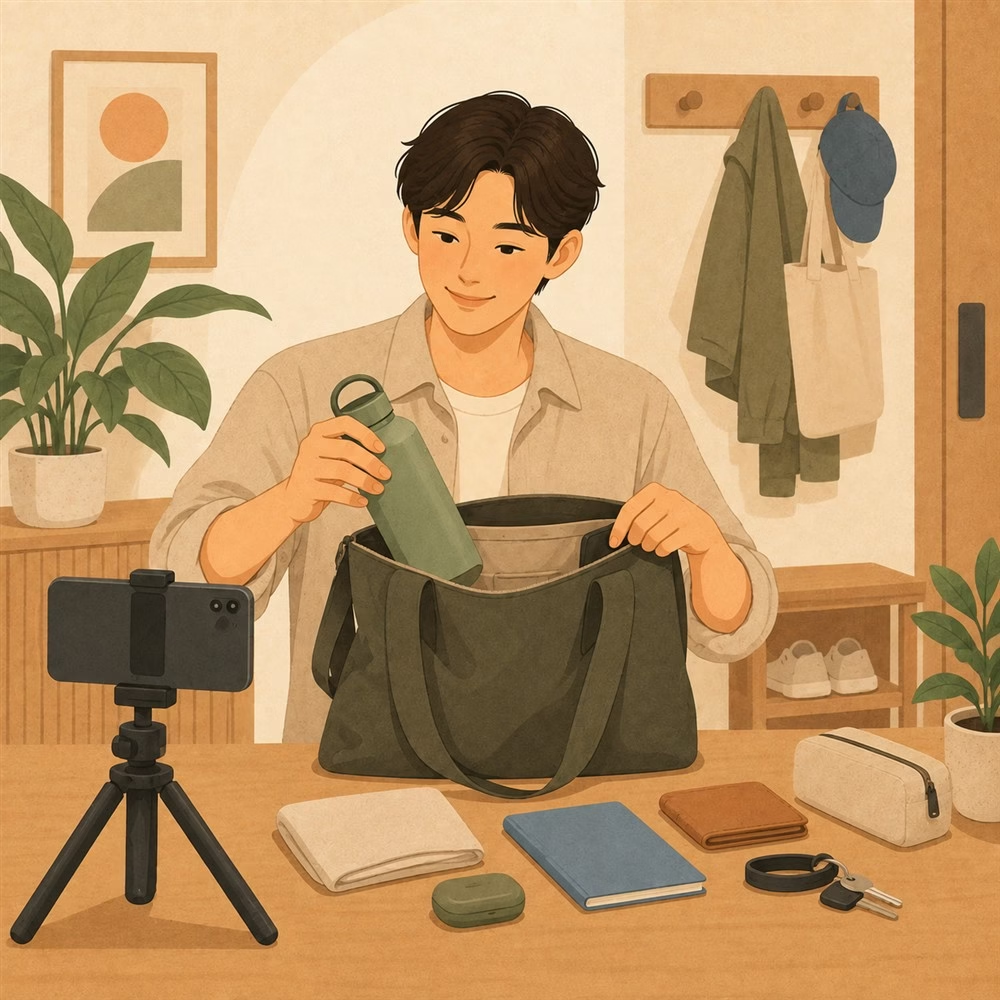
A lifestyle video can look polished while leaving the buyer’s real question unanswered: would this product fit into my day? When hiring a Korean male UGC creator for lifestyle brands, start with the routine he needs to demonstrate. A convincing bag, apparel, home, or everyday-tech video depends on useful actions, credible delivery, and a setting that makes sense for the intended audience.
The practical brief is more specific than “a Korean man talking about our product.” Define who is watching, which decision the video supports, and what the camera must show. Then choose a creator whose language, presentation, and production setup fit that assignment.
What should a Korean male UGC creator for lifestyle brands demonstrate?
Ask for evidence of product use, not simply an attractive scene. A commuter bag might need a clear view of the opening, pocket access, and how it sits when worn. A shirt might need movement and close-ups of the fabric. A desk accessory might need one uninterrupted demonstration of the task it simplifies.
These are proposed creative directions, not claims about every Korean consumer. Choose the situation from your actual customer research. A work-from-home buyer, a student, and a frequent traveler can have different priorities even when they shop in the same market.
Before casting, complete this sentence: “After watching, our intended customer should understand how the product helps with ___.” If the answer is only “our brand looks premium,” add a concrete product question that the footage can answer.
Does the creator need to live in Korea or speak Korean?
Separate location, spoken language, audience, and appearance in the brief. They solve different production needs.
- Korea-based production: useful when the assignment requires local delivery, specific settings, or a product sold in Korea. Confirm the actual filming location and availability directly.
- Korean-language delivery: request a recent spoken sample, then assess natural phrasing, clarity, and the tone appropriate to your brand.
- English-language delivery: relevant when a Korean creator presents a product to an international audience. Review that language separately.
- Bilingual versions: agree whether these are two locally written scripts or one script adapted into a second language. Plan enough footage for both edits.
Do not infer native-language ability, residence, or customer familiarity from someone’s name or appearance. If the project involves both English coordination and Korean performance, the bilingual Korean UGC creator guide can help define those responsibilities.
How should you evaluate a lifestyle portfolio?
Watch a complete, relevant video before judging a highlight reel. Look for continuity between what the creator says and what the product visibly does. Can you understand the demonstration without guessing what happened between cuts?
For a male lifestyle brief, assess wardrobe and setting as production requirements. A polished office scene, a casual weekend routine, and a home organization demonstration need different props and presentation. Request examples that match your chosen situation without assuming that one style represents Korean men generally.
Public portfolios also distinguish services differently. Kai Baker’s portfolio separates video and photography, while Jay Narh’s service page distinguishes ad production, organic content, and other formats. These are overseas portfolio examples, not evidence of Korean availability or campaign results. The useful takeaway is to ask exactly which service and deliverables your quote includes.
Finally, identify whether a sample is commissioned work or a self-produced concept. Either can demonstrate creative ability; neither automatically proves sales performance. Ask what the creator personally handled: concept, script, on-camera performance, shooting, or editing.
Which everyday scene should you brief first?
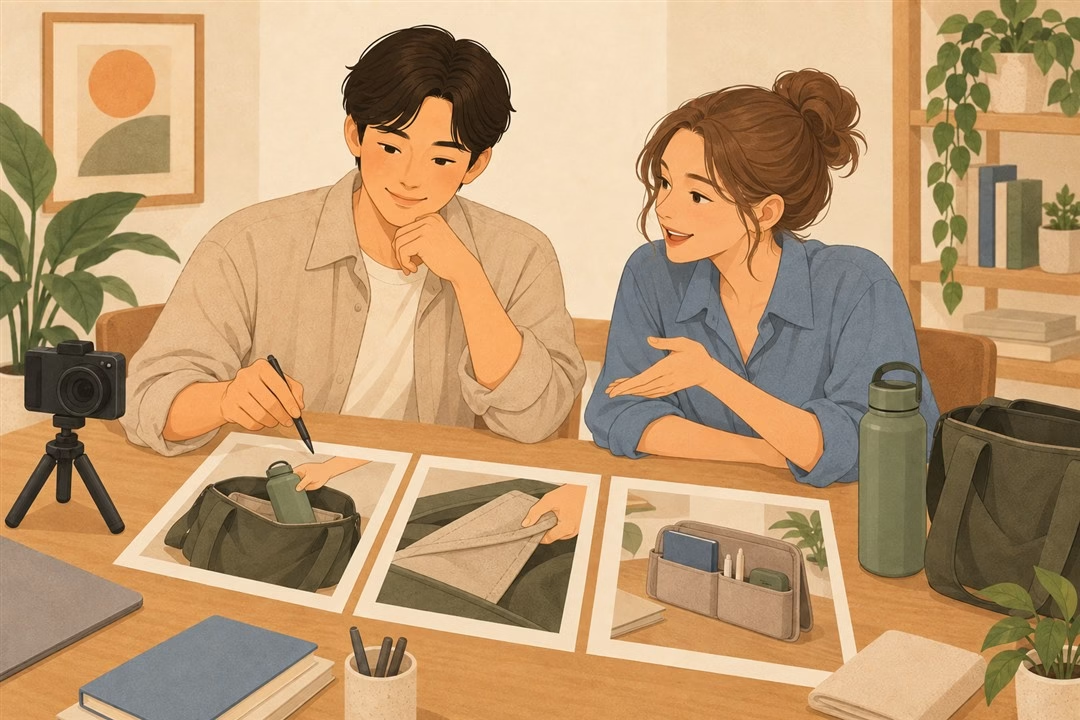
Pick one product-use moment and make the required shots explicit. The following examples are illustrative concepts to adapt after reviewing your product and customer evidence.
A bag for the transition from desk to commute
Show the items going in, the relevant compartment, and the bag being picked up and worn. If capacity is important, use the actual items your approved product specifications support. Avoid implying waterproofing or protection that has not been established.
Clothing for a defined occasion
Show a full outfit, movement, and one relevant detail. Agree on the sample size, styling, and intended fit before shipping. A creator can describe how a sample feels to him, but that should not become a universal comfort or sizing promise.
An everyday home or desk accessory
Show the starting situation, the real setup process, and the finished use. Capture the mechanism or interaction clearly. A fast montage may look pleasing while concealing the very detail the customer needs to evaluate.
Keep the action achievable in the actual location. Confirm props, space, light, and any access permission before agreeing to a scene. Let the creator propose natural phrasing around the required demonstration.
What belongs in a usable production brief?
Give the creator enough information to make decisions without scripting every gesture. A focused brief should specify:
1. The audience and the product decision the video should support.
2. The actual product version, approved benefits, and claims to avoid.
3. The chosen routine, required demonstration, and essential close-ups.
4. Spoken language, tone, pronunciation references, and caption language.
5. Output lengths, aspect ratios, clean exports, captions, and any separate stills.
6. The call to action and the destination the viewer will reach.
7. Review milestones, revision scope, and the delivery dependency on product arrival.
Ask for a short concept and shot plan before filming. Approve the intended meaning and product proof first, then review whether the Korean wording sounds natural. This makes a later request for a new scene easier to distinguish from correcting an error in the agreed footage.
How should you compare quotes and usage scope?
Compare the same package across creators. One quote may cover a single edited asset; another may include alternate openings, clean footage, photographs, or additional languages. Do not treat those as equivalent offers.
Discuss where the brand will use the content, the intended period, any paid promotion, and whether posting from the creator’s own account is included. Ask separately about raw footage, editing permissions, exclusivity, renewals, and any proposed reuse involving the creator’s likeness. Record the agreed scope in writing.
For a concrete example of why this matters, James Kim’s published packages distinguish finished-video delivery from packages with additional usage and footage. That is one creator’s offer, not a Korean market price benchmark. Request a project-specific quote rather than applying an unrelated marketplace average.
What should you test before ordering more videos?
Start with a bounded pilot: one product, one routine, one main demonstration, and a small set of clearly labeled variants. For example, keep the demonstration and CTA consistent while testing two openings. That makes the creative difference easier to interpret.
Before release, check that the spoken copy, captions, product version, visible action, and landing page agree. Review the video with sound and without sound. Confirm that important details remain visible in the intended placement.
Judge results against the campaign objective using your own reporting. Views or engagement alone do not establish that the video improved sales. Record placement, audience, spend, destination, and conversion tracking so a landing-page or delivery issue is not automatically blamed on the creator.
Do you need a large following or a customer testimonial?
For brand-owned creative, assess the creator’s production and communication ability first. Audience size becomes a separate consideration when you are also buying distribution through the creator’s account. Ask for relevant audience evidence for that part of the assignment.
A commissioned demonstration should accurately reflect the creator’s experience with the product. Do not write a long-term customer story for someone who has just received a sample. If the assignment needs a genuine testimonial, establish the person’s actual experience before drafting it.
Ready to scope a lifestyle shoot?
The right Korean male UGC creator for lifestyle brands is a fit for a specific audience, routine, and product explanation. A clear demonstration brief gives you a stronger basis for choosing that person than a broad casting label alone.
Danny’s work spans Korean UGC creation, Korean-market content production, and collaboration with global clients. To discuss a project, review the Korean UGC service and portfolio and send the product, audience, language, planned channels, required scenes, and desired delivery date through the form below. Those details make the scope and next steps concrete.