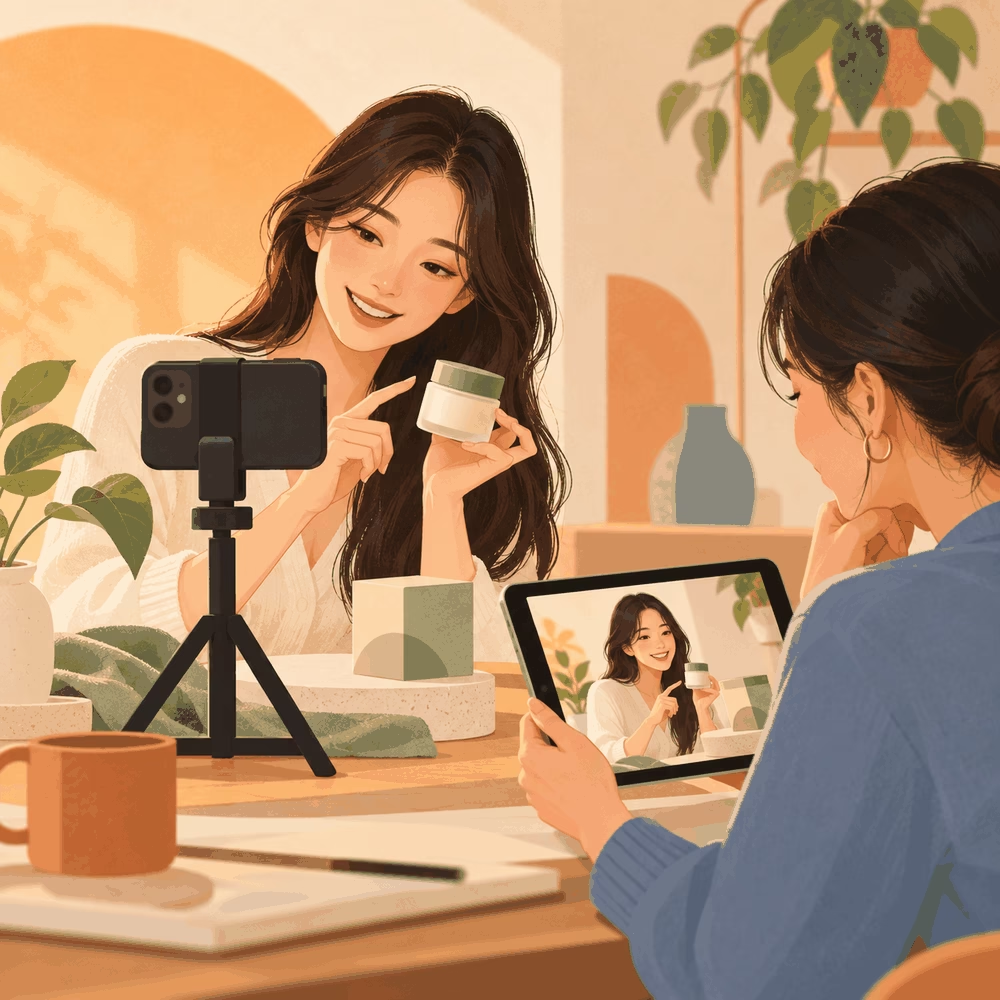
Your new product is ready for Korea, but the first video shows only a smiling creator holding the box. A shopper still cannot see how the product works, whether it fits their situation, or what will happen after they click. Buying more placements for that same video will not answer those questions.
A Korean UGC creator for ecommerce product launches can help make a product understandable in a local buying context. The useful deliverable is not simply “an authentic video.” It is a small set of credible demonstrations that address a real buyer question and can be used in the channels your team actually controls. This guide covers what to prepare before hiring, how to write a brief, and how to judge the first assets without promising that a creator alone will drive sales.
Is the product ready for creator content in Korea?
Start with the purchase path, not a creator shortlist. If the Korean product page, price, delivery promise, returns information, or customer-support route is unclear, a persuasive video may send people into an unfinished store experience. Record the live destination and ask a Korean reviewer to complete the same path a customer will take on a phone. Our guide to localizing product descriptions for Korean consumers covers the copy side of that check.
Write down the one question a first-time buyer must answer before purchasing. For an unfamiliar household item, that may be whether it fits a small space. For a beauty product, it may be how to use it as part of a routine, without making unsupported results claims. For an app-connected device, it may be setup and compatibility. A creator demonstration should answer that question on camera. If your team cannot state the question, pause the shoot and review customer inquiries, product reviews, or support notes first.
Decide what is actually available at launch. A product sample, a stable product page, approved claims, and a tested checkout are minimum inputs for a credible brief. Do not ask the creator to invent performance claims, imply a feature is live when it is not, or present a scripted endorsement as an independent customer review.
What should you ask a Korean UGC creator for ecommerce product launches to make?

Brief three distinct buyer moments rather than ordering three near-identical clips. The first is discovery: show the product in use and identify the problem it solves. The second is evaluation: demonstrate the detail a shopper would otherwise look for in reviews, specifications, or questions. The third is the next step: make the available purchase route clear without inventing urgency or discounts.
For each moment, specify a single product truth and a single visible proof. “Easy to use” is not a proof; a real setup sequence or a close view of the control is. “Perfect for everyone” is not a useful brief; a specific situation and honest limitation are. Give the creator room to speak naturally, but have a Korean-language reviewer check whether the explanation is clear and the product terminology matches the store page.
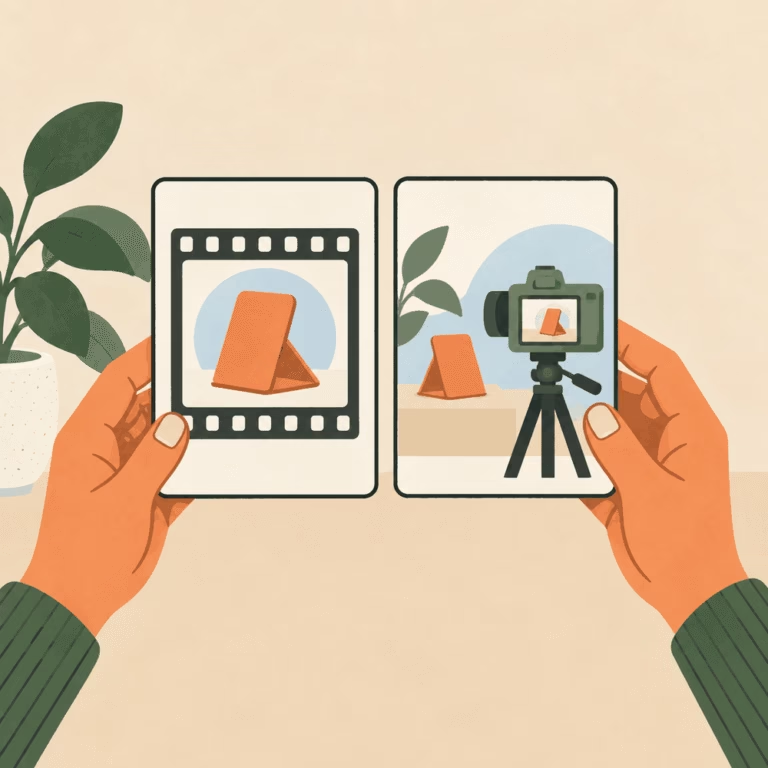
This is a production brief, not a request for guaranteed performance. A practical first batch might include a main demonstration, a short cut focused on one objection, and clean raw footage that can be edited later if the rights allow it. The exact count and duration should follow your placements and budget. Separate content production from posting to the creator’s audience: those are different services, with different permissions and measures. Our guide to real Korean UGC for social ads explains the distinction further.
What belongs in the creator brief and agreement?
Keep the creative brief short enough to use during a shoot, then attach the necessary commercial and review details. The brief should include:
- Buyer and use case: Who the video is for, where they will encounter it, and the one question it must answer.
- Product facts: Approved features, use instructions, limitations, exact product name, and any claims that need evidence or legal review.
- Physical context: Product variant, packaging, sample-shipping date, and any items the creator needs to demonstrate it correctly.
- Language and tone: Korean terms that must match the product page, terms to avoid, and whether an English version is also needed.
- Deliverables: Framing, aspect ratio, approximate length, subtitles or clean audio, raw footage, stills, and revision rounds.
- Review path: Who approves product accuracy, Korean-language clarity, and final use before release.
Agree separately on where the footage may appear: the brand’s social accounts, paid ads, ecommerce product pages, marketplaces, email, or the creator’s own channel. Define duration, territory, editing permission, music and third-party assets, paid-usage rights, and whether the creator’s likeness can be reused. Do not assume a production fee includes perpetual ad rights or permission to turn the creator’s words into a customer testimonial. Have the relevant legal and platform owners review the agreement and required disclosures.
These details affect the format. A video recorded with licensed music that is fine for one social post may not be usable in an ad or on a marketplace page. A vertically cropped clip may also hide the product feature the product page needs to show. Ask for clean versions and safe framing when you expect reuse.
Where should the finished videos appear first?
Map each asset to a place where it answers a buyer question. A product-page demonstration can sit near the claim it proves. A short discovery cut can introduce the problem in a social placement. A creator’s own post can reach their audience, if distribution is part of the agreement. Do not distribute the same edit everywhere and assume the same result.
KakaoStyle’s creator-marketing guidance for Zigzag sellers describes a platform-specific program that connects creator content and product links. It is a useful reminder to design a clear route from a creator’s content to a product, not evidence that any brand will reproduce the case results it reports. The placement, seller eligibility, and measurement options for your store may be different.
Keep the destination consistent with the video. If a creator shows one color, size, or bundle, the linked page should not silently switch to another. If a product is not yet purchasable, use a genuine waitlist or launch-information page rather than a dead purchase button. Check the mobile page, Korean copy, price, availability, and delivery information on the day the video goes live.
How do you judge the first batch without inventing a sales story?
Review the assets against the brief before looking at campaign numbers. Can a viewer identify the product, its relevant use, and the next step without relying on a caption? Is the demonstration truthful? Does the Korean sound like a person explaining an item, not a translated ad script? Are all claims and visuals approved? If the clip fails those tests, buying impressions is premature.
After launch, measure by placement. Track the video link or campaign tag, product-page visits, relevant engagement, add-to-cart or inquiry events, and purchases where your stack supports them. Compare variants only when audience, offer, placement, and timing are reasonably comparable. A creator may make a product easier to understand without the available data proving that the video caused every sale.
Look for the next question. Repeated comments about size, use, compatibility, or delivery can become the brief for the next clip or a product-page update. If the question is about the product itself, fix the product or listing rather than asking the creator to talk around it.
Do you need a creator with a large following?
Not when you are buying footage for your own product page or ads. In that case, on-camera clarity, relevant product use, Korean-language judgment, and usable rights may matter more than follower count. If you also want the creator to publish to their audience, evaluate audience fit and distribution separately.
Can a translated global launch video replace Korean UGC?
It may cover product facts, but translation alone does not show a Korean buyer’s situation or answer a question that appears only in the local purchase path. Keep any useful global footage; test whether a Korean demonstration adds a different answer before commissioning a full replacement.
A Korean UGC creator for ecommerce product launches should be briefed after the product path and buyer question are clear. If you are preparing a launch, send the product page, approved claims, target buyer, intended placements, and timing through the form below. We can discuss a focused Korean UGC brief and the production and usage scope you actually need.
See the production options before you brief
View real Korean UGC examples, production credits, and delivery options. Compare raw footage for your editors with a finished video, then use the form below to discuss your brief and usage.