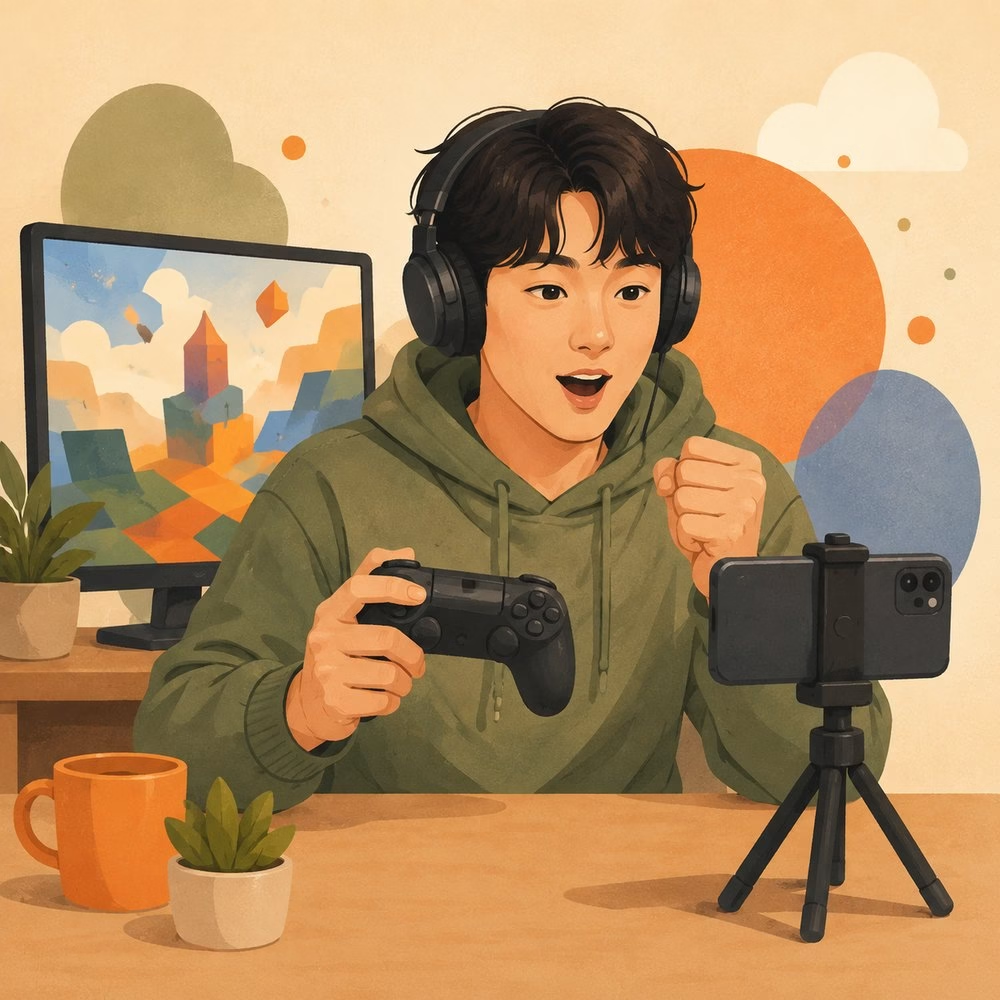
A game trailer can look polished and still fail to answer the player’s first question: “Will this actually be fun for me?” Creator-led content works differently. It can show the moment-to-moment experience, explain a confusing mechanic, or make a genre-specific joke feel native to the feed.
That is why hiring a UGC creator for game promotion in Korea is not simply a casting decision. The creator needs to understand the game, speak naturally to the intended Korean player, capture usable footage, and deliver assets that fit the campaign’s paid or organic plan. A fluent script alone cannot compensate for weak gameplay understanding or a brief that leaves rights and review standards vague.
This guide is for global game studios, publishers, and agencies planning Korean-market creator assets. It explains how to define the job, evaluate creators, choose formats, write a practical brief, scope rights, and run a first test without confusing UGC production with influencer distribution.
Why does game UGC need a Korea-specific brief?
Games carry their own language before localization begins. Players recognize genre terms, interface conventions, progression systems, character roles, and community jokes. A line can be grammatically correct in Korean yet still sound as though it was written by someone who has never played the genre.
A Korea-specific brief should resolve four layers:
- Player context: Who is the intended player, what genre do they already know, and what would make them stop?
- Game truth: Which mechanics, modes, rewards, characters, and claims are approved and available in the promoted build?
- Korean delivery: Which terms should remain in English, which localized names are official, and what tone fits the audience?
- Placement: Is the video an organic brand post, a paid ad, a creator-account post, or a cutdown for several channels?
Korea-focused game marketing agency HOUR-B presents creator work alongside community, media, user-acquisition, and local platform operations. The useful takeaway is not that every campaign needs every channel. It is that creator content should be planned inside the actual Korean launch and community context—not treated as an isolated translated video.
Before contacting a creator, write one campaign sentence: “This asset should help [specific Korean player] understand or feel [one game value] and take [one measurable next step].” If that sentence contains three audiences, four features, and two CTAs, the brief is still too broad.
Choose genre fluency before follower count
A UGC creator is not automatically an influencer, and an influencer is not automatically the right asset producer.
For brand-owned UGC, the creator’s main job is to produce believable footage that the studio can use on its own channels or in paid media. Their personal reach may be irrelevant. For an influencer activation, the audience, channel history, distribution terms, and community relationship become part of the purchase.
The creator marketplace PlayCamp frames game creator selection around the game, language, campaign participation, and measurable outcomes rather than follower count alone. That is a useful buying principle even if you manage the campaign directly: start with the player-creator fit, then evaluate reach only when distribution is included.
Review these signals:
- The creator actually plays or can quickly understand the genre.
- Their reactions and explanations sound natural rather than performed from a translated script.
- They can record clean gameplay or work accurately with studio-supplied capture.
- Their Korean terminology matches the approved build and store listing.
- Their pacing fits short-form feeds without hiding the core mechanic.
- They can follow technical, disclosure, and rights requirements.
- Their portfolio separates sponsored distribution from assets produced for a brand account.
Do not ask only, “Have you promoted a game before?” Ask the creator to explain the promoted mechanic back to you in their own words. A short concept response often reveals more than a general portfolio.
Which UGC formats work for game promotion in Korea?
Choose formats by the player question they answer. Trends can shape editing, but the format still needs a clear campaign job.
First-session reaction
Show the first moment that genuinely surprises, delights, or challenges the creator. This works when the game has an immediate visual or mechanical payoff. Do not script a dramatic reaction that the footage cannot support.
Mechanic-in-one-sentence
Open with the player problem, then demonstrate one mechanic in plain Korean. This format is useful when the store page looks familiar but the play loop has a distinctive twist.
Challenge, fail, and retry
Let the creator set a concrete goal, fail in an understandable way, and try again. The structure can communicate difficulty and progression without a long explanation. The chosen build and footage must make the sequence reproducible.
“Who is this game for?” recommendation
Connect the game to a recognizable player preference: short sessions, collection, strategy, co-op, narrative choice, or another verified feature. Avoid claims about “all Korean gamers” or an entire generation.
Comment or objection response
Answer a real concern such as controls, learning curve, session length, language support, or the difference from a familiar genre. Use an actual question from research or community feedback when permission and context allow.
Creator-led feature update
For a live-service title, explain one new feature or event from the current build. Lock the date, availability, reward conditions, and official names before recording.
GameInfluencer’s UGC production overview highlights gameplay clips, reactions, testimonials, creative briefing, creator matching, review, rights, and reporting. Its structure reinforces an important distinction: a format idea is only one part of the delivery system. The asset also needs a clear brief, QA, usable rights, and a reporting plan.
For more format options, see these UGC video ideas for the Korean market. Use the ideas as starting points, then adapt the hook and proof to the promoted game.
How should you brief a UGC creator for game promotion in Korea?
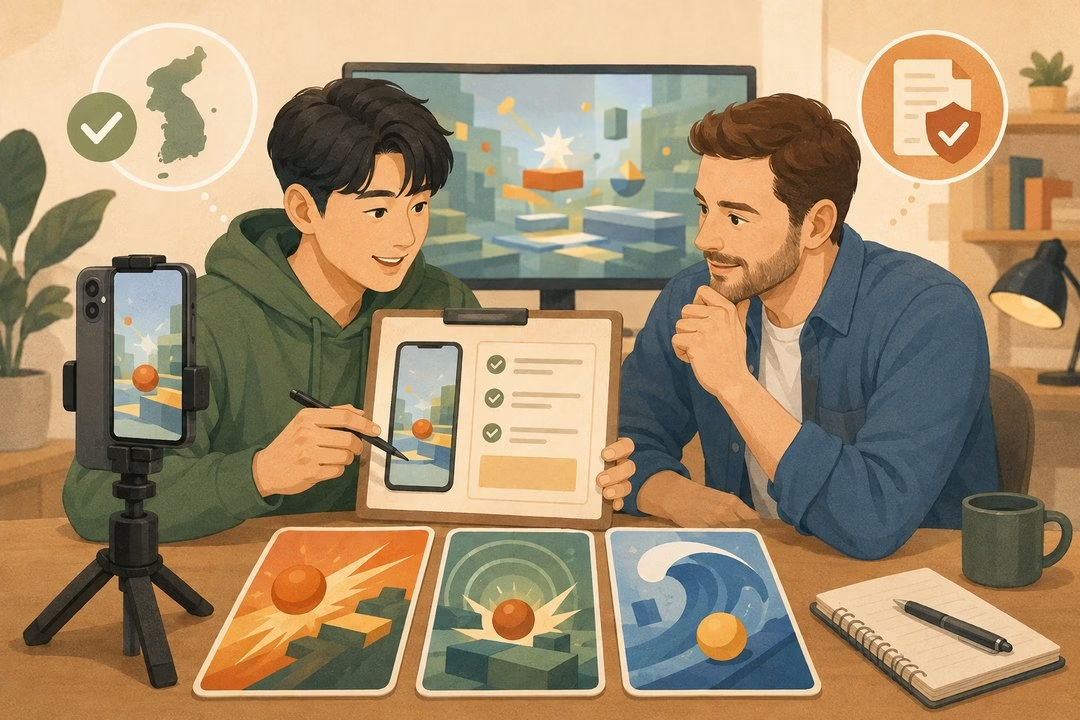
A good brief locks accuracy while leaving enough room for the creator to sound like a player.
Include:
- Audience: Market, language, approximate player profile, genre familiarity, and desired action.
- Campaign job: Install, wishlist, event participation, feature awareness, retargeting, or another single objective.
- Approved game facts: Official title, character and item names, mechanic description, supported platforms, release status, and availability.
- Build access: Device, region, account, test build, capture restrictions, embargo, and support contact.
- Core creative beat: Hook, gameplay proof, creator interpretation, and CTA.
- Must-show footage: Only the scenes or mechanics needed to support the message.
- Korean language notes: Official terminology, pronunciation, terms that remain in English, caption style, and prohibited wording.
- Technical delivery: Aspect ratio, duration, resolution, safe areas, captions, clean version, raw footage, and file names.
- Review gates: Concept, Korean read-through where needed, rough cut, final cut, and number of feedback rounds.
- Commercial terms: Channels, paid use, region, license period, editing, creator posting, and renewal.
Avoid a word-for-word English script that has merely been translated. Lock facts and mandatory phrases, then let the creator adapt sentence rhythm, emphasis, and reaction language. If a feature is difficult to explain, review a short Korean read-through before filming.
Separate gameplay proof from performance
The creator can be expressive, but the game still needs to prove the promise.
If the hook says the combat rewards timing, show a moment where timing is visible. If the video says the game fits short sessions, show the relevant loop without implying a session length the team has not verified. If the creator calls an event “free,” confirm the eligibility and conditions.
Use this review sequence:
1. Watch the video once without sound. Is the game and core action understandable?
2. Listen without looking. Does the Korean sound natural and accurate?
3. Match every claim to visible footage or approved product information.
4. Confirm that captions support the spoken meaning instead of changing it.
5. Check the current build, region, dates, and CTA destination.
This is especially important when a global team supplies capture. The creator should not be asked to act as though they personally reached a stage, earned an item, or experienced an outcome that the footage does not show.
Scope usage rights and deliverables before filming
“One UGC video” is not a complete scope. A master edit, alternate hooks, raw gameplay, face-camera footage, clean versions, subtitles, still frames, and paid-media rights are separate deliverables.
Confirm these points in writing:
- number and length of final edits;
- number of alternate hooks and CTAs;
- who supplies or owns gameplay capture;
- permission to crop, subtitle, dub, or re-edit;
- organic and paid channels;
- territory and license period;
- creator-account posting or ad authorization;
- music, sound-effect, font, and game-asset permissions;
- revision and reshoot conditions;
- renewal pricing and asset storage.
The paid-use period should match the testing plan. Do not buy an indefinite license automatically if the first goal is a small creative pilot, but do not launch an ad with rights that expire before the media flight ends.
If the campaign is focused on mobile acquisition, the related guide to Korean UGC video ads for mobile apps covers the connection between the hook, product proof, and install-focused creative.
How do you test the first Korean game UGC assets?
Start with a test that can produce a decision. One practical setup is one creator, one game value, one shared body, and three clearly different hooks.
For example:
- Hook A opens with a recognizable player frustration.
- Hook B opens with the most visually distinctive mechanic.
- Hook C opens with a genre-specific recommendation.
Keep the body, offer, landing destination, and audience stable enough to compare the openings. If you change the creator, hook, footage, length, CTA, and targeting at once, a winning result will not tell you what to repeat.
Review quality before performance:
- natural Korean delivery;
- correct game and genre terminology;
- visible support for the promise;
- accurate build and event information;
- required disclosure;
- agreed technical files;
- paid and editing rights.
Then choose metrics that match the placement. Early retention can diagnose whether the opening earns attention. Completion can reveal pacing problems. Click or store-visit behavior can show whether the promise and CTA align. Downstream install quality requires a reliable attribution setup; views alone do not prove player acquisition.
What should you ask before hiring?
Use these questions in the first conversation:
1. Which game genres do you play or understand well?
2. Can you record the required platform and build in Korea?
3. How would you explain this mechanic naturally in Korean?
4. Are you producing an asset, publishing to your audience, or both?
5. What is included in the fee: concept, filming, gameplay capture, editing, hooks, captions, raw files, and revisions?
6. Which organic and paid rights are included, for how long and where?
7. How do you handle factual corrections versus creative feedback?
8. Can you provide a clean version for localization or later editing?
9. What disclosure will appear if the content is published from your account?
10. What is the reshoot process if the build changes or a required scene is unavailable?
Clear answers make quotes comparable. They also protect the creator from an expanding brief.
Build game creator content that feels native and stays usable
The right UGC creator for game promotion in Korea does more than read Korean copy on camera. They understand the player, communicate the game’s real value, work with the correct build, and deliver assets that can survive localization review and media use.
Define the campaign job first. Select for genre and production fit. Brief facts, Korean terminology, footage, reviews, and rights. Then test a small set of meaningful variations before scaling.
If your studio needs a bilingual Korean creator to turn a global game brief into natural Korean short-form assets, review the Korean UGC production service and share the game, target player, platform, campaign objective, required deliverables, and paid-use period in the project form below.