
YouTube Video Localization for Korea: Subtitles, Voice Over, or Dubbing?
YouTube video localization for Korea is not just about changing English subtitles into Korean. A Korean viewer may understand the words, but still feel that the video sounds too literal, too foreign, or not made for them.
Start with what the viewer needs to do: listen to an interview, follow a demonstration, or watch a character performance. That decision helps you choose Korean subtitles, voice over, or dubbing, then plan the script, timing, tone, and localized title and description around the same viewing experience.
In this guide, you will learn when Korean subtitles are enough, when Korean voice over works better, when AI translation needs native review, and what to prepare before localizing a YouTube video for Korean audiences.
What YouTube Video Localization for Korea Really Means
YouTube video localization for Korea means adapting a video so Korean viewers can understand it naturally, trust it, and take the intended next action. Translation is one part of that process, but localization also includes tone, subtitle readability, voice delivery, cultural context, and YouTube metadata.
For example, a basic translation may convert every sentence into Korean. But a localized video asks different questions: Does this Korean sentence sound natural? Is the subtitle short enough to read on mobile? Does the call-to-action make sense for Korean viewers? Should this video use subtitles, Korean voice over, or both?
This distinction matters because YouTube is not just a video hosting platform. It is also a search and discovery platform. If the Korean title, description, subtitles, and viewer experience feel disconnected, the video may technically be translated but still fail to connect with the Korean audience.
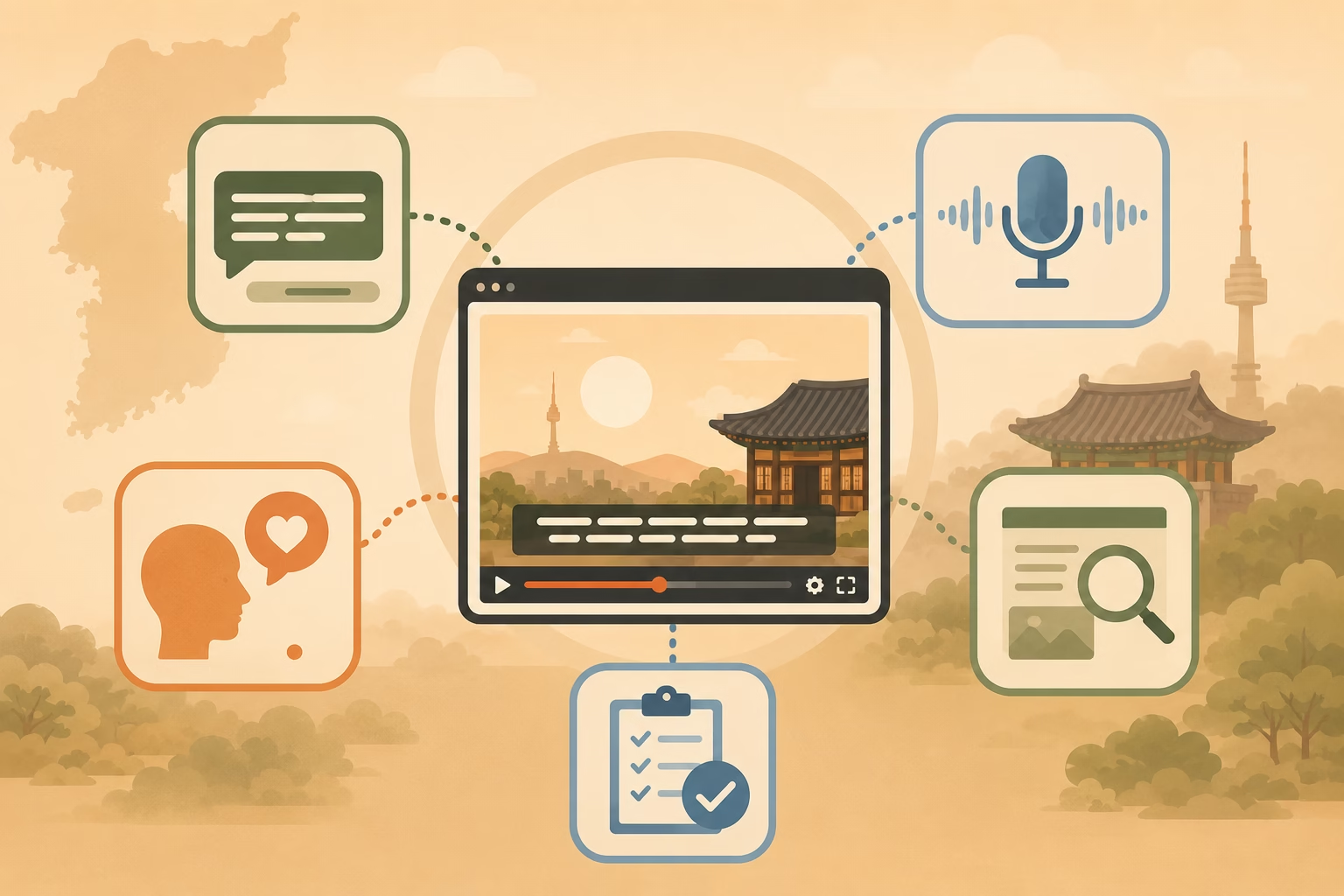
Korean Subtitles, Voice Over, or Dubbing: Which Should You Choose?
Not every YouTube video needs the same localization format. The right choice depends on the content type, budget, audience expectation, and how much trust the video needs to build.
Use this comparison to define the version you want before requesting a quote. These are production choices to agree with your provider; lip sync, casting, mixing, and final video editing need an explicit scope.
| Format and typical fit | Original voice | Source materials | Main review work |
|---|---|---|---|
| Korean subtitles: interviews, talks, or tutorials | Remains audible. | Final video and transcript; existing subtitle file if available. | Korean wording, reading speed, line breaks, speaker changes, and timing. |
| Korean voice over: explainers, demonstrations, or training | Can be replaced or lowered beneath the Korean voice; agree on the mix. | Video, narration script, timing references, and separate audio tracks where available. | Spoken phrasing, pronunciation, pace, tone, and alignment with the visuals. |
| Korean dubbing: character or dialogue-led content | Dialogue is replaced in the Korean version. | Video, dialogue script with speaker labels, and music/effects tracks where available. | Performance, speaker consistency, dialogue timing, and any agreed lip-sync requirement. |
When Korean subtitles are enough
Korean subtitles are often enough for videos where the original speaker’s voice is part of the value. This can include founder interviews, product walkthroughs, expert talks, webinars, documentaries, or creator-led videos.
Subtitles are also a practical choice when you want to test the Korean market before investing in a larger localization package. They are faster to produce than full dubbing and can still make the content accessible to Korean viewers.
However, Korean subtitles need more than direct translation. The subtitle length, timing, line breaks, and reading speed all matter. Long, literal subtitles can feel heavy, especially on mobile. For YouTube, subtitles should be clear, readable, and timed to match the viewer’s attention span.
Good fit for Korean subtitles:
| Video type | Why subtitles may work |
|---|---|
| Founder or expert interviews | Keeps the original speaker’s credibility |
| Educational videos | Viewers can follow terms and explanations |
| Product tutorials | Clear subtitles can guide step-by-step learning |
| Webinars and lectures | Cost-effective for long-form content |
| Market testing videos | Lower investment before deeper localization |
When Korean voice over works better
Korean voice over works better when the viewer needs to focus on the message without constantly reading subtitles. It is especially useful for explainer videos, brand videos, product demos, e-learning content, app tutorials, and corporate videos.
A Korean voice over can make the video feel more direct and easier to consume. This matters for viewers watching on mobile, multitasking, or learning through visual demonstrations. If the original video already has strong visuals, replacing or supporting the narration with Korean voice over can make the message easier to absorb.
This is also where tone becomes important. Korean voice over for a corporate training video should not sound like a YouTube entertainment video. A product demo should not sound too dramatic. A brand story should not sound robotic. The voice style needs to match the video’s purpose.
In Korean voice over projects, the script often needs small adjustments before recording. A sentence that works as a subtitle may sound too long or unnatural when spoken aloud in Korean.
When full dubbing is worth considering
Full dubbing is usually worth considering when the video needs a more immersive Korean viewing experience. This can apply to character-based content, entertainment, animation, children’s content, training simulations, or videos where multiple speakers interact.
Dubbing requires more work than standard subtitles or narration. It may involve script adaptation, casting, recording, timing, emotional direction, and audio mixing. For many business videos, Korean voice over is enough. But for content where the viewer needs to feel like the video was originally made in Korean, dubbing may be the better choice.
The practical rule is simple: if the voice is mainly delivering information, voice over may be enough. If the voice is part of the performance, character, or emotional experience, dubbing becomes more important.
Can AI Translate YouTube Videos into Korean Accurately?
If AI is used for an initial transcript or translation, treat the output as a draft for review. A grammatically correct Korean sentence can still use the wrong product term, level of formality, or spoken rhythm for the video.
Pay particular attention to names, technical language, jokes, overlapping speakers, and the call to action. Check the draft against the source video so a transcription error does not pass unnoticed into both subtitles and narration.
- Confirm the source transcript, speaker labels, and any unclear speech.
- Have a Korean-language reviewer check meaning, terminology, tone, and pronunciation notes.
- Adapt the approved wording to the chosen format: readable subtitles or a script that works when spoken.
- Review the assembled video for timing, voice balance, captions, and on-screen text on both mobile and desktop.
Assign the final language and brand approval before production starts, especially when several people will review the same video.
Korean YouTube Localization Checklist
Before publishing a localized YouTube video for Korea, check more than the translated script. A video can have accurate Korean words but still feel poorly localized if the timing, tone, metadata, or call-to-action is wrong.
Script and terminology
Start with the source script or transcript. If the video includes technical terms, product names, industry phrases, or brand-specific language, prepare a terminology list before translation.
This is especially important for SaaS, apps, finance, healthcare, education, gaming, and B2B content. Without terminology control, the same word may be translated in multiple ways across subtitles, voice over, titles, and descriptions.
Checklist:
- Source transcript
- Product names
- Brand terms
- Industry terms
- Names of people or features
- Preferred Korean terms
- Words that should remain in English
Subtitle timing and readability
Korean subtitles should not simply mirror the English sentence structure. English and Korean have different word order, rhythm, and sentence length. A direct subtitle translation can become too long or hard to read.
Good Korean subtitles should be short enough to read comfortably, split naturally, and timed to match the spoken content. If the video will be watched mostly on mobile, readability becomes even more important.
Check before publishing:
| Item | Question to ask |
|---|---|
| Subtitle length | Can a viewer read it quickly? |
| Line breaks | Are the breaks natural in Korean? |
| Timing | Does the subtitle appear and disappear at the right moment? |
| Mobile view | Is it readable on a phone screen? |
| Speaker changes | Is it clear who is speaking? |
Tone and cultural adaptation
Korean tone can change the viewer’s impression quickly. A video can sound too stiff, too casual, too salesy, or too foreign depending on how the Korean is written.
For most brand, product, and education videos, a clear and polite Korean tone works well. But for UGC-style videos, YouTube creator content, or social clips, a more casual tone may feel more natural. The key is not to choose “formal” or “casual” randomly. The tone should match the speaker, brand, audience, and platform.
This is where localization becomes different from translation. The goal is not to preserve every English phrase. The goal is to help Korean viewers receive the same message naturally.
Title, description, and CTA localization
Many brands localize the video but forget the YouTube metadata. That is a mistake. Korean viewers often discover videos through search, suggested videos, shared links, or embedded pages. The title and description help set expectations before the viewer even clicks.
A localized YouTube package should consider:
- Korean title
- Korean description
- Korean keywords
- Chapter titles
- Pinned comment
- CTA text
- Link destination
- Thumbnail message, if text is used
- Hashtags, when relevant
For example, an English CTA like “Book a demo” may not always be the best Korean phrasing. Depending on the brand and offer, it may need to sound softer, clearer, or more specific for Korean viewers.
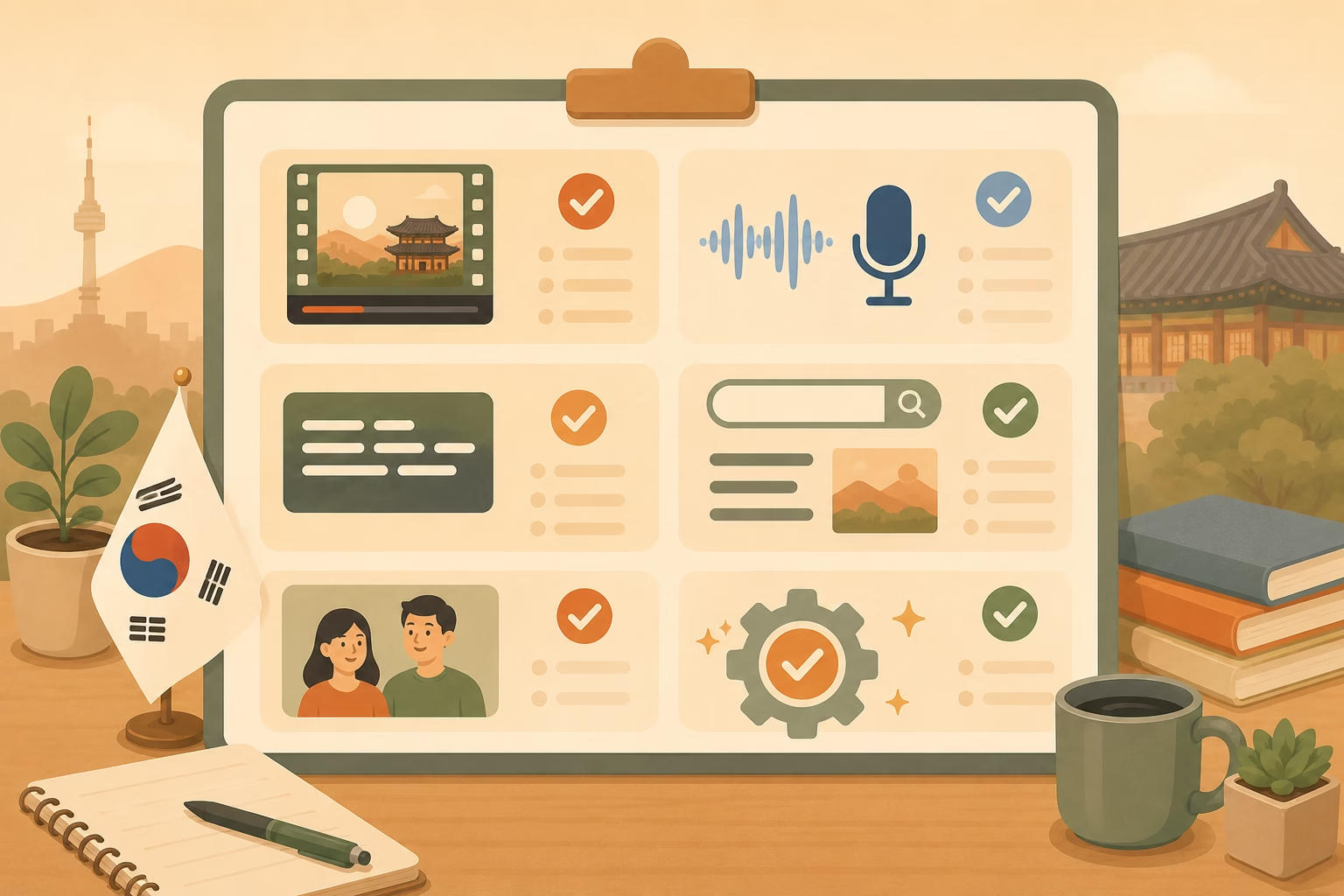
Final Thoughts: Localize for Korean Viewers, Not Just the Korean Language
YouTube video localization for Korea should not stop at translation. A strong Korean version considers how viewers read, listen, search, and respond.
For some videos, Korean subtitles are enough. For others, Korean voice over will make the message easier to understand. And for brand or product videos, localized titles, descriptions, and CTAs can make the difference between a translated video and a video that actually works in the Korean market.
If you already have a YouTube video and want to adapt it for Korean viewers, start by choosing the right localization format. Then review the script, subtitles, voice, and metadata as one connected viewer experience.
If you want to localize a YouTube video for Korean audiences, I can help with Korean subtitles, voice over direction, script adaptation, and metadata localization.
What should you send for a YouTube localization brief?
- Source: The video link or final file, transcript, and existing subtitle or separate audio files.
- Audience and purpose: Who will watch, what they need to understand, and the intended next action.
- Preferred format: Subtitles, Korean voice over, dubbing, or a combination; say whether the original voice should remain.
- Language references: Product terms, pronunciation notes, tone references, and wording that must stay unchanged.
- Timing and review: Video length, any fixed timing or lip-sync needs, preferred schedule, and the final approver.
- Delivery: The subtitle, audio, or video files you need, plus any title and description adaptation. Confirm the included production steps before work begins.
Share these details to discuss a practical scope for your Korean version.