
Korean Voice Over Talent: 5 Mistakes to Avoid Before Hiring
Finding Korean voice over talent looks simple at first. You listen to a few demos, choose a voice that sounds good, send the script, and wait for the final audio.
But Korean voice-over is not just about finding someone who can speak Korean.
The right voice needs to match your audience, your brand tone, your script style, and the way Korean listeners actually expect spoken content to sound. A voice that works for a game character may feel too dramatic for a corporate training video. A friendly app tutorial voice may sound too casual for a financial service. A script that reads well in English may sound stiff once translated directly into Korean.
As a Korean voice-over talent working with international clients, I often see the same issue: the recording stage goes much better when the voice direction, Korean script, and usage context are clear from the beginning.
This guide will walk through the most common mistakes brands make when hiring Korean voice over talent, and how to avoid them before recording starts.
Quick links
- Mistake 1: Choosing a voice only because the demo sounds good
- Mistake 2: Recording a directly translated script
- Mistake 3: Ignoring Korean formality and tone
- Mistake 4: Treating all Korean accents the same
- Mistake 5: Forgetting usage rights, revisions, and delivery format
- Korean voice over talent checklist
Mistake 1: Choosing a Voice Only Because the Demo Sounds Good
A good demo is important, but it should not be the only reason to choose Korean voice over talent.
Voice demos are usually short, polished, and selected to show the talent at their best. They help you understand the actor’s tone, vocal texture, pronunciation, and recording quality. But a demo does not always tell you whether that voice is right for your specific project.
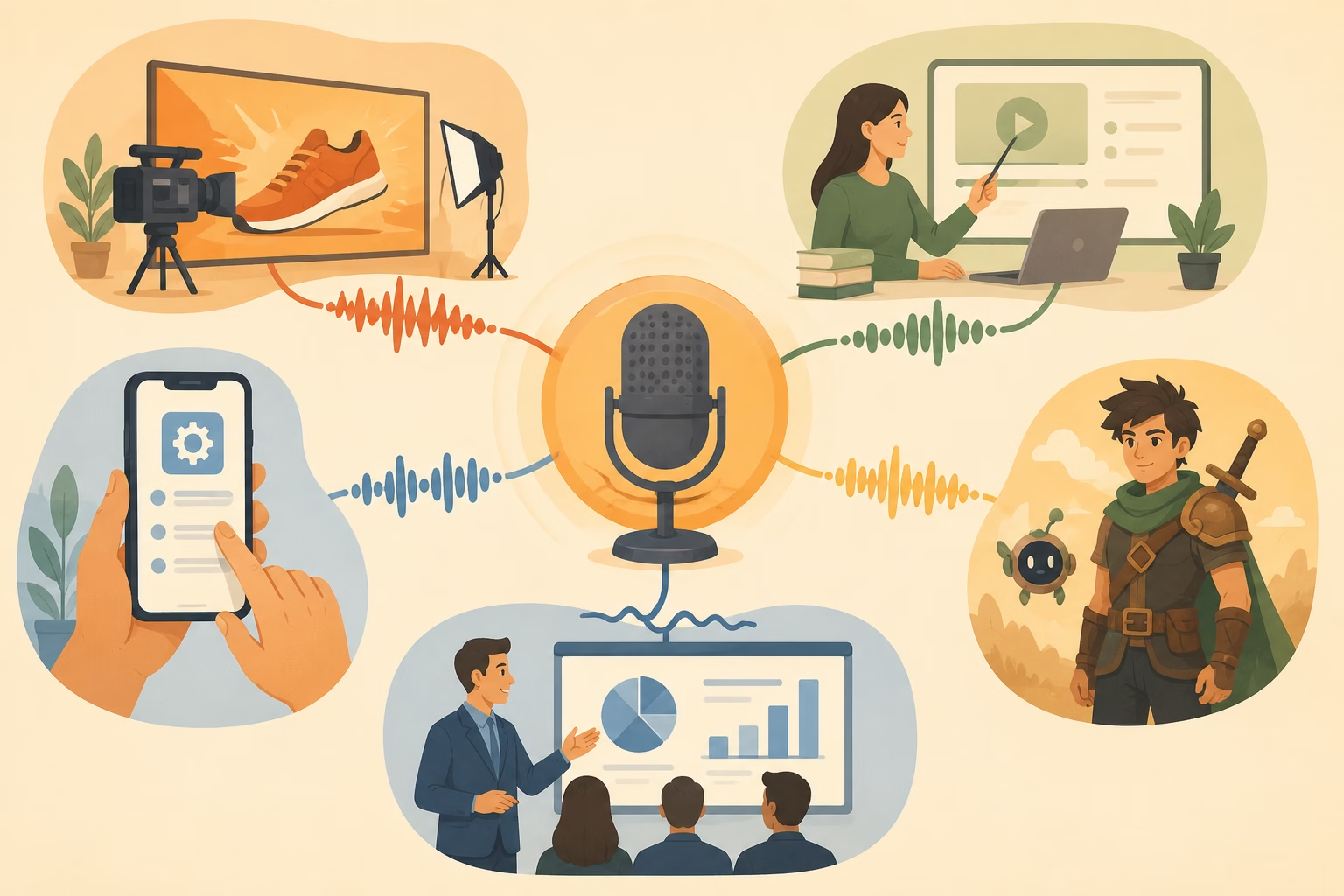
For example, a warm and emotional voice may work beautifully for a brand film, but it may feel too slow for a mobile app tutorial. A bright and energetic commercial voice may be great for a 15-second ad, but too intense for a 20-minute eLearning module.
The better question is not, “Does this voice sound good?”
It is, “Does this voice help the Korean audience understand, trust, and respond to this content?”
Match the voice to the project type
| Project type | Recommended Korean voice direction |
|---|---|
| Commercials / Ads | Clear, persuasive, energetic, brand-focused |
| eLearning / Training | Calm, steady, easy to follow, not too dramatic |
| Corporate videos | Professional, trustworthy, polished |
| Apps / Product tutorials | Friendly, concise, natural, helpful |
| Games / Characters | Expressive, emotionally flexible, character-driven |
| YouTube / Social videos | Conversational, approachable, less formal |
| Medical / Finance / B2B content | Accurate, controlled, credible, formal enough |
A native Korean voice actor should be selected based on audience, message, platform, and emotional goal — not just the nicest-sounding demo.
For project-specific recording support, explore my Korean Voice Over Service.
Mistake 2: Recording a Directly Translated Script
One of the biggest issues in Korean voice-over projects is using a script that has only been translated, not localized for spoken Korean.
A sentence can be technically correct in Korean and still sound unnatural when spoken out loud. This happens often when English marketing copy, app tutorials, or corporate scripts are translated too directly.
English often allows short, direct, action-focused sentences. Korean usually needs a different sentence rhythm, especially when the message needs to sound polite, natural, and trustworthy. Word order, sentence endings, formality, and implied meaning all affect how the final audio feels.
For example, an English line like:
“Start creating today.”
Could be translated in several different ways depending on the context:
| Context | Better Korean direction |
|---|---|
| Friendly app onboarding | Casual, simple, encouraging |
| Corporate SaaS product | Clear, polite, benefit-focused |
| Youth-focused social ad | Short, energetic, conversational |
| Financial service | Trustworthy, restrained, professional |
The right Korean version depends on the brand, audience, and platform. This is why Korean voice-over should ideally start with a script review, not just recording.
Why Korean voice-over often needs localization
Korean localization for voice-over may involve:
- Shortening long translated sentences
- Making stiff written Korean sound more conversational
- Adjusting honorifics and sentence endings
- Checking pronunciation of brand names and product terms
- Matching the script to the desired tone
- Making sure the line length works for timing or lip-sync
- Removing expressions that sound foreign to Korean listeners
From my experience with Korean voice-over and localization projects, the best recordings usually happen when the script has already been adapted for how people actually speak — not only how the original English sentence was written.
If your English script needs to sound natural in Korean, review my Korean Localization Service.
Mistake 3: Ignoring Korean Formality and Tone
Korean has different levels of formality, and this matters a lot in voice-over.
Many international clients ask for a voice that is “friendly,” “professional,” or “natural.” Those words are helpful, but in Korean they are not enough. A friendly Korean voice can still be polite. A professional Korean voice can still be warm. A casual Korean voice can sound natural in one context and disrespectful in another.
The key is choosing the right level of formality for the audience.
Formal vs informal Korean voice-over
| Tone direction | When it works |
|---|---|
| Formal and polished | Corporate videos, B2B, finance, medical, public announcements |
| Polite and conversational | Product tutorials, brand explainers, app onboarding, eLearning |
| Casual and friendly | Social media, youth brands, creator-style videos |
| Emotional and cinematic | Brand films, documentaries, storytelling |
| Character-driven | Games, animation, entertainment content |
In many business contexts, Korean voice-over should not be too casual. Even when the brand wants to sound friendly, Korean listeners may still expect a certain level of politeness.
This is especially important for:
- SaaS products
- Financial services
- Healthcare content
- Educational content
- Government or institutional videos
- Corporate training
- B2B product explainers
A native Korean voice talent can help decide whether the script should sound formal, semi-formal, conversational, or casual. That decision affects not only the recording, but also the script itself.
Mistake 4: Treating All Korean Accents the Same
For most international brand projects, a general South Korean accent or Seoul-based standard Korean is the safest choice. It is widely understood, neutral, and appropriate for most commercial, corporate, and educational content.
That said, accent and dialect should still be considered carefully.
A regional dialect can add authenticity in certain stories, local campaigns, documentaries, or character-based projects. But it may not be the right choice for a broad national campaign or a corporate video where clarity and neutrality matter more.
When standard Korean is usually the right choice
Standard South Korean Korean is usually best for:
- Global brand videos
- Corporate explainers
- eLearning and training
- App tutorials
- Product videos
- YouTube narration
- Paid social ads
- Internal communication
- Most commercial voice-over projects
When dialect may be useful
A Korean dialect may be useful for:
- Regional campaigns
- Documentary interviews
- Character voices
- Local storytelling
- Comedy or entertainment
- Content where regional identity matters
The key is intention. Dialect should be used because it supports the project, not because it sounds “more Korean.”
For most brands entering the Korean market, clear and natural standard Korean will be the strongest starting point.
Mistake 5: Forgetting Usage Rights, Revisions, and Delivery Format
Hiring Korean voice over talent is not only about the recording fee. The final quote can depend on how the audio will be used, how quickly it is needed, and what kind of delivery is required.
Before requesting a quote, prepare the practical details. This helps avoid delays and unclear expectations.
What affects a Korean voice-over quote?
| Factor | Why it matters |
|---|---|
| Script length | Longer scripts require more recording and editing time |
| Project type | Ads, eLearning, games, and corporate videos may have different usage needs |
| Usage rights | Paid ads, broadcast, organic social, internal use, and web use can differ |
| Territory | Korea-only, global, or regional usage may affect the license |
| Duration | One-time use, one year, unlimited usage, or campaign-based usage |
| Turnaround time | Rush delivery may cost more |
| Sync requirements | Timed narration, dubbing, or lip-sync needs more production work |
| Revision scope | Script changes after recording can create extra work |
| File format | WAV, MP3, split files, raw audio, edited audio, or synced files |
This is why a clear brief matters. A professional Korean voice actor can record faster and more accurately when the project details are clear from the beginning.
Korean Voice Over Talent Checklist
Before hiring Korean voice over talent, prepare the following:
1. Project basics
- What is the project type?
- Where will the audio be used?
- Who is the target audience?
- Is the content for Korea only or global use?
- Is the voice-over for paid ads, organic content, internal training, or product use?
2. Script and language
- Is the script already translated into Korean?
- Has the script been localized for spoken Korean?
- Are brand names or product names difficult to pronounce?
- Are there any terms that must stay in English?
- Does the script need formal, polite, conversational, or casual Korean?
3. Voice direction
- Male or female voice?
- Young, mature, warm, energetic, premium, calm, or character-driven?
- Should the tone feel corporate, friendly, emotional, or instructional?
- Are there reference videos or sample voices?
- Should the speed be natural, fast, slow, or timed to video?
4. Recording and delivery
- Is syncing required?
- Do you need raw audio or edited audio?
- Should files be split by line or delivered as one full track?
- What file format is needed?
- What is the deadline?
- How many revisions are included?
A strong brief does not limit creativity. It helps the Korean voice talent make better decisions.
FAQ: Hiring Korean Voice Over Talent
How do I choose the right Korean voice over talent?
Start with the project goal. A good Korean voice talent should match your audience, platform, tone, and message. Do not choose based on the demo alone. Check whether the voice fits the actual use case, such as ads, eLearning, corporate video, app tutorial, game, or narration.
Do I need a native Korean voice actor?
For professional Korean voice-over, yes. A native Korean voice actor can catch pronunciation, sentence rhythm, formality, and tone issues that non-native speakers may miss. This is especially important for brand content, paid ads, educational materials, and product videos.
Should I translate the script before hiring a Korean voice actor?
You can, but the script should ideally be reviewed for spoken Korean before recording. A translated script may be accurate but still sound stiff or unnatural. Korean voice-over often works best when translation and localization are handled before the recording stage.
Can Korean voice actors record remotely?
Yes. Many Korean voice-over projects are recorded remotely with home studio setups. The important thing is to confirm audio quality, recording environment, file format, and revision terms before starting.
Should Korean voice-over use formal or informal tone?
It depends on the audience and project. Corporate, finance, medical, and training content usually need a more formal or polite tone. Apps, social videos, and youth-focused campaigns can be more conversational. For most brand projects, polite and natural Korean is a safe starting point.
Work With a Native Korean Voice Over Talent
The right Korean voice-over should sound natural, clear, and appropriate for the audience. It should not feel like a translated script being read out loud.
If you already have a script, the next step is to check three things:
- Does the Korean sound natural when spoken?
- Does the voice direction fit the audience?
- Are the usage rights, delivery format, and revision scope clear?
I can help with Korean voice-over recording, script review, and localization support for international brands that need natural Korean audio.
Send your script and get a native Korean voice-over recommendation.