Voice Over Korean: AI or Native Korean Voice Actor?
If you searched for “voice over Korean,” you may be looking for a Korean text-to-speech tool, an AI voice generator, Korean dubbing, or a native Korean voice actor. AI tools can be useful when you need quick Korean audio for drafts, tests, or simple narration, but if the voice will represent your brand, product, game, YouTube channel, or paid campaign, speed is not the only thing that matters. The real question is whether it will sound natural, trustworthy, and native to Korean listeners — and this guide will help you decide when AI is enough and when hiring a native Korean voice actor is the safer choice.
In this guide
Can you use AI for Korean voice over?
Yes, you can use AI for Korean voice over in some situations.
AI Korean voice generators have become much easier to access. You can paste a Korean script, choose a voice, adjust the speed or tone, and export an audio file quickly. For many creators and teams, this is useful because it removes the need to schedule a recording session or hire a voice actor for every small test.
But the important question is not simply whether AI can speak Korean.
The better question is whether the result will sound right for the purpose of your content. A voice over for an internal draft does not need the same quality as a paid ad. A temporary narration does not need the same emotional detail as a game character. A simple explainer does not need the same level of brand trust as a product launch video.
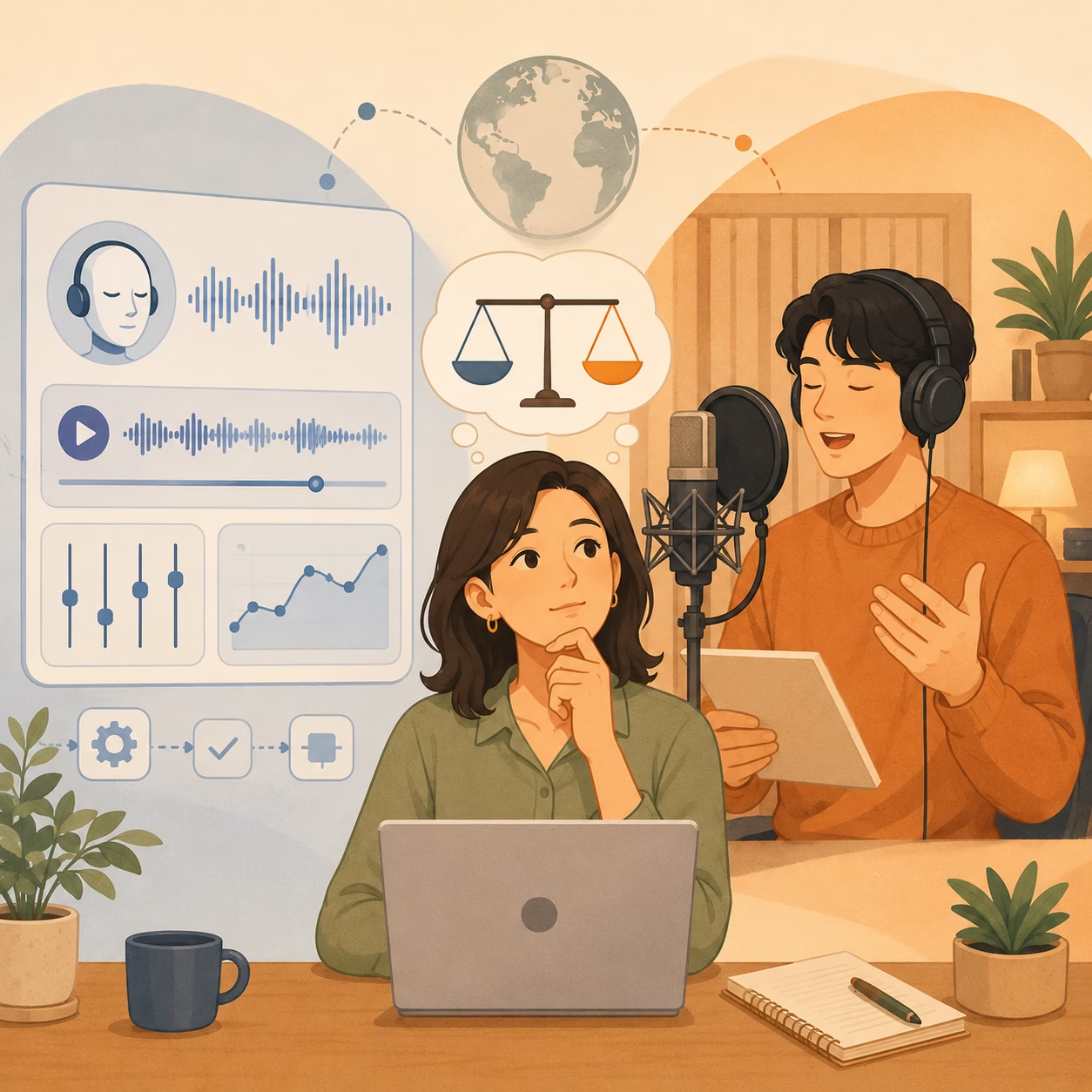
So instead of asking, “Is AI Korean voice over good or bad?” it is better to ask, “What role does the voice play in this project?”
If the voice is only helping your team understand the video flow, AI may be enough. If the voice is representing your brand to Korean customers, you should be more careful.
When AI Korean voice over is enough
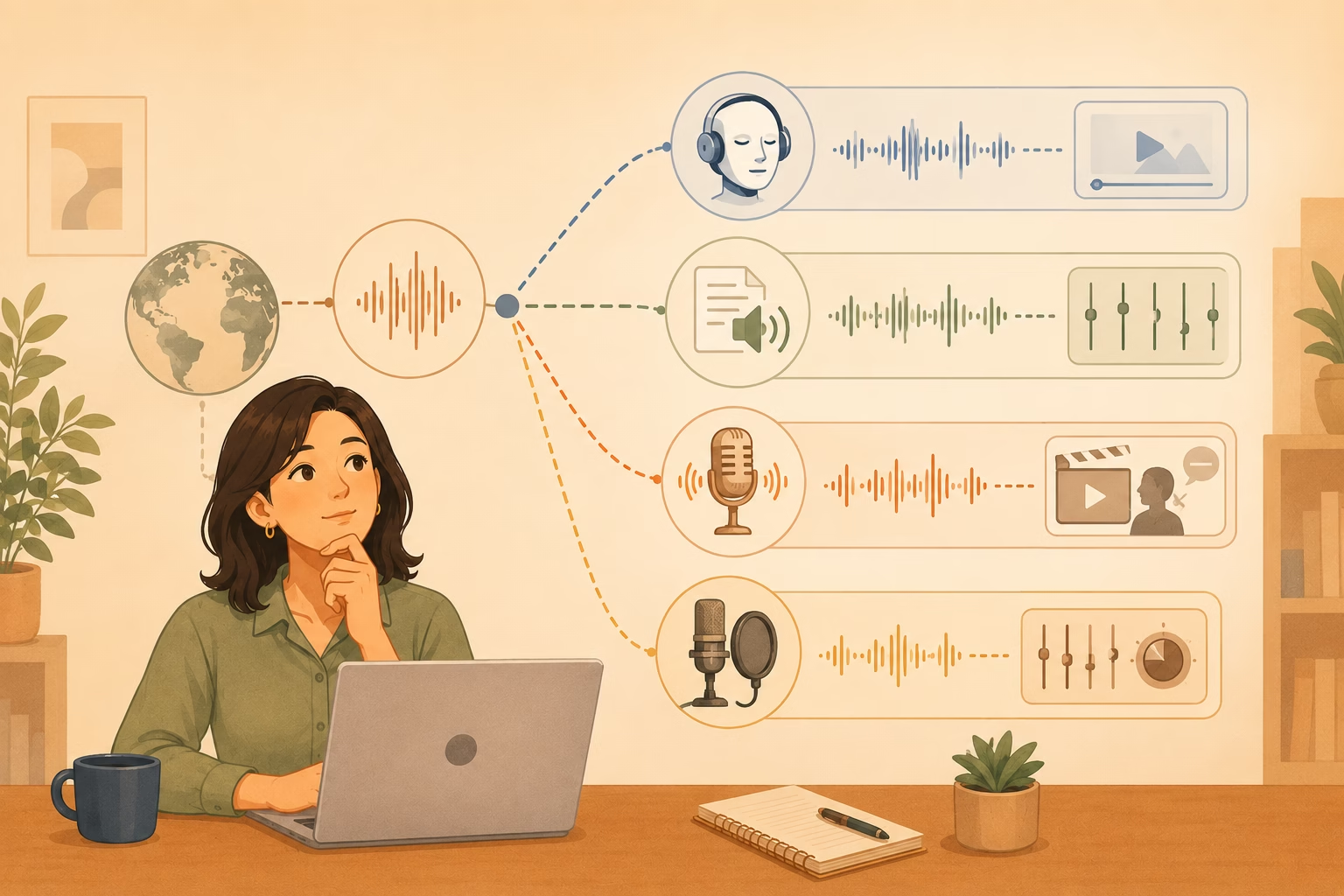
AI Korean voice over can be a reasonable choice when the content is low-risk, temporary, or not directly connected to your brand image.
For example, if you are creating an internal draft, you may not need a perfect human recording. Your team may only need to check timing, video flow, or whether the Korean version roughly fits the scene. In that case, AI can help you move faster.
AI can also work for simple educational or informational content where the voice does not need to persuade, act, or create emotional trust. If the goal is basic comprehension, a clear AI voice may be enough.
Another useful case is early-stage localization testing. Before investing in professional Korean localization or voice over, you may want to test whether a Korean version of your content makes sense. AI can help you create a quick sample before you commit to a larger production budget.
| Project type | Why AI can work |
|---|---|
| Internal draft | The audio is not public-facing |
| Rough localization test | You only need to check direction |
| Simple educational narration | Clarity matters more than emotion |
| Temporary placeholder voice | Final quality is not required yet |
| Low-risk content | The brand impact is limited |
AI Korean voice over is useful when speed matters more than emotional nuance. But once the content becomes public-facing, the decision becomes more important.
When you should hire a native Korean voice actor
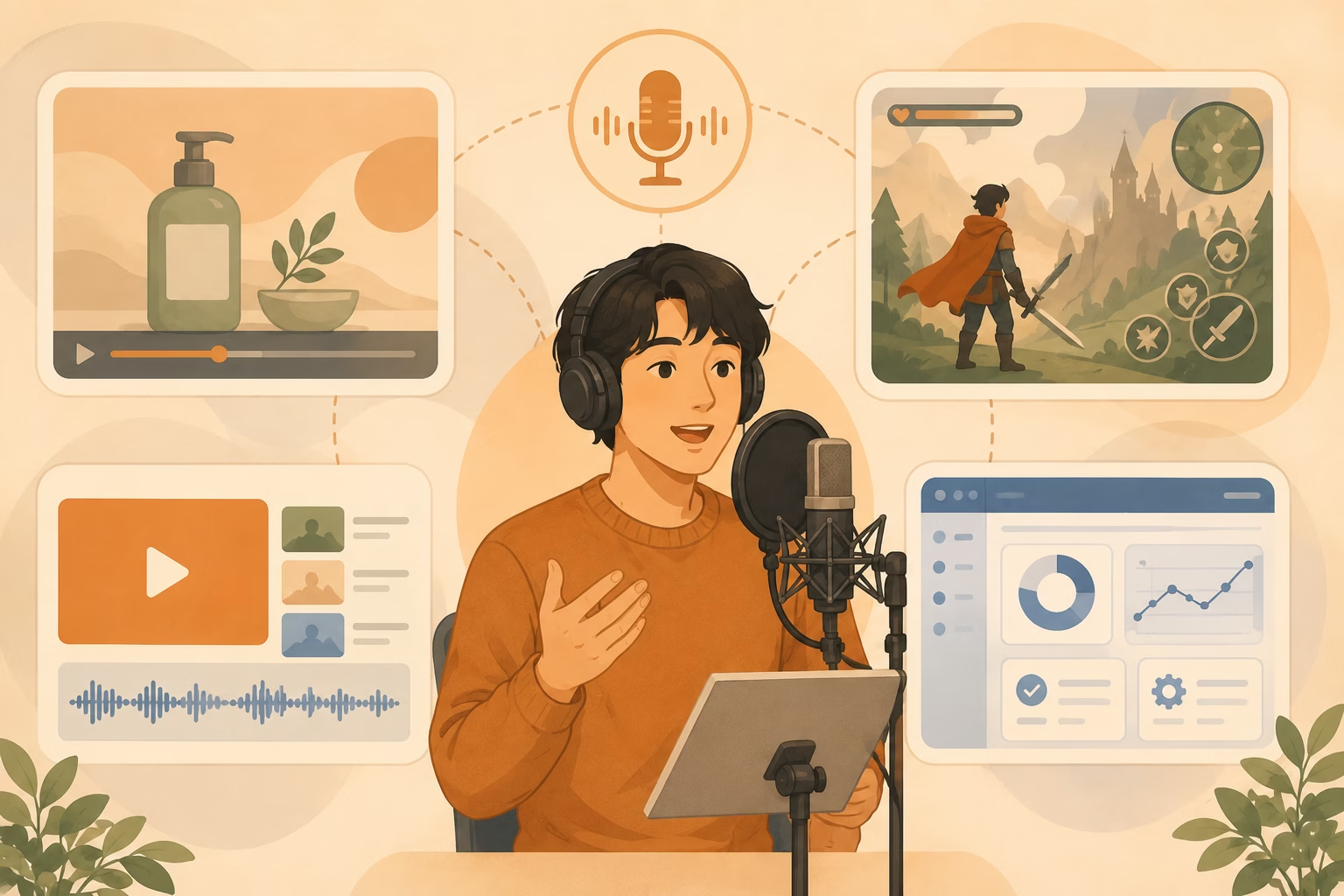
You should consider hiring a native Korean voice actor when the voice directly affects how Korean listeners perceive your brand, product, or story.
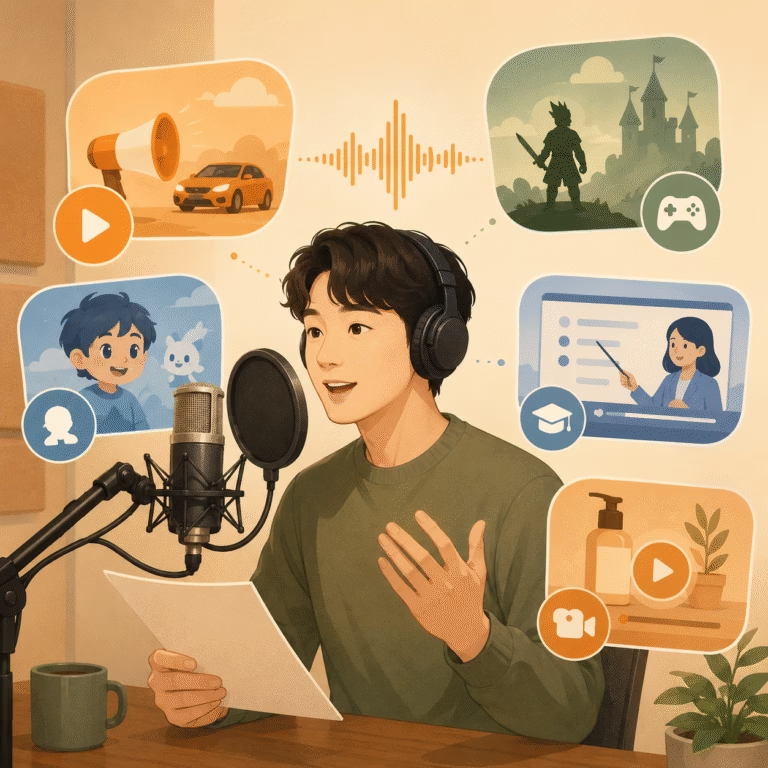
This is especially important for ads, brand videos, games, YouTube localization, SaaS product videos, and any content that needs to sound persuasive, emotional, or trustworthy.
Korean voice over for ads and brand videos
In advertising, the voice does more than read the script. It shapes the viewer’s first impression.
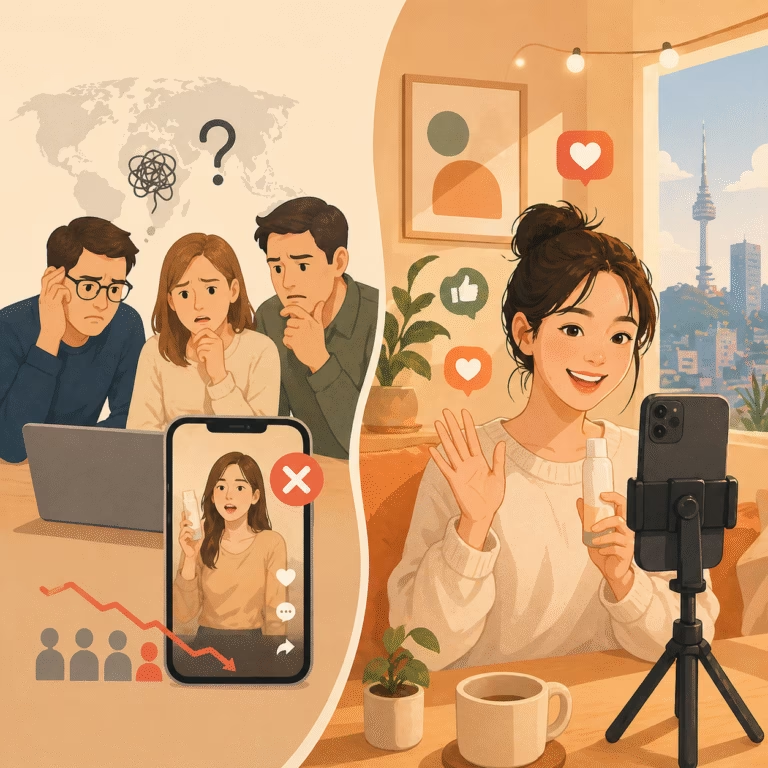
A Korean ad needs the right level of confidence, warmth, clarity, and timing. If the voice sounds slightly robotic or the sentence endings feel unnatural, Korean viewers may not think, “This is AI.” They may simply feel, “This brand sounds awkward.”
That small feeling can reduce trust.
For paid campaigns, this matters even more. If you are spending money to reach Korean customers, the voice should not be the weakest part of the creative.
Korean voice over for games and characters
Games, animation, and character-driven content need emotional control.
A character may need to sound nervous, excited, sarcastic, brave, tired, or playful. These are not just pitch changes. They involve breath, rhythm, pause, intention, and context.
AI voices can imitate emotion to some extent, but character voice over often needs performance. A native Korean voice actor can understand the scene and adjust the delivery based on the character’s relationship, personality, and emotional state.
Korean voice over for YouTube localization
YouTube localization is another area where human voice can make a big difference.
If viewers are going to listen for several minutes, the voice needs to feel natural enough to keep them watching. A voice that is technically clear but emotionally flat can make the video feel less engaging.
For YouTube, the goal is not just translation. The goal is watchability.
A native Korean voice actor can help the video feel like it was made for Korean viewers, not simply converted into Korean.
Korean voice over for SaaS and product videos
For SaaS, apps, and product explainer videos, the voice needs to sound clear and trustworthy.
This is where my marketing background shapes how I approach voice over. In Korean IT marketing, product messaging is not only about explaining features. It is about reducing friction, building trust, and helping users feel that the product is reliable.
A voice over for a Korean product video should do the same.
The tone should be professional but not stiff. Friendly but not too casual. Clear but not overly dramatic. These choices are hard to make if you only adjust speed and pitch inside an AI tool.
What AI Korean voices often miss
AI Korean voices have improved a lot. Some can sound smooth at first.
But Korean voice over is not only about pronunciation.
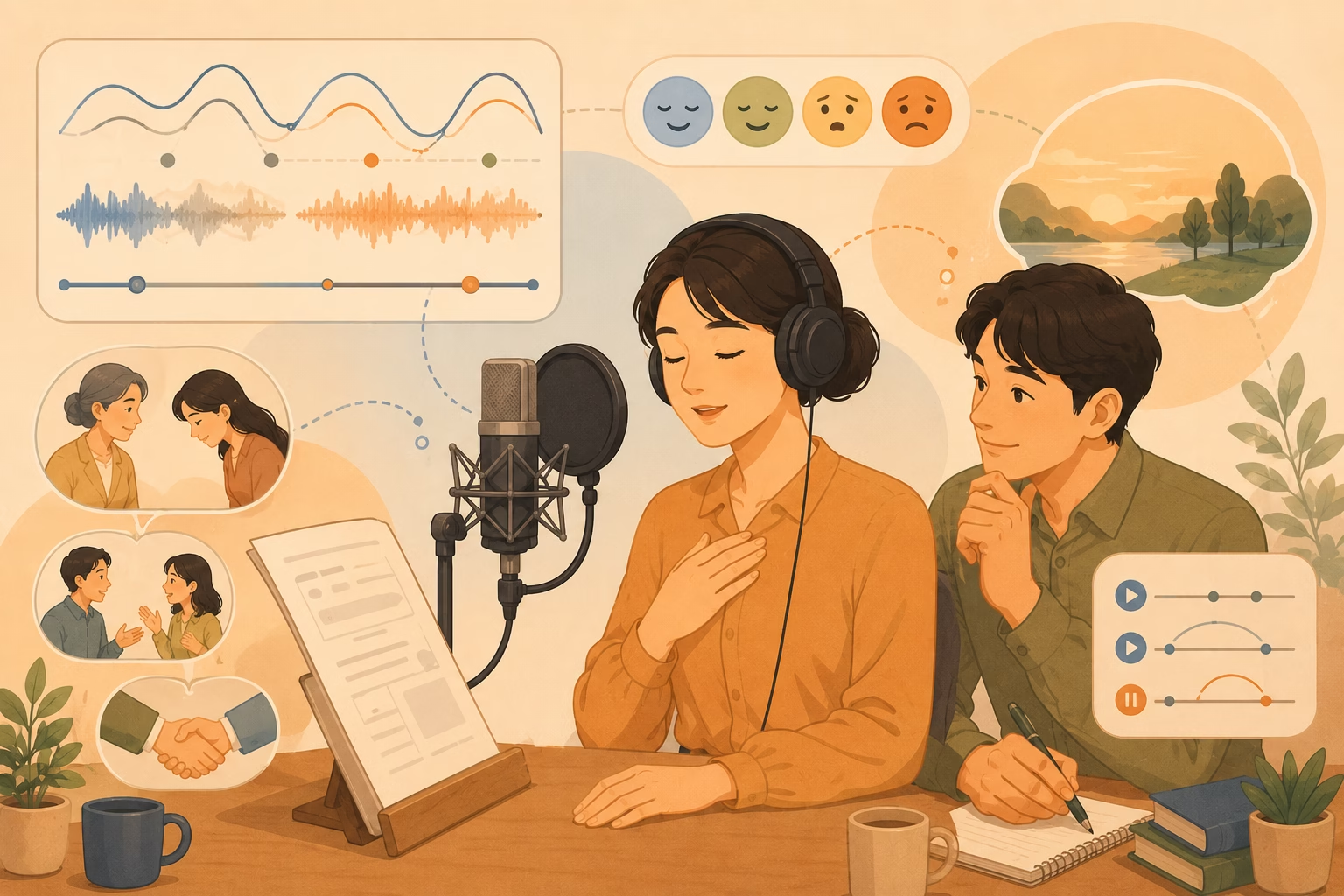
A voice can pronounce Korean words correctly and still feel unnatural. This usually happens because the script, tone, or rhythm does not match how Koreans actually expect the message to sound.
Korean honorifics are not just grammar
Korean honorifics are deeply connected to relationship and context.
The difference between a formal tone, polite conversational tone, and casual tone can change how a brand feels. For example, a product video may need a calm and polite tone, while a mobile app ad may need something more casual and energetic.
If the tone is too formal, the content can feel distant. If it is too casual, it can feel unprofessional.
A native Korean voice actor can read the script and understand whether the level of politeness fits the audience.
Korean sentence endings change the brand personality
In Korean, sentence endings carry a lot of emotional weight.
A sentence ending can make a message feel direct, gentle, premium, friendly, technical, or promotional. This is one reason why a script that is “correct” may still not sound right.
For example, the same message can feel different depending on whether it ends with a formal explanation, a soft suggestion, or a stronger call to action.
This matters in ads, product videos, and brand storytelling.
Natural pacing matters in Korean voice over
Korean and English do not always breathe in the same places.
If a Korean voice over follows the rhythm of the English source too closely, it can sound translated. The words may be Korean, but the flow may not feel native.
A human voice actor can adjust pauses, emphasis, and pacing based on the Korean sentence structure.
Emotion and trust are hard to automate
AI tools often let you adjust speed, tone, pitch, or style.
Those controls are useful, but they are not the same as understanding why a sentence should sound warm, serious, urgent, or reassuring.
For brand content, trust is often built through small details: a softer pause, a more confident ending, a less exaggerated promotional tone, or a more natural way of stressing the key phrase.
Those details are where human Korean voice over still has a strong advantage.
AI vs human Korean voice over: quick comparison
| Criteria | AI Korean voice generator | Native Korean voice actor |
|---|---|---|
| Speed | Very fast | Requires scheduling and recording time |
| Cost | Usually lower | Usually higher |
| Best for | Drafts, tests, simple narration | Ads, games, product videos, brand content |
| Korean nuance | May need review | Naturally handled by a native speaker |
| Honorifics and tone | Can be inconsistent | Can be adjusted by context |
| Emotion | Limited or preset | Directed and performed |
| Character acting | Limited | Stronger choice |
| Brand trust | Depends on use case | Safer for public-facing content |
| Script feedback | Usually not included | Can include Korean script review |
| Final campaign use | Case-by-case | Recommended for high-risk content |
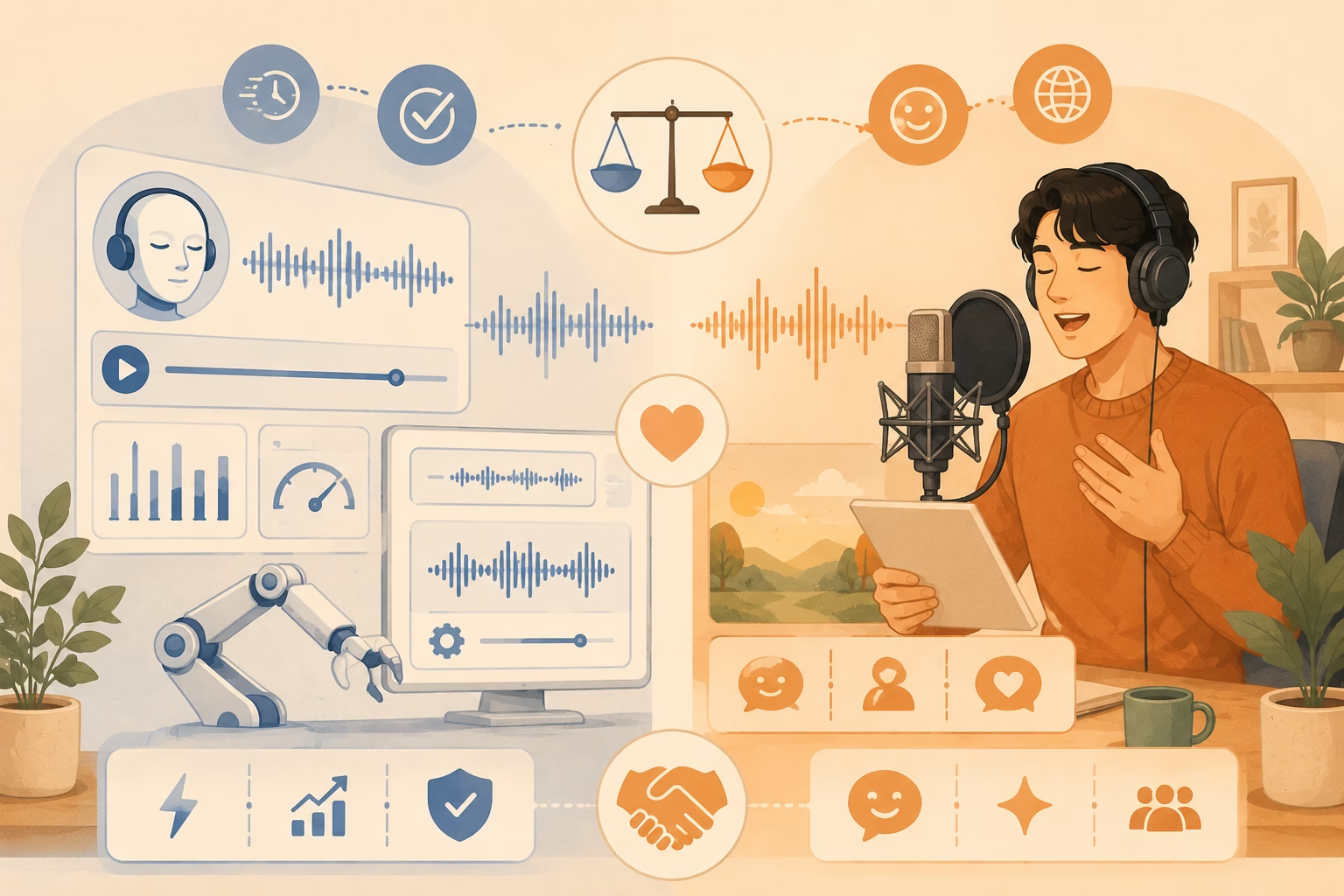
This is the simplest way to decide:
If the content is temporary, internal, or low-risk, AI may be enough.
If the content represents your brand, sells your product, introduces your game, or targets Korean customers directly, a native Korean voice actor is usually the safer choice.
A simple decision checklist
Ask these questions before choosing AI or human Korean voice over.
| Question | If yes, consider a native Korean voice actor |
|---|---|
| Will Korean customers or viewers see this content? | Yes |
| Is this part of a paid ad campaign? | Yes |
| Does the voice represent your brand? | Yes |
| Does the script include emotion, humor, or character acting? | Yes |
| Would an awkward tone reduce trust? | Yes |
| Do you need the Korean script to sound natural, not translated? | Yes |
| Is the content for a game, app, SaaS product, or YouTube channel? | Often yes |
If you answered “yes” to three or more of these questions, it is worth considering a native Korean voice actor.
Not because AI is useless.
But because the cost of an unnatural voice may be higher than the cost of hiring a human voice actor.
Not sure if AI is enough for your project?
Send your Korean script and project type, and I can help you decide whether AI voice over is enough or a native Korean voice actor would be safer.
How a human Korean voice over project works
Hiring a Korean voice actor may sound slower than using AI, but the process can be simple if you prepare the right materials.
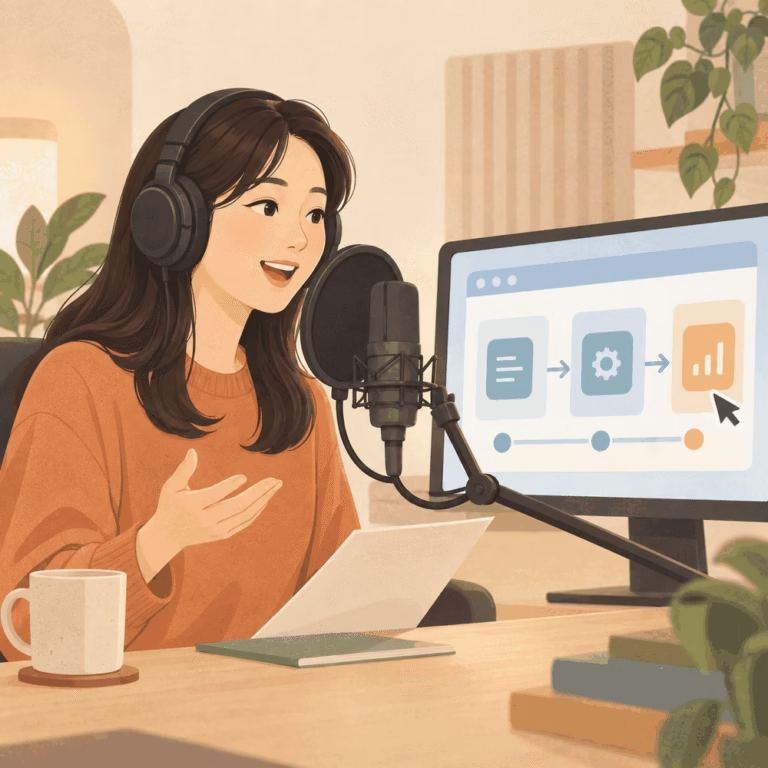
Step 1: Share your script and project context
Start with the Korean script, English source if available, video reference, target audience, and intended platform.
For example, a voice over for a YouTube documentary needs a different tone from a mobile game ad. A SaaS product explainer needs a different rhythm from a character trailer.
The more context you share, the more natural the final recording can be.
Step 2: Review the Korean tone
Before recording, it is helpful to check whether the Korean script sounds natural.
This is especially important if the script was translated from English. Direct translation can create awkward expressions, stiff sentence endings, or unnatural promotional phrases.
In many projects, I review the script not only as a voice actor, but also as a Korean marketer. I look at whether the message would sound natural to Korean listeners and whether the tone fits the brand.
Step 3: Choose the voice direction
The voice direction should be clear before recording.
You can define it with simple words such as:
- Calm and trustworthy
- Friendly and conversational
- Young and energetic
- Premium and polished
- Warm and informative
- Character-driven and expressive
Reference videos can also help. Even if the final voice should not copy another voice, references make the intended mood easier to understand.
Step 4: Record and deliver the final audio
After the tone is clear, the Korean voice over can be recorded and delivered in the agreed format, such as WAV or MP3.
For video projects, it is also useful to share timing requirements. If the Korean audio needs to match an existing video, pacing and sentence length may need to be adjusted.
Step 5: Handle revisions clearly
A good voice over workflow should also define what counts as a revision.
For example, fixing pronunciation, adjusting tone, or correcting a small read may be handled differently from rewriting the script after recording. Clarifying this early helps both sides avoid confusion.
FAQ about Korean voice over
Is AI Korean voice over good enough?
AI Korean voice over can be good enough for drafts, internal reviews, simple narration, or early localization testing. But for ads, brand videos, games, YouTube localization, and product videos, a native Korean voice actor is usually safer because tone, pacing, emotion, and Korean nuance matter more.
What is the difference between Korean text to speech and Korean voice over?
Korean text to speech usually means generating audio from written Korean text using software. Korean voice over usually refers to recorded narration or performance for a video, ad, game, course, or branded content. Text to speech is a tool. Voice over is a creative and communication process.
Do I need a native Korean voice actor for Korean ads?
If the ad will be seen by Korean customers, yes, it is usually a good idea. Korean ads need natural pacing, persuasive tone, and the right level of politeness. A voice that sounds slightly unnatural can make the brand feel less localized.
Can I use AI Korean voice for YouTube localization?
You can use AI Korean voice for testing or low-risk content. But if you want Korean viewers to watch for longer and feel connected to the content, a native Korean voice actor can help make the video sound more natural and engaging.
How much does Korean voice over cost?
The cost depends on script length, usage, project type, delivery format, revision scope, and whether the recording is for paid advertising or organic content. A short internal narration and a commercial ad should not be priced the same way because the usage value is different.
Can a Korean voice actor also review my script?
Yes. In many Korean voice over projects, script review is very helpful, especially when the Korean script was translated from English. A native Korean voice actor can point out expressions that are grammatically correct but sound unnatural, too formal, or too translated.
Need a natural Korean voice over?
AI Korean voice over tools are useful. They are fast, convenient, and practical for drafts, internal testing, and simple narration.
But Korean voice over for public-facing content is different.
If your video represents your brand, promotes your product, introduces your game, or speaks directly to Korean customers, the voice needs to do more than pronounce Korean words correctly. It needs to sound natural, trustworthy, and appropriate for the context.
That is where a native Korean voice actor can help.
A human voice can adjust the tone, pacing, emotion, honorifics, and script nuance in a way that fits Korean listeners. For ads, games, YouTube localization, SaaS product videos, and brand content, that difference can affect how your message is received.
If you are not sure whether AI is enough for your Korean voice over project, send me your script and project type. I can help you check whether a native Korean recording would be the better choice.
Need a Korean voice over that sounds native, not just translated?
Share your script, video type, and target audience. I’ll help you review the Korean tone and record a natural voice over for your project.
Get a Natural Korean Voice Over