
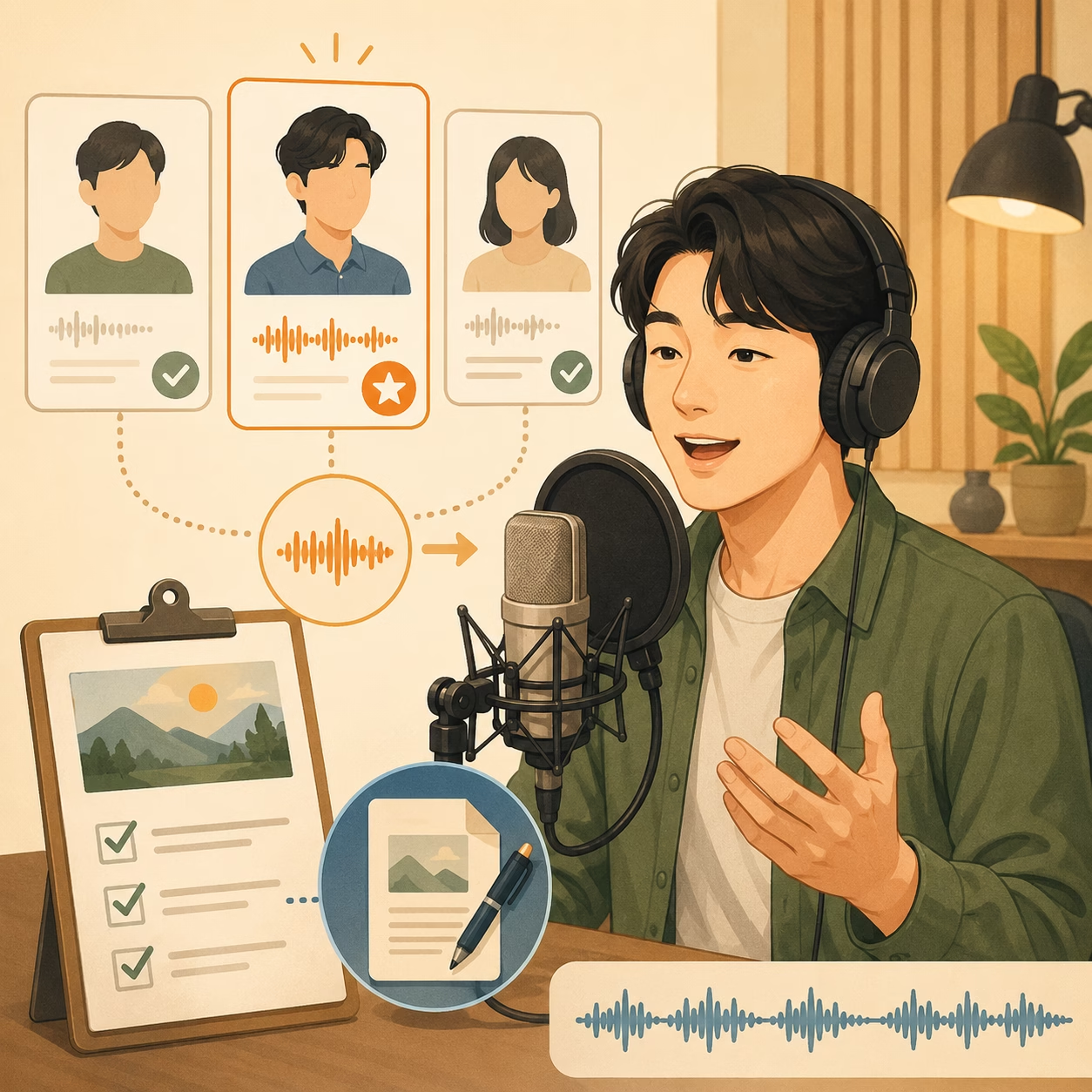
Korean Voice-Over Agency: How to Choose the Right One
Finding the right Korean voice-over agency involves more than choosing a voice that sounds good.
The provider also needs to understand Korean pronunciation, speaking style, cultural context, recording quality, and commercial usage requirements. A voice that works well for a corporate presentation may not be suitable for a mobile game, commercial, eLearning course, or product tutorial.
A full-service agency can be useful when a project requires multiple actors, complex casting, or ongoing production management. For projects that need one consistent Korean voice, however, working directly with a native Korean voice talent may offer a simpler and more efficient process.
This guide explains what Korean voice-over agencies typically provide, how they differ from freelance voice talent, and what to check before hiring a Korean voice provider.
What Does a Korean Voice-Over Agency Do?
A Korean voice-over agency helps clients find and manage Korean voice talent for different types of audio and video projects.
Depending on the agency, its services may include:
- Voice casting
- Custom auditions
- Recording coordination
- Script review
- Korean translation or localization
- Pronunciation checks
- Live-directed recording sessions
- Audio editing
- File splitting and naming
- Revision management
- Commercial usage rights
- Final audio delivery
Some agencies specialize only in Korean voice-over, while others provide multilingual voice production across many countries.
Larger agencies may have access to a broad roster of male, female, child, character, and regional voice talent. They may also coordinate recording studios, engineers, translators, and project managers.
However, not every project requires this level of production support.
Korean Voice-Over Agency vs. Freelance Voice Talent
One of the first decisions is whether to hire an agency or work directly with a freelance Korean voice actor.
Neither option is automatically better. The right choice depends on the size, complexity, and goals of the project.
Working With a Korean Voice-Over Agency
An agency may be a better choice when the project requires:
- Several Korean voice actors
- Multiple characters
- A wide range of voice options
- Complex casting
- Studio coordination
- Long-term production management
- Korean translation and recording together
- Large volumes of audio
- Ongoing revision management
The agency acts as a central point of contact and handles communication with the actors, studio, director, translator, and audio engineer.
This can save time for larger productions, although agency fees and management costs may increase the overall budget.
Working Directly With a Freelance Korean Voice Talent
A freelance voice actor may be more suitable when the project requires:
- One consistent voice
- Direct communication
- Faster feedback
- A simple recording process
- Corporate narration
- eLearning content
- Product tutorials
- App demonstrations
- YouTube narration
- Social media advertisements
- Explainer videos
- IVR or phone system recordings
Direct communication can make it easier to explain pronunciation, tone, pacing, and revision requests. It may also reduce the number of people involved in the production process.
Before choosing a freelancer, review their Korean voice-over services and samples, and confirm that they have reliable recording equipment, relevant experience, and a clear process for revisions and usage rights.
Projects involving translated video content may also require YouTube video localization for Korean audiences, including script adaptation, subtitles, and voice-over.
When Should You Hire a Korean Voice-Over Agency?
A Korean voice-over agency is particularly helpful when casting and production coordination are important parts of the project.
Projects With Multiple Characters
Games, animations, and fictional content may require several actors with distinct ages, personalities, and vocal styles.
An agency can help organize auditions and ensure that the selected voices work well together.
Large Advertising Campaigns
A regional or global advertising campaign may involve:
- Multiple versions of the same script
- Broadcast usage
- Different campaign periods
- Several Korean actors
- Live direction
- Strict delivery deadlines
An agency can manage the actors, usage agreements, recording sessions, and final delivery.
Long-Form Dubbing
Documentaries, online series, training programs, and entertainment content may require several hours of recording.
Long-form projects often benefit from structured project management and consistent quality control.
Multilingual Localization
When a company needs Korean voice-over together with several other languages, a multilingual agency may simplify communication by managing all languages through one provider.
The trade-off is that the Korean recording may be handled through several layers of project management rather than through direct communication with the talent.
What to Look for in a Korean Voice-Over Provider
Whether working with an agency or an individual actor, several factors should be checked before making a decision.
1. Native Korean Language Ability
The actor should have native-level Korean pronunciation and understand how Korean is naturally spoken.
Correct pronunciation alone is not enough. The delivery should also match the intended audience, context, and level of formality.
2. Relevant Voice Samples
Listen to samples that are similar to the project.
A voice actor may sound excellent in a dramatic commercial but may not be the right choice for an instructional video or corporate presentation.
Useful sample categories include:
- Commercial
- Corporate narration
- eLearning
- Documentary
- App tutorial
- Character voice
- Product demonstration
- YouTube narration
3. Recording Quality
Ask how and where the recordings are produced.
A professional provider should be able to deliver clean audio without excessive background noise, room echo, clipping, or inconsistent volume.
The required technical specifications should also be confirmed before recording. These may include:
- WAV or MP3 format
- Sample rate
- Bit depth
- Mono or stereo
- Separate files
- File naming requirements
4. Clear Revision Policy
Clarify what happens when revisions are needed.
There is an important difference between:
- A recording mistake
- A pronunciation correction
- A direction change
- A revised script
- Additional lines
- A complete rerecording
The quote should explain which revisions are included and which changes may require an additional fee.
5. Commercial Usage Rights
Voice-over pricing is not based only on script length. The quote may also depend on how the recording will be used.
Important usage details include:
- Organic or paid media
- Internal or public use
- Social media advertising
- Online commercial use
- Television or radio
- Usage period
- Distribution region
- Brand size
- Campaign budget
Provide these details before requesting a final quote.
6. Communication and Responsiveness
Good communication is especially important when the client does not speak Korean.
The provider should be able to explain pronunciation issues, identify unnatural translated phrases, and ask questions when the intended meaning is unclear.
Direct and detailed communication can prevent expensive rerecordings later.
Korean Language and Cultural Considerations
Korean voice-over requires more than reading a translated script.
Several linguistic and cultural details can affect how natural and persuasive the final recording sounds.
Standard Korean and Regional Dialects
Standard Korean, largely based on the Seoul dialect, is normally used for corporate videos, commercials, training content, apps, and general narration.
Regional dialects may be appropriate for:
- Local characters
- Comedy
- Entertainment
- Regional campaigns
- Stories requiring a specific identity
A regional dialect should not be used only because it sounds distinctive. It needs to fit the character, setting, and purpose of the content.
Formality and Speech Level
Korean has several levels of politeness and formality.
A script may sound:
- Formal and professional
- Friendly and conversational
- Respectful but approachable
- Casual
- Authoritative
- Energetic
The correct level depends on the audience and the relationship between the speaker and listener.
A direct translation from English may use a style that feels too formal, too casual, or inconsistent in Korean.
English Brand Names and Foreign Words
Korean scripts often contain:
- Company names
- Product names
- Technical terms
- Abbreviations
- English phrases
- Names of people or places
The client should provide reference pronunciations when possible.
The Korean voice actor may pronounce a brand name differently depending on whether the intended sound follows English pronunciation or the commonly used Korean pronunciation.
Natural Spoken Korean
Written Korean and spoken Korean are not always the same.
A translated sentence may be grammatically correct but still sound stiff when read aloud.
Before recording, the script may need adjustments to:
- Shorten long sentences
- Improve breathing points
- Simplify difficult phrases
- Match the timing of the video
- Create a more conversational rhythm
- Remove unnecessary repetition
This process is often called script adaptation, transcreation, or voice-over localization.
Professional Korean localization services can help adapt translated scripts so they sound natural when spoken aloud.
The Korean Voice-Over Production Process
A clear workflow helps reduce delays and unnecessary revisions.
Step 1: Share the Project Details
Provide:
- Final script
- Reference video
- Intended audience
- Preferred voice style
- Usage information
- Deadline
- Audio specifications
- File naming requirements
The more information provided at the beginning, the easier it is to prepare an accurate quote.
Step 2: Select the Voice
The agency may provide several demos or arrange custom auditions.
When working with a freelance actor, review the actor’s existing samples and explain the desired tone using clear references.
Descriptions such as “natural,” “professional,” or “energetic” can be interpreted differently. A reference video or sample is often more useful.
Step 3: Review the Korean Script
The Korean script should be checked for:
- Pronunciation
- Grammar
- Natural phrasing
- Tone
- Timing
- Brand terminology
- Consistency
Any unclear terms should be resolved before recording.
Step 4: Record a Sample
For larger projects, a short sample may help confirm:
- Tone
- Speed
- Energy
- Pronunciation
- Acting direction
Approving a sample before the full recording can prevent major revisions.
Step 5: Complete the Recording
The voice actor records the full script according to the approved direction.
Long projects may be divided into sections to make review easier.
Step 6: Quality Check
The recording should be reviewed for:
- Missing words
- Mispronunciations
- Background noise
- Editing errors
- Inconsistent volume
- Incorrect file names
Step 7: Deliver the Final Files
The files are delivered in the agreed format.
For projects requiring separate files, the provider may split and name each recording according to a spreadsheet or script ID.
Step 8: Handle Revisions
The client reviews the recording and submits organized feedback.
Time-coded notes or clearly marked script changes make the revision process much faster.
Questions to Ask Before Hiring
Before selecting a Korean voice-over agency or freelance actor, ask the following questions:
- Is the voice actor a native Korean speaker?
- Can I listen to relevant voice samples?
- Is Korean script review included?
- Can the provider identify unnatural translations?
- What recording equipment is used?
- What audio format will be delivered?
- Are edited and raw files available?
- How many revisions are included?
- What happens if the script changes?
- What usage rights are included?
- Is a custom audition available?
- Can the actor follow video timing or time codes?
- Can files be split and named separately?
- What is the expected turnaround time?
- Is live direction available?
These questions make it easier to compare providers based on the actual production process rather than price alone.
How Much Does Korean Voice-Over Cost?
Korean voice-over rates vary depending on the project.
The main pricing factors include:
- Script length
- Number of words
- Estimated recording time
- Content type
- Number of actors
- Character complexity
- Audio editing
- File splitting
- Live direction
- Delivery deadline
- Commercial usage
- Usage period
- Distribution region
- Number of revisions
A short paid advertisement may cost more than a longer internal training video because the commercial usage is different.
To receive an accurate quote, provide both the script and the usage information.
A quote based only on the number of words may not include the correct commercial rights.
Agency or Freelance Talent: Which Is Right for the Project?
A Korean voice-over agency is usually the better option when a project requires multiple actors, complex casting, large-scale production management, or several languages.
Working directly with a freelance Korean voice talent may be more efficient when the project needs one consistent voice and straightforward production.
The right provider should offer:
- A suitable voice
- Native Korean delivery
- Reliable recording quality
- Clear communication
- Transparent pricing
- Appropriate usage rights
- A structured revision process
The goal is not simply to find someone who can speak Korean. It is to find a voice provider who understands the project and can deliver audio that sounds natural to Korean listeners.
Frequently Asked Questions
What does a Korean voice-over agency do?
A Korean voice-over agency helps clients cast Korean voice actors and may also coordinate auditions, recording sessions, script review, audio editing, revisions, and usage rights. The exact services depend on the agency and the scale of the project.
Should I hire an agency or a freelance Korean voice actor?
An agency is often suitable for projects requiring multiple actors, complex casting, or extensive production management. A freelance Korean voice actor may be more efficient when the project needs one consistent voice and direct communication.
How much does Korean voice-over cost?
The cost depends on factors such as script length, content type, commercial usage, distribution region, editing requirements, turnaround time, and the number of revisions. Both the script and usage details should be provided when requesting a quote.
Can a Korean voice actor review my translated script?
Some Korean voice actors can identify unnatural expressions, pronunciation issues, and sentences that are difficult to deliver naturally. More extensive rewriting or transcreation may require a separate Korean localization service.
Do I need a Seoul accent for Korean voice-over?
Standard Korean, which is largely based on the Seoul dialect, is commonly used for corporate, commercial, instructional, and general narration projects. Regional dialects are more suitable when they support a specific character, setting, or campaign concept.
Need a Native Korean Male Voice Actor?
If your project requires one natural and professional Korean male voice, working directly with a native Korean voice actor can simplify communication and production.
Korean male voice-over is available for:
- Corporate videos
- Commercials
- eLearning courses
- Product tutorials
- App demonstrations
- YouTube videos
- Documentaries
- Training content
- IVR and phone systems
- Brand storytelling
Listen to my Korean voice-over samples to review the available voice styles.
If the script also needs to be reviewed or adapted for Korean audiences, learn more about my Korean localization services.
Tell Me About Your Korean Voice-Over Project
Share your script, intended usage, preferred voice style, and deadline through the form below. I will review the details and get back to you with a personalized quote.