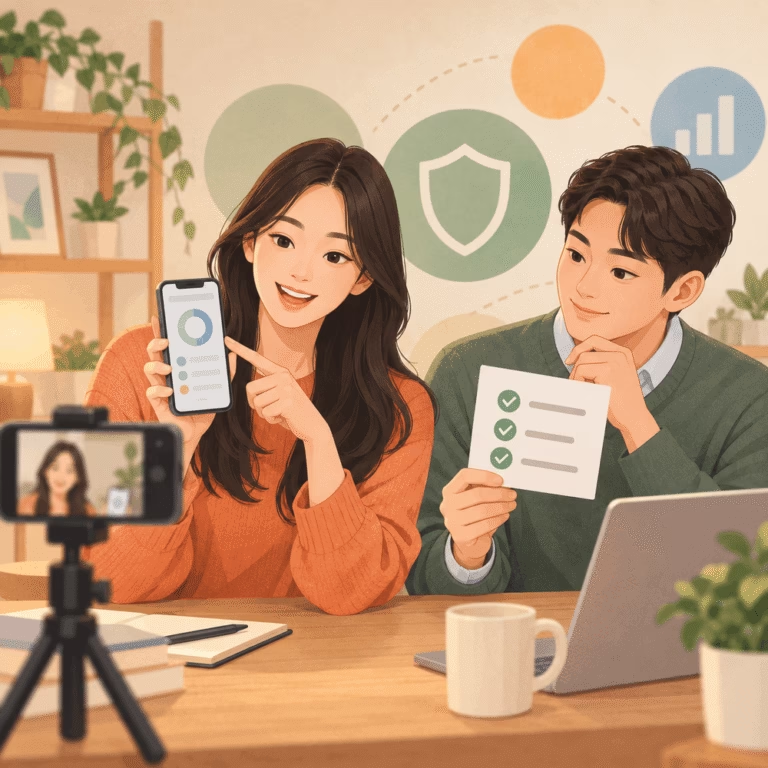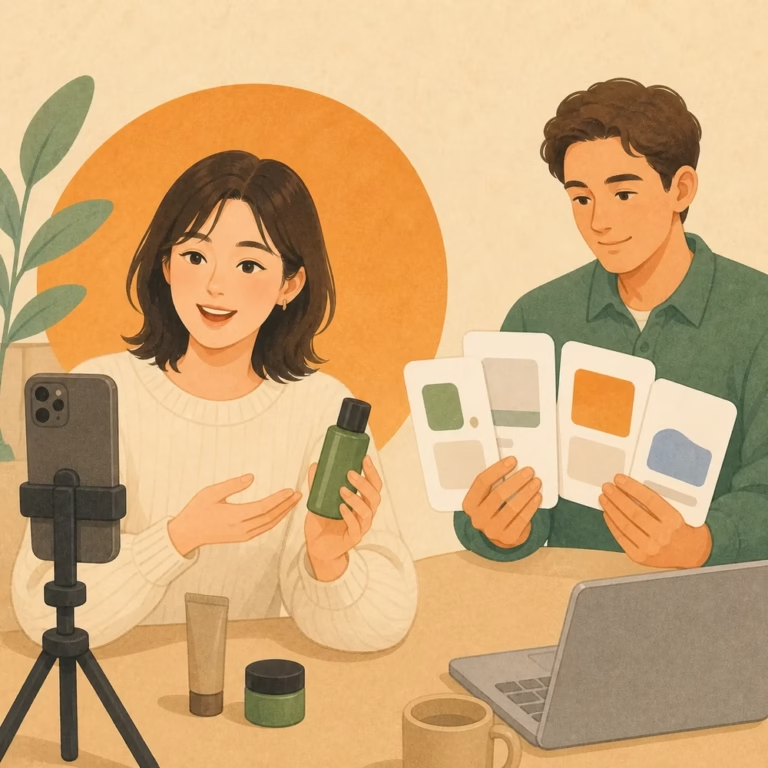
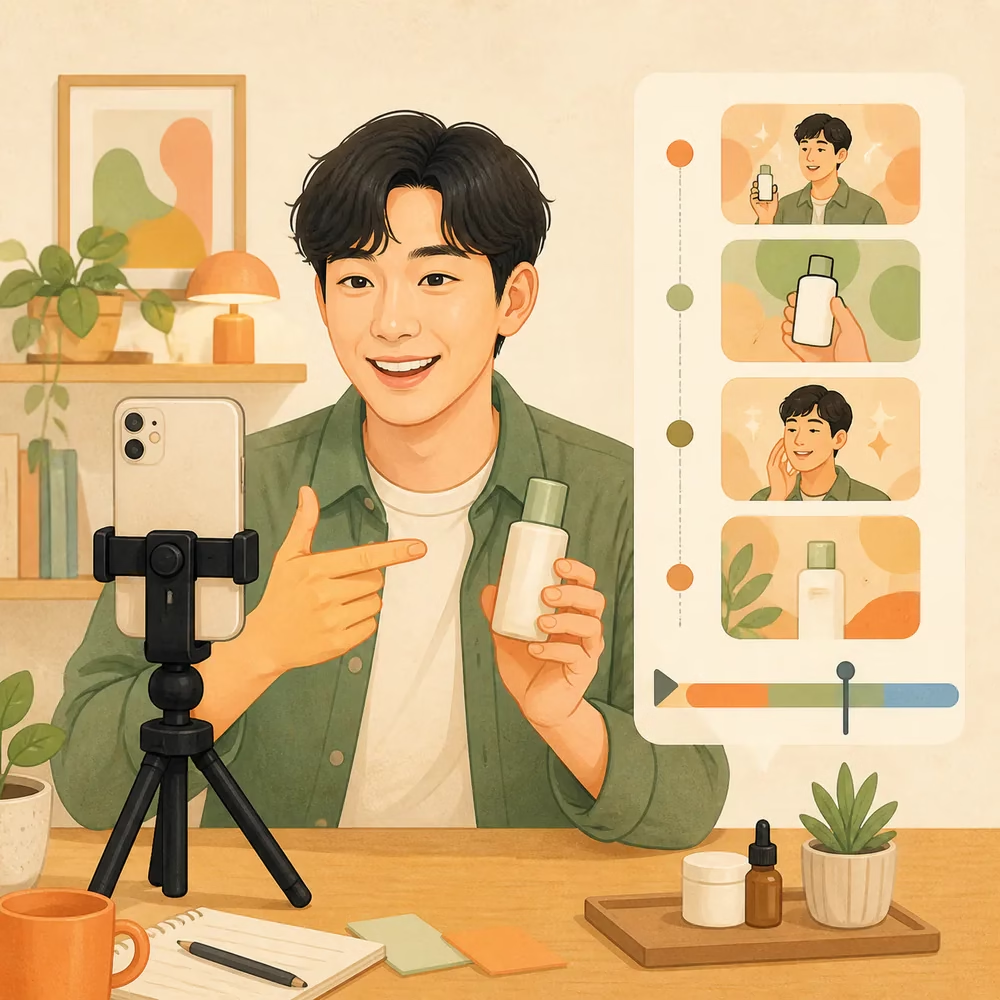
Short-form UGC video can look natural on a creator’s phone and still feel imported to Korean viewers. The problem is rarely the camera. It is usually the message: an English hook translated word for word, a product benefit that arrives too late, captions that sound written rather than spoken, or a call to action that does not match how the audience evaluates the offer.
For teams searching for Short-form UGC video for Korean audience, the practical goal is not to make a generic UGC ad with Korean subtitles. It is to build one believable Korean viewing moment, then create controlled variations that can be tested without losing that local fit.
This guide explains how to plan the angle, structure the script, brief a creator, review the Korean, and decide when a Korea-based creator should be involved.
Why Can a Successful Global UGC Concept Miss Korean Viewers?
A global reference video can be useful, but it is not a finished Korean brief. Viewers notice more than grammatical accuracy. They notice whether the situation feels familiar, whether the creator’s relationship to the product is believable, and whether the language matches the category.
Three problems appear often when foreign brands adapt short-form content for Korea:
- The hook preserves the English wording but loses the reason a Korean viewer should care.
- The creator lists features instead of showing one recognizable use case.
- Korean speech, on-screen captions, interface language, and the landing page use different terms or levels of formality.
That inconsistency creates friction. A video may be visually attractive yet still make the product feel distant or unfinished. Start by defining the viewer, the situation, and the decision the video should support. Translation comes after those choices.
If the project also involves selecting local talent, the guide to hiring a TikTok UGC creator based in Korea explains how to separate creator production, influencer distribution, and paid usage rights.
What Makes a Short-Form UGC Video for Korean Audiences Feel Native?
A native-feeling video does not need Korean landmarks, trends, or cultural references in every shot. Those details can become decoration if they are unrelated to the product. The stronger signals are usually smaller and more functional.
A situation the target user recognizes
Show a moment that makes sense for the category: checking an app during a commute, comparing a product before ordering, trying a feature after a recurring frustration, or explaining a result to a friend. The setting should support the product story instead of trying to prove that filming happened in Korea.
Spoken Korean that fits the relationship
Korean offers several levels of politeness and distance. A friendly beauty review, a finance-app explanation, and a B2B software demonstration should not sound identical. Decide whether the creator is speaking as a peer, an informed user, a guide, or a professional reviewer. That role determines vocabulary, sentence endings, pace, and how directly the offer should be presented.
Captions written for the screen
Do not paste a transcript onto the video. Short captions should carry one idea at a time, remain readable within the platform’s safe area, and use the same product terminology as the app or landing page. Embedded English text should also be reviewed; automatic caption tools do not repair wording already designed into the footage.
Product proof before explanation becomes abstract
The viewer should see what the product changes. For a physical product, that may be texture, use, fit, or a before-and-after state that can be shown honestly. For an app or SaaS product, it may be one screen action followed by one clear outcome. A broad promise without visible evidence feels like an advertisement, not a recommendation.
How Should the First 15 to 30 Seconds Be Structured?
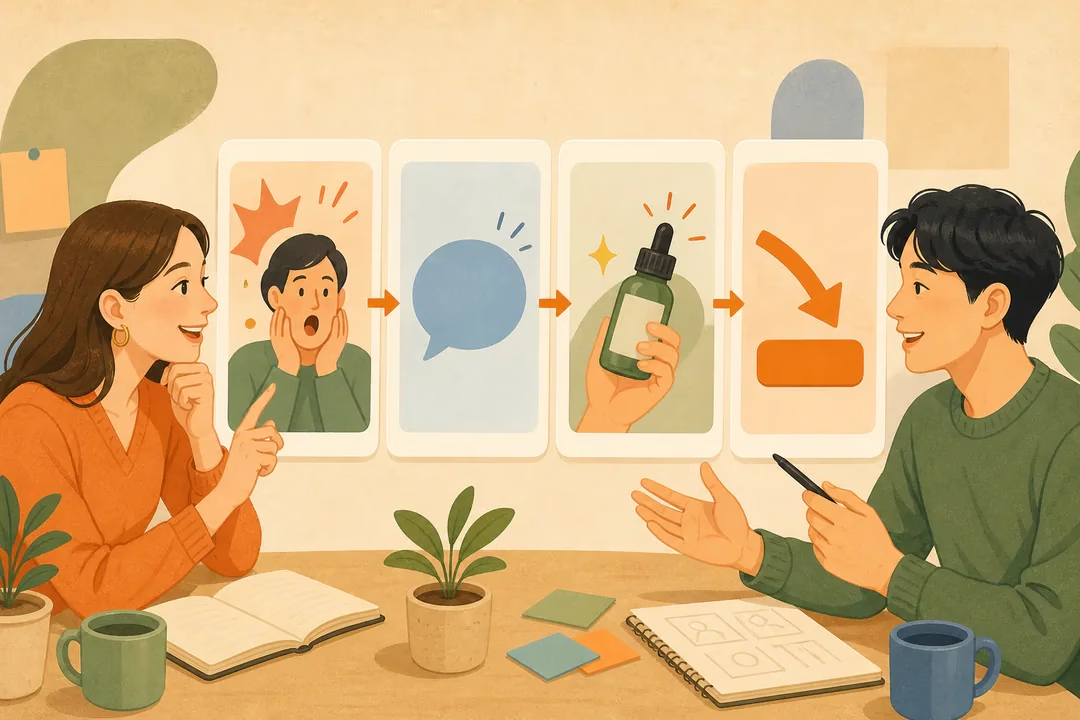
Platform guidance changes, but the creative logic remains useful: earn attention, establish relevance, prove the point, and ask for one action. TikTok describes a simple hook, body, and close structure, while Meta recommends vertical creative with important elements kept in the safe zone for Reels ads.
Use those principles as a production baseline, then localize the substance.
1. Hook: identify one Korean viewer problem
The opening should make the right viewer think, “That is my situation.” Avoid empty lines such as “You need to see this” unless the next image immediately pays off the claim. A useful hook can be a specific frustration, a surprising product use, a direct comparison, or a result that the footage can demonstrate.
2. Context: make the creator’s role clear
The audience should understand why this person is talking about the product. Are they trying it for the first time, using it in a routine, explaining a feature, or comparing options? Do not present a paid creator as a long-term customer unless that experience is true.
3. Proof: show one feature in action
Choose one product moment rather than a rushed feature tour. For an app, record the precise interaction the viewer needs to understand. For a consumer product, capture the use, texture, sound, fit, or visible change that supports the claim.
4. Close: give one next step
Match the CTA to the campaign stage. “Learn more” may suit a complex product. A limited offer may need a clear condition. An app-install video should show what happens after the click. Avoid combining several actions in one short close.
The first production should also include variations. Record two or three hooks, at least one alternative opening visual, and a clean ending that can support different CTAs. Variation is cheaper to plan during filming than to recreate after the edit is approved.
What Should a Korean UGC Creator Brief Include?
A good brief controls the facts without forcing every spoken word. It should give the creator enough context to sound natural and enough constraints to protect the product.
Include the following:
- Target audience: location, age or life stage, language, category familiarity, and the problem they recognize.
- Campaign objective: awareness, consideration, install, lead, trial, purchase, or retargeting.
- Creator role: customer, first-time user, peer, expert, demonstrator, or scenario performer.
- Core message: one problem, one benefit, and one proof point.
- Approved claims: what the creator may say, what requires qualification, and what must not be implied.
- Product access: the correct build, account, sample, product variant, and safe demo data.
- Language rules: Korean tone, pronunciation, terminology, subtitle language, and whether bilingual versions are needed.
- Deliverables: aspect ratio, duration, edited files, clean footage, hook variations, captions, music, and thumbnails.
- Review process: who approves product accuracy, Korean language, brand fit, and legal or platform requirements.
- Usage rights: organic or paid use, channels, markets, duration, editing permission, creator-handle authorization, and raw-footage rights.
For software, one feature and one viewer problem are usually more persuasive than a compressed product tour. The Korean UGC guide for SaaS startups shows how to scope a product demonstration, while the language-learning app creator guide explains how creator role and Korean-language accuracy interact in an educational product.
Which Production Choices Build Trust With Korean Audiences?
“Authentic” does not mean careless. The content can feel casual while the production system remains controlled.
Keep the setting plausible
Use an everyday environment that supports the use case. A deliberately staged Korean backdrop can distract from the product. Clean audio, readable captions, and an uncluttered frame usually matter more than location symbolism.
Let the creator speak, not recite
Give the creator message points and required facts, then allow natural connective language. A Korean script written as a translation often has long sentences and compressed nouns that are difficult to perform. Read the lines aloud and shorten them before filming.
Keep terminology consistent
The spoken line, subtitle, product interface, store listing, and landing page should name the feature the same way. If the creator says one term while the screen shows another, the viewer has to resolve the mismatch.
Protect credibility
Use demonstrations and first-use observations when the creator has not experienced a long-term result. Do not script a testimonial that implies personal success without a factual basis. Disclose paid relationships according to the relevant platform and market requirements, and confirm music, footage, and advertising rights before launch.
How Should You Review and Test Korean UGC?
Do not combine every review question into “Does this look good?” Use separate passes so that an attractive edit does not hide a language or product problem.
Korean language review
Check pronunciation, spacing, captions, honorific level, natural sentence rhythm, and product terminology. Review the final edit, not only the script, because timing and line breaks can change how the message is understood.
Product-truth review
Confirm that the correct interface, product variant, price, offer, and use sequence appear on screen. Make sure the demonstration supports the spoken claim and does not expose private or unstable test data.
Creative review
Watch once without sound and once without reading the captions. The viewer should still recognize the problem, product, and next action. Confirm that important elements remain visible in vertical safe areas.
Commercial review
Verify usage period, markets, paid-media permission, creator-handle access, revision scope, music rights, and delivery files. These terms should be agreed before a winning asset receives additional spend.
Performance test
Test one variable at a time where practical: opening line, first visual, product proof, or CTA. Evaluate metrics that match the objective, such as early retention, completed views, click-through, qualified visits, installs, or leads. A view count alone cannot explain whether the Korean message or the offer worked.
When Should You Hire a Korea-Based UGC Creator?
A Korea-based creator is especially useful when the production depends on natural spoken Korean, local product access, Korean settings that are genuinely relevant, app or payment flows available only in Korea, or fast feedback on whether a translated concept feels believable.
Location alone is not enough. Review the creator’s ability to interpret a brief, explain the product, deliver the required Korean register, provide controlled variations, and work within the planned rights and review process. If you need production rather than distribution, prioritize on-camera clarity and workflow reliability over follower count.
You can review Korean UGC production examples and service options before deciding whether you need scripting, filming, voice-over, editing, or a combined deliverable.
Frequently Asked Questions
Should the video be Korean-only or bilingual?
Use Korean when the primary viewer evaluates and uses the product in Korean. A bilingual version can help when the audience naturally uses both languages or when a global team needs reusable assets, but it should be adapted as its own edit. Do not assume that adding English subtitles to a Korean performance, or Korean subtitles to an English performance, creates the same viewing experience.
How many versions should the first test include?
Begin with one controlled concept and enough variation to learn: two or three hooks, one or two opening visuals, and a clear CTA option. The right number depends on budget and media plan, but every version should answer a specific testing question. A larger batch of nearly identical edits creates volume without useful learning.
Build One Believable Korean Viewing Moment First
Effective Short-form UGC video for Korean audience is not a translated global asset with local captions attached. It is a small product story designed around a Korean viewer’s situation, delivered in natural Korean, supported by visible proof, and reviewed as both language and advertising creative.
Start with one audience, one problem, one product moment, and one CTA. Brief the creator clearly, record useful variations, and review Korean fit separately from edit quality. Once that core version is credible, the campaign has a stronger foundation for testing and scale.
If you need a Korean creator who can help adapt the concept, shape the script, record natural Korean delivery, and produce short-form assets for paid or organic use, share your product, target audience, reference videos, required deliverables, and intended channels in the project form below.