A language-learning app can have an excellent lesson design and still produce UGC that feels unconvincing. The creator may speak Korean fluently, yet the learner persona is unclear. The screen recording may look clean, yet it never shows the moment that makes the app useful. The script may be grammatically correct, yet the tone sounds like translated advertising rather than a real recommendation.
Hiring a Korean UGC creator for language learning apps therefore requires more than finding a native speaker with a good camera. You need a creator who can understand the learner, demonstrate the product truthfully, deliver Korean naturally, and follow a review process that protects both educational accuracy and ad performance.
This guide shows global app teams what to decide before hiring, what to include in the brief, and how to approve a pilot without turning natural UGC into a stiff product commercial.
Why language-learning app UGC needs more than a native speaker
Language-learning products sell a change in confidence or ability, but that change is difficult to show in a short video. A creator cannot simply hold up a phone and say that an app is useful. The viewer needs to recognize a learning problem, see one relevant product interaction, and understand what to do next.
The first question is not, "Is this person Korean?" It is, "What role should this person play for the learner?" A native Korean creator can model pronunciation, explain a cultural nuance, demonstrate a realistic conversation, or react to a learner’s common mistake. A genuine Korean learner can document progress or frustration from the learner’s point of view. Those are different roles, and asking one creator to perform both can make the story less believable.
While producing Korean UGC and collaborating with global teams, I have often seen briefs specify the hook, duration, and call to action but leave the creator’s role undefined. That gap causes larger revisions than camera or editing issues because it affects every line in the script.
Choose the creator profile before reviewing portfolios
A strong portfolio is useful only when you know what you are looking for. Define the viewer and the creator persona before comparing samples. Start with these decisions:
- Target learner: age range, location, first language, current Korean level, and reason for learning.
- Campaign objective: awareness, app-store visit, free-trial start, lesson completion, or re-engagement.
- Creator role: native-language guide, bilingual explainer, peer learner, product reviewer, or scenario performer.
- Distribution: brand-owned paid ad, organic brand account, creator account, or a combination.
- Performance style: calm teaching, humorous correction, everyday conversation, reaction, or direct demonstration.
Then review whether the creator can deliver the required Korean register. A beginner-focused app may need patient, clearly paced speech. A speaking-practice product may need natural conversational rhythm. A business-Korean product may require formal vocabulary and controlled delivery. "Native Korean" is not a complete creative direction.
If the asset will run from the brand’s account, follower count may be far less important than on-camera clarity, believable delivery, and the ability to produce controlled variations. This is one reason to separate UGC production from influencer distribution when you write the scope.
What to ask a Korean UGC creator for language learning apps
Before commissioning a full batch, ask for answers or samples that reveal how the creator works. Useful questions include:
- Can you record both natural-speed and learner-friendly Korean?
- Can you explain why a line sounds natural or unnatural, rather than only reading it?
- Are you comfortable showing the app and matching your performance to a screen recording?
- Can you follow a pronunciation guide, subtitle guide, and approved terminology list?
- What is included in the quote: scripting, filming, editing, captions, raw footage, hook variations, and revisions?
- What paid usage period, platforms, markets, and creator-handle permissions are included?
Ask for a short custom read or paid test when pronunciation and tone are central to the product. The sample does not need to reveal the entire campaign. One hook, one Korean sentence, and one product interaction can show whether the collaboration is likely to work.
You can also review Korean UGC production options before deciding whether you need a creator-only deliverable or support with scripting and editing.
Build the brief around one learning moment
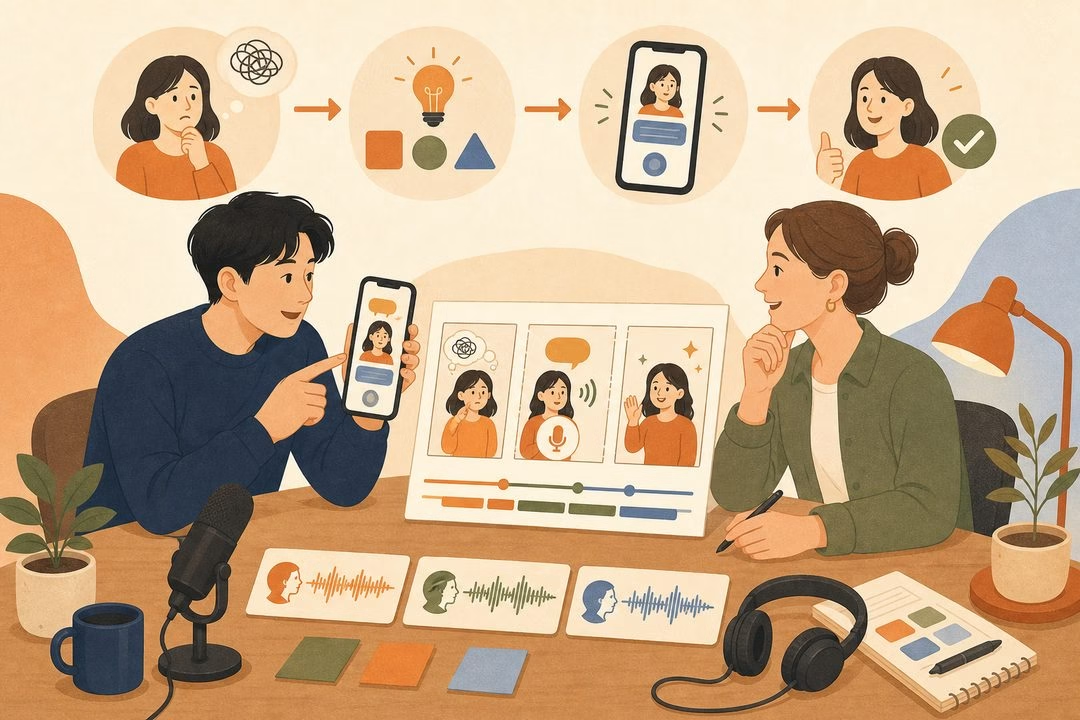
A useful brief does not try to explain the whole app. It gives the creator one learner problem and one product moment to demonstrate. For example:
- The learner understands textbook Korean but freezes during an everyday conversation.
- The learner cannot hear the difference between two similar sounds.
- The learner knows vocabulary but struggles to choose the correct honorific level.
- The learner wants a five-minute speaking routine that fits a commute or lunch break.
Connect that problem to a feature the creator can genuinely show. The flow might be: a recognizable mistake, a short app interaction, a corrected attempt, and a specific next step. If the creator has not used the product long enough to make a personal outcome claim, write the video as a demonstration or first-use observation. Do not ask for a testimonial that implies progress the creator has not experienced.
A current language-learning app creator brief illustrates why audience, market, ad platform, and deliverable should be explicit. A broader guide to UGC for apps also emphasizes product use and clear screen walkthroughs. For Korean campaigns, add a language QA layer to those basics.
The brief should include app access, the exact build or feature to show, approved and prohibited claims, pronunciation notes, required shots, caption language, call to action, aspect ratio, duration, delivery files, revision rounds, and usage rights. Give the creator room to make the wording conversational, but identify the facts that cannot change.
Set screen-recording and subtitle rules before filming
App UGC often combines face-to-camera footage with a screen recording. If those pieces are planned separately, the creator may point to the wrong area, the interface may change during editing, or the captions may cover the feature being demonstrated.
Provide a clean test account and confirm the device, operating system, app version, and market shown in the video. Remove personal information and notification previews. Tell the creator which screens are approved and whether localized Korean UI is ready. If the Korean interface or campaign copy still needs work, treat that as a separate Korean localization review before the final shoot.
For captions, decide whether the viewer needs Korean only, English only, or bilingual support. Korean line breaks should follow meaning rather than squeezing every spoken word into one caption. Romanization can help a beginner in a tightly defined teaching moment, but using it everywhere may distract from Hangul or create inconsistent pronunciation cues. Keep on-screen terminology consistent with the app.
Review the first video with a practical checklist
Do not approve a language-learning app video only because it looks natural. Review five layers separately:
- Language: Are pronunciation, spacing, captions, honorifics, and terminology accurate?
- Learner fit: Would the target learner recognize the problem and understand the explanation?
- Product truth: Does the video show a real feature without promising an unverified result?
- Creative clarity: Is the hook understandable without sound, and is the app interaction visible on a phone screen?
- Commercial scope: Are the call to action, usage rights, music rights, source files, and revision terms correct?
A vendor-reported language-app UGC case study highlights the value of testing repeatable creative formats. The practical lesson is not to copy its claims or exact execution. It is to design a brief that can produce controlled variations: different hooks, opening visuals, learner problems, or calls to action while keeping the core product demonstration consistent.
Does an app UGC creator need a large following?
Not necessarily. If you are buying content for a brand-owned ad account, you are primarily hiring production ability and performance. A large audience matters when the creator is also expected to publish and provide distribution. State those as separate deliverables so you can compare rates and results clearly.
For paid ads, ask for clean files, edit permissions, the agreed usage period, and enough variation to test. For creator-posted content, also review audience location, language, engagement quality, disclosure requirements, and whether the account context matches the app.
Should the creator be a native Korean speaker or a Korean learner?
Choose based on the story. Use a native Korean speaker when the creative depends on authoritative pronunciation, cultural explanation, natural dialogue, or Korean-market trust. Use a genuine learner when the story depends on identification with the learning journey. For some campaigns, a two-person format works best: one person represents the learner and the Korean creator provides the correction or response.
What matters is transparency. The performer should not pretend to have a language level, app history, or outcome that is not real. A clear role creates more credible content and makes script review easier.
Run a paid pilot before scaling production
A practical workflow is simple:
1. Define one audience, one learning problem, and one campaign objective.
2. Shortlist creators based on role fit, Korean delivery, app-demo ability, and workflow reliability.
3. Share the product, approved claims, terminology, visual rules, and usage scope.
4. Commission one paid pilot with two or three hook variations.
5. Review language accuracy and creative performance separately.
6. Revise the brief before ordering the next batch.
This protects the creator from unclear feedback and protects the app team from scaling the wrong concept. It also creates a reusable system: once the core demonstration is correct, you can test different problems, tones, and calls to action without rebuilding the process each time.
Make the creator brief part of localization
The right Korean UGC creator for language learning apps is not just a presenter. The creator is the point where product behavior, spoken Korean, learner expectations, and ad creative meet. Hiring improves when you define the role first, prove one learning moment, and review language and performance with separate criteria.
If you need a Korean creator who can help shape the brief, deliver natural Korean on camera, and produce app-focused UGC for a global team, share your target learner, app link, campaign goal, and reference videos below. The Ninja Forms project form will help collect the details needed for a practical first discussion.