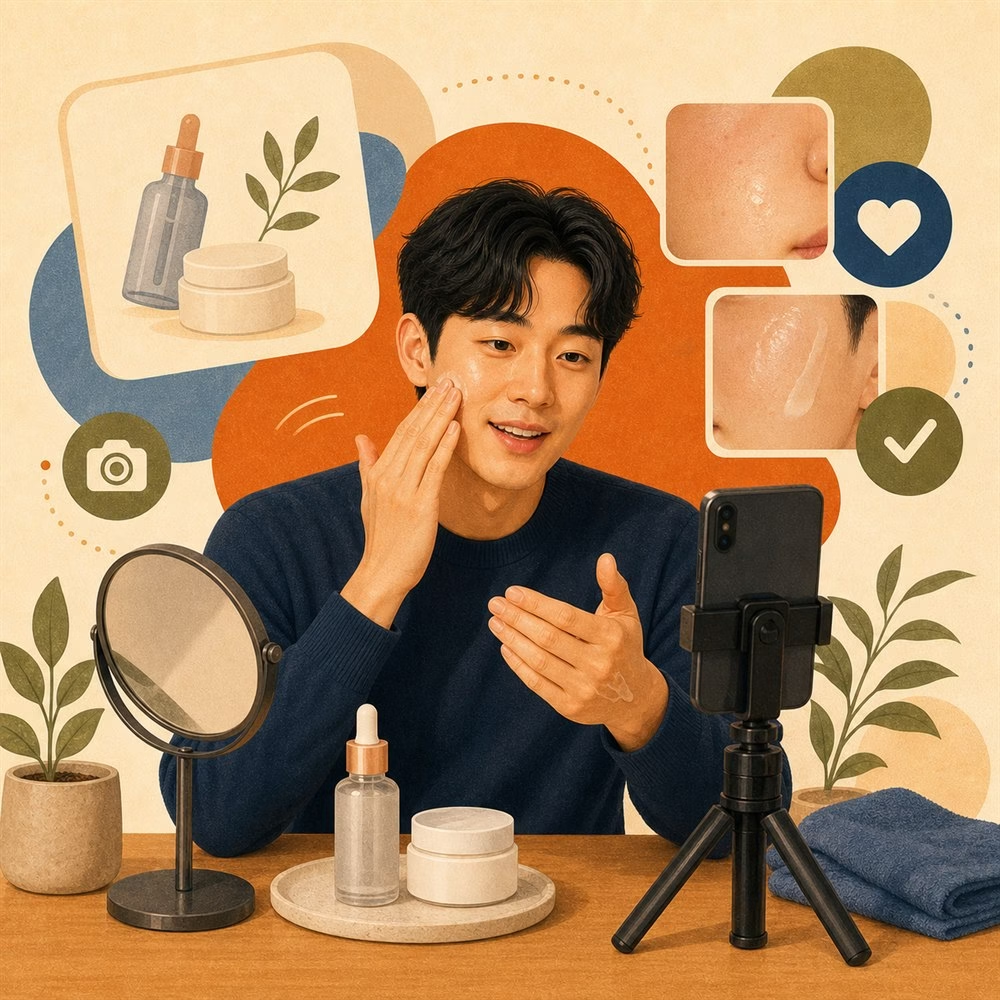
A skincare UGC video can look polished and still be unusable for a Korean campaign. The creator may have attractive beauty footage, but the Korean sounds translated. The product texture may be visible, but the lighting changes between scenes. The script may name impressive ingredients, but it turns a careful product benefit into a claim the brand never approved.
When hiring a Korean UGC creator for a skincare campaign, start with the job the content needs to do. Define the skin concern being discussed, what the creator can honestly demonstrate, and the rights your brand needs after delivery. Use those requirements to build a shortlist.
This guide explains how global skincare teams can shortlist a Korean UGC creator, review relevant samples, write a Korea-ready brief, and run a controlled first project without scripting away the authenticity they are trying to buy.
Why is skincare UGC a special hiring decision?
Skincare content has a demanding combination of language, visual proof, and claim discipline. The viewer is often looking closely at skin texture, application, finish, packaging, and routine fit. Small production choices therefore affect credibility: a beauty filter can hide the detail the product is supposed to show, while inconsistent lighting can make two clips difficult to compare honestly.
The spoken message matters just as much. A global brief may use words such as calming, repairing, brightening, clean, clinical, or sensitive-skin friendly. Those terms cannot simply be translated and handed to a creator. The Korean version should match the approved product evidence, the intended level of certainty, and the way a real customer would describe the concern.
This makes a skincare UGC creator more than an on-camera presenter. The creator is working at the point where product information, natural Korean delivery, physical demonstration, and advertising requirements meet.
An industry guide to what skincare brands review in UGC portfolios highlights lighting, natural skin presentation, ingredient literacy, reliability, and usage rights. Those are useful baseline criteria. A Korea-focused project must add Korean-language judgment and local campaign fit to that list.
What should you decide before shortlisting Korean creators?
Do not begin by collecting profiles. Write a one-paragraph scope first. It should answer six questions:
- Who is the viewer? Define age range, market, language, relevant skin concern, and where the person is in the purchase journey.
- What should the asset do? Decide whether it should introduce a product, demonstrate texture, explain an ingredient, answer an objection, support a product page, or generate a paid-ad click.
- Where will it run? A TikTok or Reels ad, an organic brand post, a product-detail page, and a creator-posted collaboration require different creative and commercial terms.
- What role should the creator play? The creator may be a peer user, routine guide, first-impression reviewer, product demonstrator, or bilingual explainer.
- What language is required? Confirm Korean-only, English-only, or separate Korean and English versions. Subtitles are not a substitute for adapting spoken delivery.
- What will the brand need after filming? List final edits, raw footage, alternate hooks, clean versions, captions, still frames, revision rounds, and usage rights.
If you also need a general distinction between UGC production and influencer distribution, review the guide to hiring a TikTok UGC creator based in Korea. A creator can produce excellent brand-owned assets without posting to a personal audience. Distribution should be scoped and priced separately when it is required.
How do you evaluate a Korean skincare UGC portfolio?
Ask for relevant samples and use these five criteria as a review scorecard. For each one, note whether the sample provides enough evidence or whether you need a follow-up question or a small paid test.
| Criterion | Evidence to look for | Question to ask |
|---|---|---|
| Natural Korean delivery | Conversational rhythm, clear pronunciation, appropriate politeness, and language that fits the product and viewer. | How would you adapt this English hook for a Korean viewer, and why? |
| Honest skin and product visibility | Stable lighting, visible skin texture, accurate product color, focus, and application close-ups without excessive filtering. | Can you share a relevant sample showing product texture or finish under consistent lighting? |
| Demonstration skill | A clear sequence showing the situation, product, application, and next step in the routine. | Which shots would help the viewer understand how this product is used? |
| Product and claim discipline | Accurate ingredient pronunciation, approved benefit wording, and a clear distinction between demonstration and personal results. | How do you handle prohibited claims or an outcome you have not personally experienced? |
| Workflow reliability | Useful questions, clear written scope, organized files, agreed delivery dates, and confirmed permissions. | How will we agree on versions, feedback, final files, and usage rights before filming? |
A strong sample in fashion, food, or apps does not by itself answer the skincare production questions. If finish, absorption, or close-up product handling is central to the brief, use a relevant sample or a paid pilot to evaluate it.
What belongs in a Korea-ready skincare UGC brief?
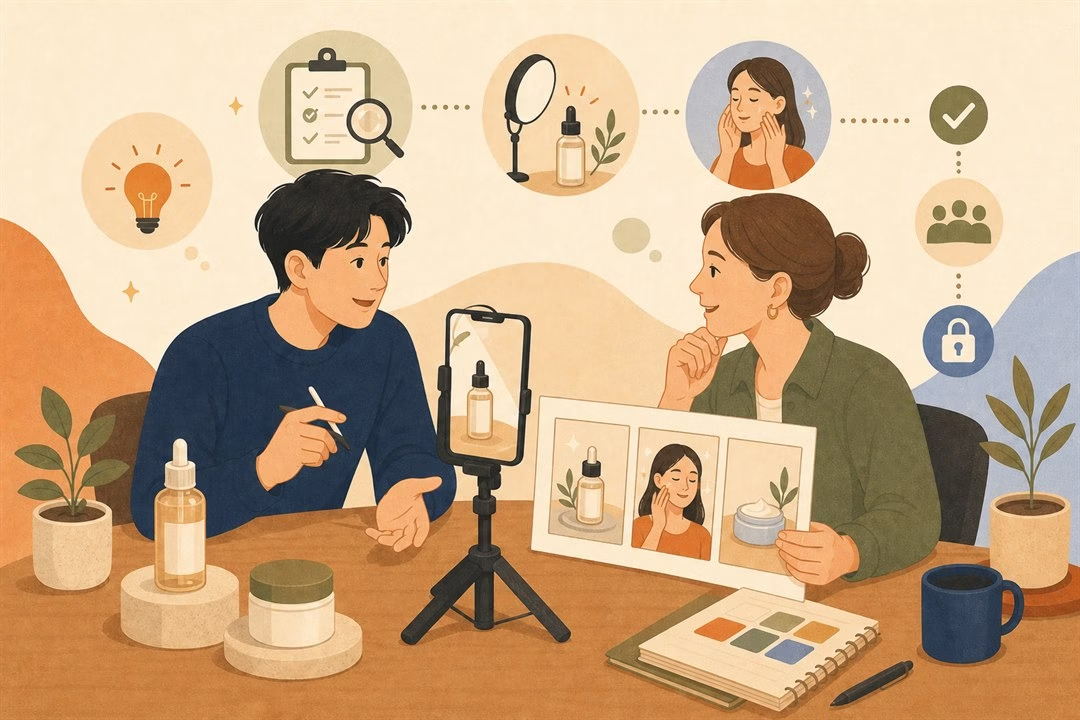
A strong brief gives the creator enough context to make natural choices without giving them a word-for-word commercial. Beautytap’s guide to a beauty UGC creative brief makes a useful distinction: provide context and boundaries, then leave room for the creator’s own language.
Include the following sections:
- Campaign objective and placement: Name the channel, audience temperature, and action the asset should support.
- Target viewer and skin concern: Describe the situation in plain language. Avoid a vague audience such as “Korean women interested in beauty.”
- Product truth: Provide the approved benefits, hero ingredients, use instructions, evidence available, and claims that must not be made.
- Korean terminology: Confirm product name pronunciation, ingredient terms, benefit wording, caption style, and the intended level of politeness.
- Creative angle: State the problem, proof point, and takeaway. Give the creator beats rather than forcing every sentence.
- Required shots: List packaging, texture, application area, routine moment, close-up, and CTA shot only where relevant.
- Technical specifications: Define orientation, length, resolution, safe areas, audio, caption files, and whether a clean version is needed.
- Deliverables and revisions: Specify edited files, raw clips, alternate hooks, first-draft date, final date, and included feedback rounds.
- Usage rights: Name organic and paid channels, territory, license period, editing permission, whitelisting or creator-handle use, and renewal terms.
The general process for short-form UGC for Korean audiences is also relevant here: build one believable viewing moment first, then create controlled variations. For skincare, that moment should show the product honestly and use Korean wording that stays within the approved claim.
Which skincare UGC formats are worth testing?
Choose formats based on the campaign question rather than what is currently popular in a creator’s feed.
Routine integration
Show where the product fits in a realistic routine and what comes before or after it. This is useful when usage order or convenience is part of the value.
Texture and application demonstration
Use close-ups to show amount, consistency, spread, finish, or packaging mechanics. Keep lighting and camera settings stable so the footage does not imply a visual result it cannot support.
First-use observation
The creator can describe packaging, scent where appropriate, texture, application, and immediate feel. It should remain a first impression rather than becoming a long-term testimonial.
Concern-led explanation
Open with a recognizable routine problem, then connect it to one product feature or approved benefit. The concern should be specific enough to feel relevant but not framed as a diagnosis.
Ingredient or product-story explainer
Use this only when the creator can pronounce the terms correctly and the brand supplies an approved explanation. The creator’s job is to make the information understandable, not to expand it into stronger scientific or medical claims.
Before-and-after content requires particular care. Confirm the time period, conditions, lighting, editing, and evidence. If those controls are not available, use application proof, routine fit, or a first-use demonstration instead.
Does a Korean skincare UGC creator need a large following?
Not when the brand is buying content for its own account, ads, website, or retailer page. In that case, the main purchase is production skill and licensed footage. Portfolio relevance, Korean delivery, product handling, and reliability can matter more than audience size.
A following becomes important when the creator is also expected to publish. Then the brand should separately evaluate audience location, language, category fit, engagement quality, disclosure, posting period, and reporting. Do not pay for distribution accidentally when all you need is a production asset, and do not assume a production fee includes posting.
The broader UGC hiring workflow also recommends defining the angles, brief, craft criteria, and licensing before production. For a Korean skincare campaign, add language and product-claim review as separate approval passes.
How should you review the first delivery?
Avoid one combined comment such as “make it feel more Korean.” Review the draft in separate passes so the creator receives actionable feedback.
1. Korean-language review: Check pronunciation, sentence endings, caption spacing, terminology, and whether the call to action sounds natural.
2. Product-truth review: Confirm the correct product, amount, application method, packaging, ingredient wording, and approved benefit.
3. Visual review: Check focus, skin texture, lighting consistency, product color, framing, filters, and vertical safe areas.
4. Creative review: Watch once without sound. The problem, product, proof, and next action should still be understandable.
5. Commercial review: Confirm music rights, final and raw files, revision scope, paid-media permission, territory, and license period.
Keep factual corrections separate from creative preferences. A wrong product claim must be fixed. A different but still on-brief gesture may not need a reshoot. This distinction protects the natural performance and keeps feedback proportionate.
Should you hire one creator or commission a pilot batch?
Start with the smallest project that can answer a real question. For one creator, that may be one core video with two or three alternative hooks and useful raw product footage. For a broader campaign, it may be two creators chosen for different skin concerns or delivery styles using the same controlled brief.
The goal is not to predict a winning ad before filming. It is to learn whether the message, creator fit, product proof, and Korean delivery work together. Approve the product truth and language first. Then compare creative variations using the campaign metrics that match the placement.
Once the core brief works, expand deliberately: another hook, another routine moment, another creator profile, or another CTA. A batch of nearly identical edits creates volume, but it may not create useful learning.
Once you have a shortlist or a pilot in mind, review the Korean UGC production options and share the product, target viewer, intended channels, deliverables, and usage period to discuss the scope.
What affects a skincare UGC quote and schedule?
Specify the number of concepts and final edits, video length, alternate hooks, raw footage or clean versions, and required languages. Include the channels and usage period, any creator posting or paid-media permissions, and the feedback rounds you want included. These details let both sides define what the quote covers.
For scheduling, confirm when the product will arrive, whether the agreed concept needs a product-use period, who approves the script and edit, and the requested first-draft and final dates. Agree on revision and reshoot boundaries before filming. A first-use video and a testimonial based on longer use need different preparation; neither should promise a product result.
Can a global skincare brief simply be translated into Korean?
Usually not without review. A global brief is a valuable source of product truth and campaign strategy, but its spoken lines, emotional intensity, examples, and calls to action may not transfer directly.
Keep the non-negotiable facts: product use, approved benefits, required visuals, and claim boundaries. Then allow the Korean creator or reviewer to adapt the hook, sentence rhythm, level of politeness, and explanation order. The result should preserve the brand’s meaning while sounding as if the content was planned for a Korean viewer from the start.
For a deeper explanation of this distinction, see why imported UGC can feel unnatural in Korea.
Hire around the viewer, the proof, and the rights
Hire a Korean skincare UGC creator around the viewer, the product evidence, and the intended placement. Shortlist for Korean delivery and skincare production skill, brief the approved product benefits, and confirm usage rights before filming.
Then run a controlled first project. A clear brief and separate language, product, visual, creative, and commercial reviews give both the brand and creator a better foundation for producing believable Korean skincare content.
If you need a Korean creator who can help adapt the brief, present the product naturally in Korean, film skincare-focused short-form assets, and coordinate with a global team, review the Korean UGC production options and share your product, target viewer, intended channels, deliverables, and usage period in the project form below.