Your English UGC opener sounds conversational. Its Korean translation is grammatically correct, yet the creator is now reciting a slogan: "everything you need," "the perfect setup," or "wait until you see this." The first line gives the viewer little reason to watch the next shot.
Useful UGC hook examples show more than a catchy sentence. They show which viewer situation the line names, what the picture can demonstrate, and why the Korean wording fits the creator’s role. A rewrite that sounds smoother but invents a product result is not an improvement.
Below are six English-to-Korean opening rewrites for global brands adapting creator-led ads. Each includes an intentionally weak literal draft, a proposed Korean line, an English back-translation, and the next visual it requires. These are educational demonstrations, not client campaigns, measured winners, or evidence of national audience preferences.
How should you use these UGC hook examples?
Treat every product feature below as an assumption for the sample, not a claim about a real brand. Before using a line, confirm that the feature exists, the footage shows it accurately, and the creator can deliver the approved meaning naturally. The weak drafts are deliberately written for this exercise; they are not quotations from customer work.
The samples change the opening emphasis when a literal translation does not give the viewer enough context. They are creative adaptations, not interchangeable certified translations. Get the new angle approved before recording rather than silently changing a global campaign’s promise.
TikTok’s creative best practices for performance ads place the proposition early and recommend a clear hook, contextual text, sound, and a closing action. That is useful production guidance, not proof that a particular Korean sentence will improve your results. Here, the practical task is to make the first line and the next picture explain the same thing.
1. Replace a vague workday promise with a recognizable task
English starting line: "Make your workday flow better."
Weak literal Korean draft: "여러분의 업무일이 더 잘 흐르게 만드세요."
Proposed Korean opening: "회의 메모, 할 일과 따로 관리하고 있나요?"
Back-translation: "Are you managing meeting notes separately from your tasks?"
The weak draft transfers the English metaphor into Korean without explaining what the app does. "업무일" and "흐르게 만드세요" make this sound like a written slogan rather than a person pointing out a practical situation.
The revision names two concrete objects: meeting notes and tasks. "따로 관리하고 있나요?" asks about a workflow without accusing every viewer of being inefficient. The comma is a suggested delivery beat, not a requirement to pause for a fixed duration.
What the next shot must show: a real way to connect a meeting note with its associated task. If the product only stores notes, the revision is inappropriate. Show that narrower feature and write a different opener; do not create a mock interface that implies an unavailable task feature.
This also changes the audience from anyone who works to people handling both notes and tasks. That narrowing is intentional. It can make the demonstration more relevant, but it does not establish higher click-through or conversion.
2. Invite a texture preview without promising a skin result
English starting line: "Check the texture before choosing your next moisturizer."
Weak literal Korean draft: "당신의 다음 보습제를 선택하기 전에 질감을 확인하세요."
Proposed Korean opening: "보습제, 바르기 전에 제형부터 볼까요?"
Back-translation: "Before applying a moisturizer, shall we look at the formulation’s texture first?"
The literal sentence is understandable, but "당신의 다음" adds an unnecessary possessive phrase and a translated shopping rhythm. The revision brings the product category forward and uses "제형," a useful term for the product’s physical form and texture in this context.
"볼까요?" invites a demonstration. It does not say that the product treats a condition, works for every skin type, absorbs instantly, or feels non-sticky to everyone. Those would be separate claims requiring their own support.
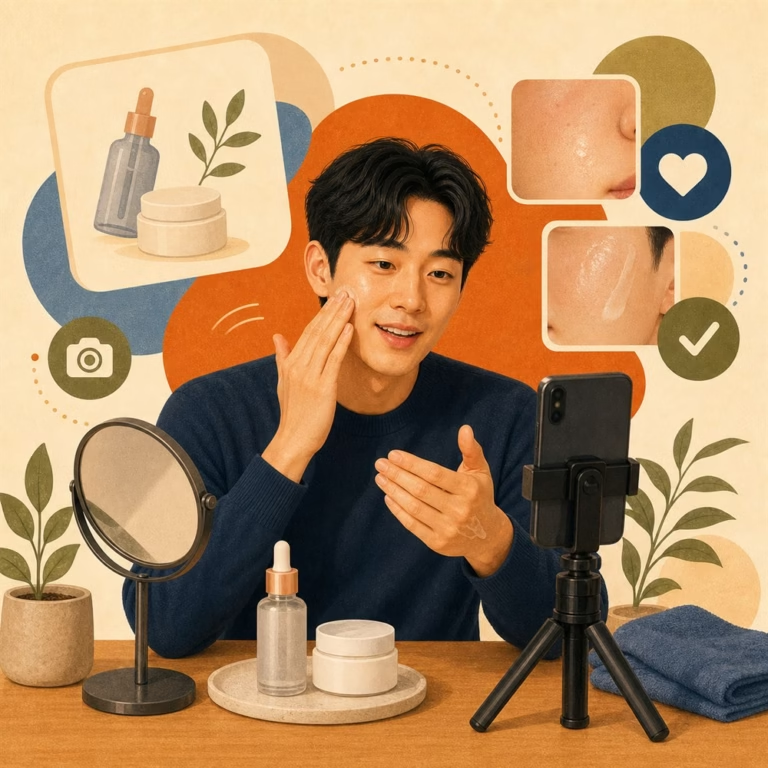
What the next shot must show: the actual sample being dispensed or spread under ordinary lighting. A texture shot can show appearance and movement. It cannot establish a long-term skin outcome or another person’s sensory experience.
Keep the wording aligned with the category and approved product terminology. If the product is not a moisturizer, do not use "보습제" simply because it sounds familiar. The invitation also needs to fit the creator’s usual delivery; a formal clinical demonstration might require a different ending.
3. Turn a blunt fit warning into a useful measurement question
English starting line: "Stop guessing whether it fits."
Weak literal Korean draft: "그것이 맞을지 추측하는 것을 멈추세요."
Proposed Korean opening: "서랍 안쪽 치수, 먼저 재 보셨나요?"
Back-translation: "Have you measured the inside of the drawer first?"
The weak version leaves "그것" unidentified and sounds like a reprimand. For this sample, the product is a drawer divider; the relevant uncertainty is the usable space inside the drawer.
"서랍 안쪽 치수" identifies what to measure. "재 보셨나요?" is polite and specific without claiming that the audience has made a mistake. It is one possible tone, not a rule that Korean ads must always ask polite questions.
What the next shot must show: the interior measurement and the actual divider dimensions or adjustment range. Measuring the outer cabinet instead would fail to answer the opener. A vague shot of an organized drawer is not enough.
Do not follow this line with "어떤 서랍에도 맞아요"—"It fits any drawer"—unless that universal claim is genuinely supportable. The rewrite offers a useful evaluation step; it is not a fit guarantee. Check whether the dimensions shown refer to the exact variant being promoted.
4. Remove a personal success story when the creator cannot claim it
English starting line: "I finally found my perfect setup."
Weak literal Korean draft: "저는 마침내 저의 완벽한 세팅을 찾았어요."
Proposed Korean opening: "책상 위 케이블, 어디로 정리할지 볼까요?"
Back-translation: "Shall we look at where to organize the cables on the desk?"
The issue is not only "마침내" or the repeated "저의." The English line implies a personal search and a satisfactory outcome. If the creator has only been commissioned to demonstrate a cable clip, translating that story faithfully still gives them an experience they may not have had.
The proposed line moves to a demonstration role. The creator can show where the clip routes a cable without pretending that it solved their own longstanding frustration. "정리할지" frames a placement decision rather than a declaration of perfection.
What the next shot must show: an actual clip placement and cable route, with the promoted clip and surface visible. If adhesion, load, or surface compatibility is uncertain, do not imply that the setup will work everywhere.
This is not a technique for disguising an advertisement as an unsponsored recommendation. Keep the commercial relationship transparent and agree the creator’s role clearly. If a real creator has a relevant personal experience, confirm it separately; do not add "I’ve used this for months" to make the line feel more authentic.
5. Replace an unlimited claim with the two features you can show
English starting line: "Everything you need, in one place."
Weak literal Korean draft: "당신에게 필요한 모든 것이 한 곳에 있습니다."
Proposed Korean opening: "예약 내역과 일정을 한 화면에서 확인해 보세요."
Back-translation: "Check your booking details and itinerary on one screen."
For this sample, the assumed app displays booking details alongside a trip itinerary. The revision states those two functions instead of carrying over "everything," which could imply much more than the product provides.
"확인해 보세요" is an invitation to inspect the feature. It does not claim that the app handles every travel need, automatically imports every booking provider, or eliminates planning work. The line is more bounded because the demonstration is bounded.
What the next shot must show: the actual combined view, using permitted sample information. If booking details and the itinerary require separate screens, either change the opener to match that journey or show the transition accurately. Do not place two screenshots side by side and call them one available screen.
The interface may use "여행 일정" rather than "일정," or another approved label for booking details. Use the product’s actual terminology when it is clear to the target reader. Consistency matters more than inserting an impressive-sounding Korean feature name.
6. Pay off curiosity with the specific thing inside
English starting line: "Wait until you see inside this pouch."
Weak literal Korean draft: "이 파우치 안쪽을 볼 때까지 기다리세요."
Proposed Korean opening: "파우치 안쪽, 수납칸부터 보여드릴게요."
Back-translation: "I’ll show you the storage compartments inside the pouch first."
The weak draft delays a reveal without saying what makes it useful. The revision identifies the actual object of attention: the interior compartments. "보여드릴게요" gives the speaker a clear, achievable next action.
What the next shot must show: the pouch opening and its real compartments. Let the viewer see their arrangement before moving to an exterior beauty shot. If the pouch has no separate compartments, this line is wrong; use an accurate feature instead.
Avoid turning curiosity into an unsupported storage promise. Showing the compartments does not establish that every phone fits, that belongings are protected from water, or that the pouch holds a specified load. If capacity is important, demonstrate the actual items and variant without misleading cuts.
This opening is useful when the interior is the reason to evaluate the product. If the meaningful feature is elsewhere, leading with the lining merely creates an extra detour. The hook should earn the next shot, not postpone the relevant one.
Which Korean ending should a creator actually say?
These examples use several endings because they assign different jobs to the speaker. "있나요?" asks about a situation. "볼까요?" proposes looking together. "해 보세요" invites an action. "보여드릴게요" commits the speaker to showing something next.
Choose according to the relationship, brand voice, and demonstration. Do not switch all six to a supposedly universal Korean UGC tone. A creator addressing peers and a specialist explaining a technical feature may need different levels of formality.
Ask for a natural read of the approved meaning. If the speaker changes a line to make it comfortable, review what changed: a synonym is different from deleting an offer condition or inserting a personal endorsement. Captions should follow the approved final speech; a short graphic headline is not automatically an equivalent caption track.
How do you choose a rewrite without calling it a winner?
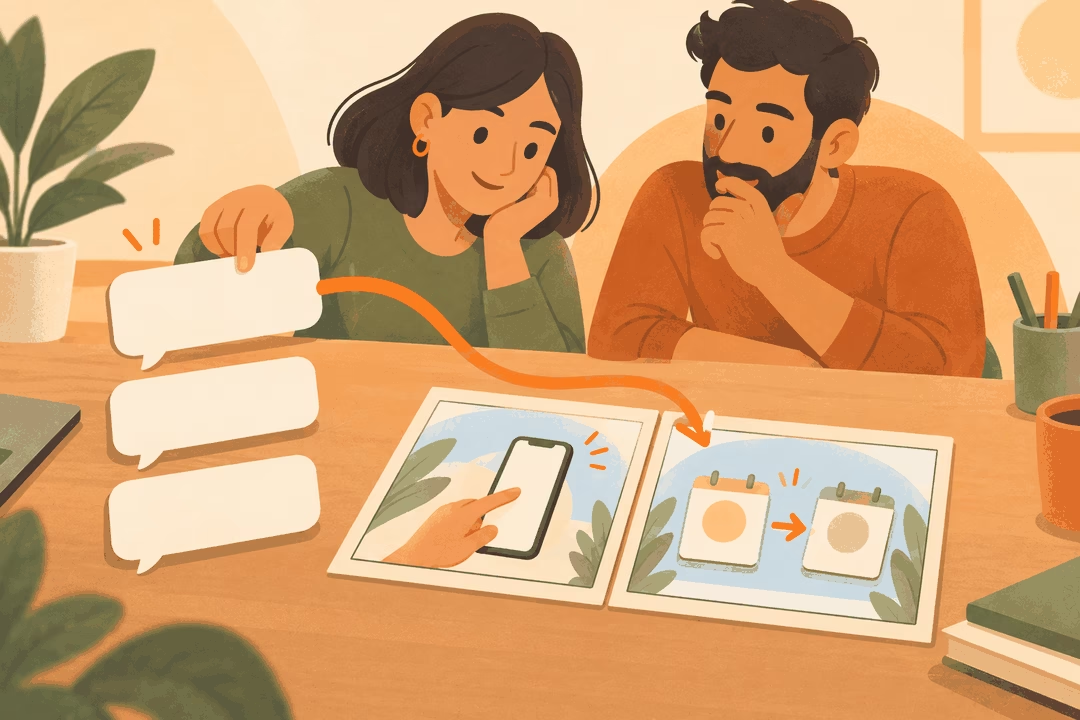
Take the current opener and write one compact revision note: the confirmed product fact, the proposed first sentence, and the next picture that answers it. If you cannot name the picture, keep working on the line before filming.
Read the line against that picture and check the exported placement. There is no fixed Korean syllable allowance that makes every opener usable. A written sentence can look short and still be awkward to perform or read over a busy shot.
For testing, document the changed opening and keep the offer, destination, and main video body consistent where practical. A new hook accompanied by a different price and different product proof does not isolate the hook. Better comprehension during review is not the same as a measured campaign improvement; small samples or missing attribution remain inconclusive.
For the wider production structure, see our short-form Korean UGC guide. This article deliberately stays with first-line decisions instead of repeating that full creator brief and production workflow.
Start with a line your next shot can answer
The strongest use of these UGC hook examples is to revise one real opening with one clear reason. Name the relevant situation, preserve verified product meaning, and let the creator demonstrate what the sentence promises. Do not use smoother Korean to hide a weaker claim.
If you need the concept and spoken delivery developed together, explore Korean UGC production. For adapting existing campaign wording and assets, see Korean localization support.
Share the current English opener, intended viewer, approved product facts, and the next shot through the project form below. That gives us a concrete starting point for a Korean rewrite, rather than a request for a list of supposedly winning hooks.