

Korean Voice Acting: What to Check Before Hiring a Native Korean Voice Actor
Korean voice acting is not just about finding someone who can speak Korean clearly. If your project is for a commercial, game, animation, training video, app, or branded content, the voice needs to match the script, the audience, the situation, and the level of formality expected in Korean. That is where many global projects become harder than expected: the translated words may be correct, but the final voice can still sound too stiff, too dramatic, too flat, or simply unnatural to Korean listeners.
In this guide, I will break down what to check before hiring a native Korean voice actor, how to review Korean voice samples, and why script tone matters before recording starts.
Korean Voice Acting Is Not Just Reading a Translated Script
A Korean voice actor does more than pronounce Korean words. The voice actor needs to understand who is speaking, who is listening, what the emotional distance is, and how formal the message should feel. This is especially important because Korean naturally changes depending on the relationship between the speaker and the listener.
For example, a Korean commercial voice for a finance app should not sound the same as a character voice for a mobile game. A corporate training video may need a calm and clear delivery, while an animation project may require stronger emotion, rhythm, and character interpretation.
This is why Korean voice acting should start before the recording session. The script, tone direction, target audience, and usage context all need to be clear first. Otherwise, even a technically good voice can sound wrong for the project.
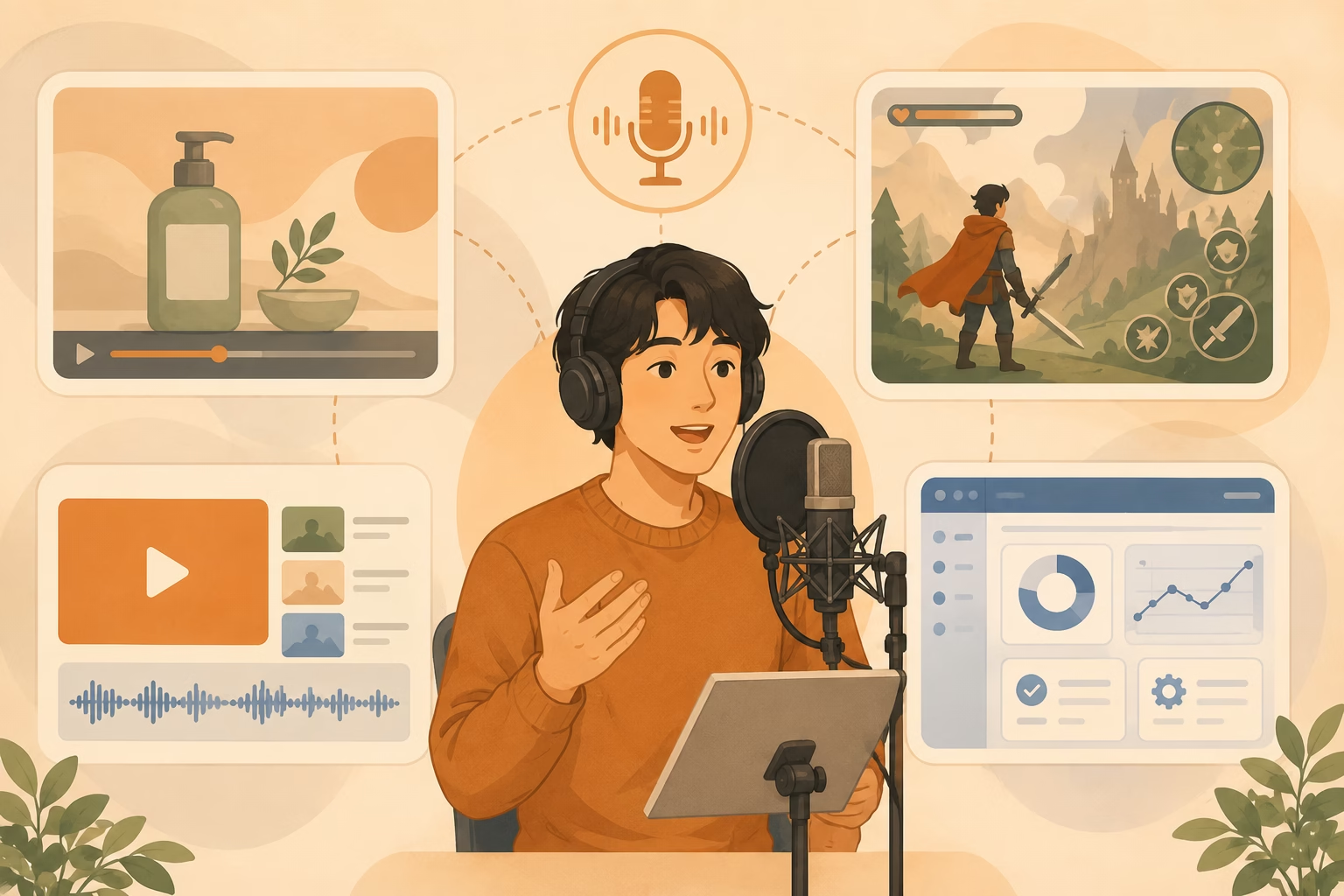
Before Hiring a Korean Voice Actor, Define the Project Type
The right Korean voice depends heavily on the type of content. Many voice platforms let you filter by gender, tone, category, or style, and this is useful. But before listening to samples, you need to know what kind of performance your project actually needs.
| Project type | Best-fit voice direction | What to check |
|---|---|---|
| Commercial | Clear, persuasive, brand-safe | Energy, CTA delivery, trust |
| Game | Character-driven, expressive | Acting range, emotion, timing |
| Animation | Dynamic, flexible, memorable | Character voice, rhythm, reaction |
| eLearning | Calm, clear, consistent | Pronunciation, pacing, fatigue-free tone |
| Corporate video | Professional, stable, credible | Clarity, confidence, natural formality |
| App/product video | Conversational, helpful, concise | Friendly tone, modern Korean expression |
The mistake is choosing a Korean voice actor only because the voice sounds “good.” A good voice for narration may not work for a character. A good commercial voice may sound too polished for a natural app tutorial.
Before you request a sample, define these five points:
- Content type
- Target audience
- Desired emotion
- Formality level
- Final platform or usage
This helps the voice actor understand whether the read should feel conversational, dramatic, instructional, premium, youthful, or trustworthy.
Check the Korean Tone Before Recording
Korean tone is not just “formal” or “casual.” It also reflects the relationship between the brand and the audience. A sentence can be grammatically correct but still sound too distant, too childish, too aggressive, or too translated.
For global brands, the biggest issue is often formality. Korean has different speech levels, and the wrong level can change the entire feeling of the message. For most branded content, polite conversational Korean is safer than overly casual Korean. But for games, character dialogue, youth-focused apps, or social-style videos, a less formal tone may be more natural.
Here is a simple way to think about it:
| Korean tone choice | Works well for | Risk |
|---|---|---|
| Formal and polished | Corporate, finance, medical, B2B | Can sound stiff |
| Polite conversational | Apps, explainers, general brand videos | Usually safest |
| Casual | Youth brands, games, social content | Can sound rude if misused |
| Dramatic | Games, animation, trailers | Can feel exaggerated in ads |
| Calm instructional | eLearning, training, tutorials | Can feel flat without rhythm |
When I review Korean scripts for voice-over projects, I usually check whether the Korean line sounds like something a real Korean speaker would say in that exact context. Sometimes the translation is technically correct, but the sentence length, ending, or CTA feels too close to English. That should be adjusted before recording, not after.
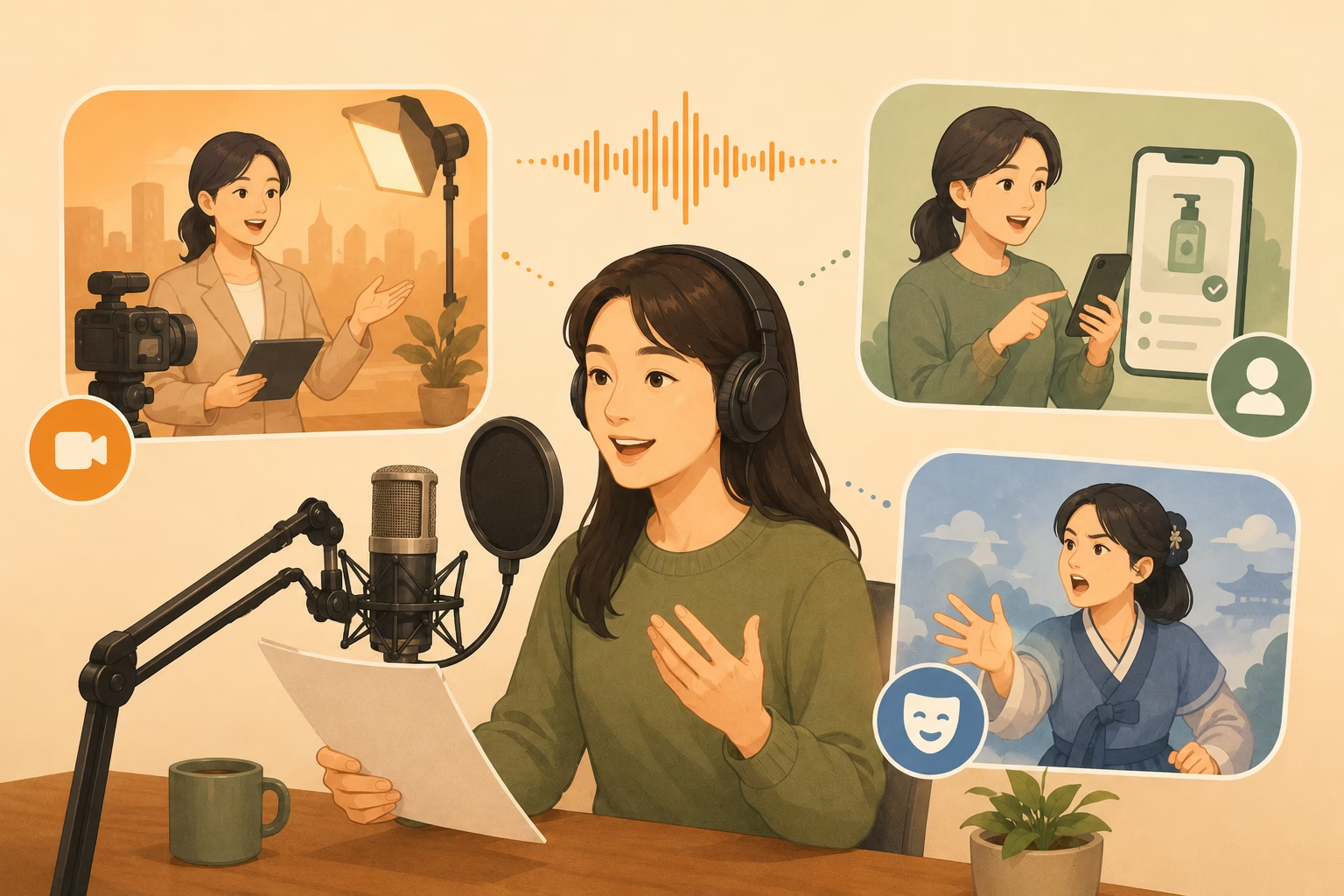
Listen for More Than a Good Voice
When reviewing Korean voice samples, do not only ask, “Do I like this voice?” Instead, listen for whether the voice actor can control rhythm, emotion, clarity, and naturalness.
A Korean voice sample should be checked from four angles:
1. Pronunciation
The pronunciation should be clean, but not overly artificial. In Korean, overly precise pronunciation can sometimes sound like a textbook or public announcement. For brand content, natural clarity is usually better than rigid clarity.
2. Rhythm
Korean has a different rhythm from English. If the script is translated from English, the sentence may become too long or dense. A good Korean voice actor should be able to make the line flow naturally, but the script still needs to support that rhythm.
3. Emotional control
For Korean voice acting, emotion should match the project. A game character can be expressive. A corporate explainer should be controlled. A commercial can be energetic, but not always loud.
4. Audio quality
The performance matters, but the recording quality also needs to be clean. Check for background noise, room echo, inconsistent volume, mouth noise, and whether the file sounds ready for editing.
Make Sure the Script Sounds Natural in Korean
A Korean voice actor can improve delivery, but the actor cannot fully fix an unnatural script during recording. If the translated script is awkward, the final audio will still feel awkward.
Common Korean script problems include:
- Sentences that are too long
- English-style CTA phrases translated too directly
- Formality level changing between lines
- Product names or technical terms without pronunciation guidance
- Character lines that do not match age, personality, or relationship
- Brand tone that sounds too corporate for the actual audience
This is especially important for commercials, games, and app videos. Korean listeners are sensitive to whether a line sounds like natural Korean or translated Korean. A line can be understandable but still not persuasive.
Before recording, prepare a short voice direction note. It does not need to be complicated. A simple note like this is already helpful:
“The tone should feel friendly and trustworthy, like a Korean app guide explaining a useful feature to a first-time user. Please avoid sounding too formal or too salesy.”
That kind of direction helps the Korean voice actor make better choices while recording.
Use This Korean Voice Acting Checklist Before You Book
Before hiring a Korean voice actor, use this checklist to reduce revisions and avoid mismatched expectations.
| Checklist item | What to confirm |
|---|---|
| Project type | Commercial, game, animation, eLearning, corporate, app video |
| Target audience | Age, market, user type, buyer stage |
| Korean tone | Formal, polite conversational, casual, dramatic, instructional |
| Script quality | Natural Korean, clear sentence endings, no direct translation issues |
| Pronunciation guide | Brand name, product name, technical terms, English words |
| Sample direction | Ask for a sample using your actual script if possible |
| Audio setup | Home studio, studio recording, file format, noise level |
| Usage rights | Paid ads, organic social, website, internal training, broadcast |
| Revision scope | Included retakes, script changes, pronunciation fixes |
| Delivery format | WAV, MP3, raw file, cleaned audio, separated takes |
The most important part is alignment before recording. If the script, tone, usage, and delivery format are clear, the recording process becomes much smoother.
Need a native Korean voice actor for your project?
Send your Korean script or English source script, and I can help you check the tone, pronunciation, and voice direction before recording.
Request a Korean Voice Acting Sample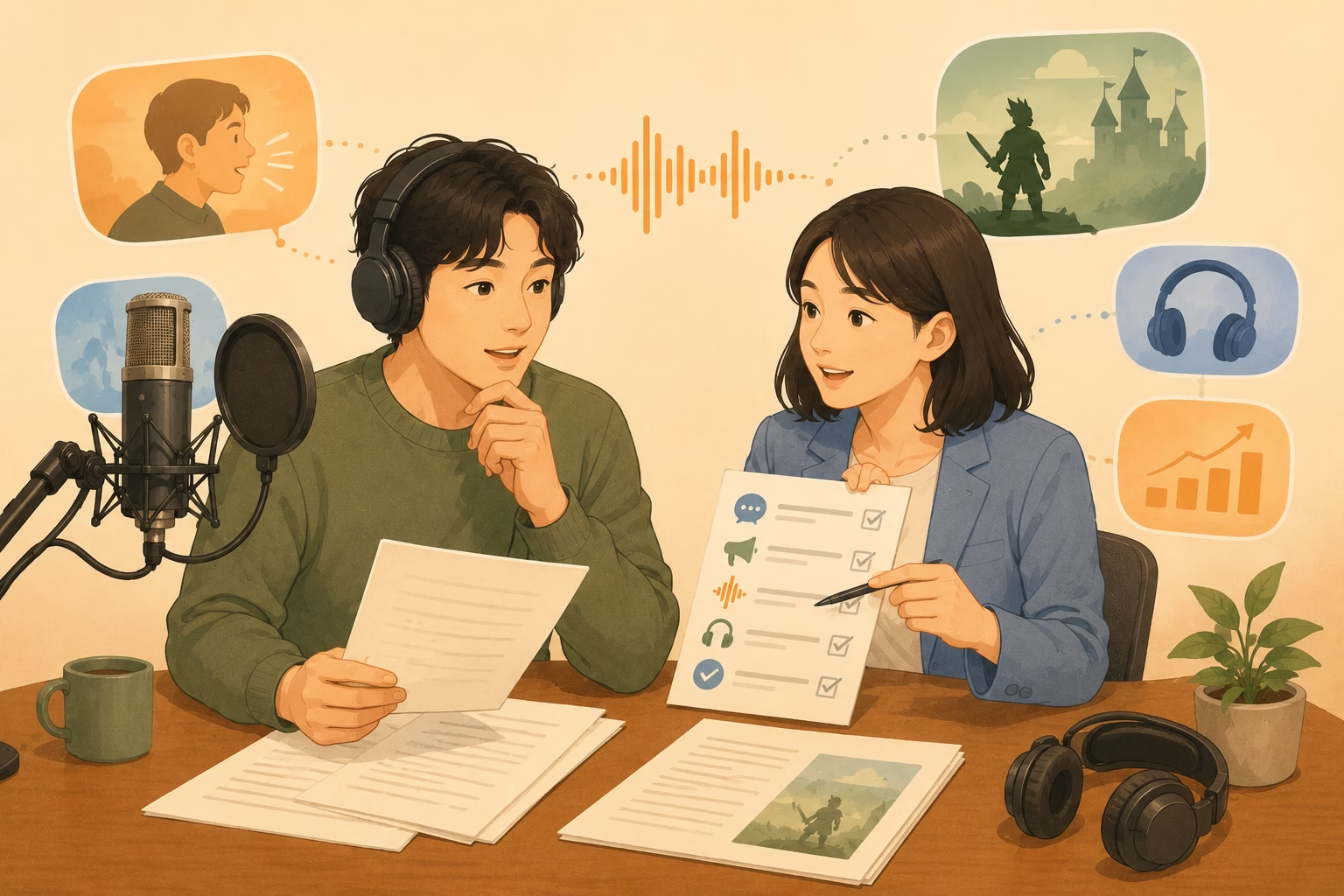
FAQ
What is Korean voice acting?
Korean voice acting is the performance of Korean dialogue, narration, or character lines for media such as commercials, games, animation, dubbing, training videos, and branded content. It usually requires more than clear pronunciation because the actor needs to interpret tone, emotion, formality, and audience context.
What is the difference between Korean voice acting and Korean voice over?
Korean voice over is a broader term. It can include narration, corporate videos, eLearning, ads, product videos, and explainers. Korean voice acting usually places more emphasis on performance, emotion, character, or dramatic interpretation. For games, animation, dubbing, and character scripts, voice acting is usually the better term.
Do I need a native Korean voice actor?
For most brand, commercial, localization, game, and training projects, yes. A native Korean voice actor is more likely to understand natural Korean rhythm, pronunciation, formality, and emotional nuance. This matters because a script can be grammatically correct but still sound unnatural to Korean listeners.
Should Korean voice acting use formal or informal Korean?
It depends on the project. Corporate videos, finance, healthcare, B2B, and training content usually need a more polite or formal tone. Games, animation, youth-focused apps, and casual social content may use a more relaxed tone. For many brand videos, polite conversational Korean is the safest option.
Can a Korean voice actor record remotely?
Yes, many Korean voice actors can record remotely with a home studio or local studio setup. Before booking, check the recording environment, audio sample quality, file format, revision terms, and whether the actor can provide clean audio for editing.
How do I choose the right Korean voice actor?
Start with the project type and target audience. Then review samples for pronunciation, rhythm, emotional control, tone fit, and audio quality. If possible, request a short custom sample using your actual script. This is often more useful than only listening to a general demo.
Korean voice acting works best when the voice actor receives more than a translated script. The project type, Korean tone, audience, pronunciation notes, and usage rights should be clear before recording starts.
A native Korean voice actor can help your project sound more natural, but the best results come from matching the voice with the script and context. Before you book, check whether the Korean script sounds natural, whether the tone fits the audience, and whether the voice actor can deliver the right level of emotion and clarity.
If you are preparing a Korean commercial, game, animation, eLearning video, or branded content, you can send your script for a quick voice direction review.