A user reaches your Korean subscription screen after a useful first session. The headline is in Korean, but the plan name on the purchase sheet is English, the annual price is presented as a small weekly equivalent, and the trial button does not explain what happens when the trial ends. Translating one screen did not localize the purchase decision.
Korean paywall localization for subscription apps connects product copy, store-owned subscription details, live prices, and the actual checkout flow. For an international app team, the practical question is not “Is every string translated?” It is “Can a Korean user understand the offer and complete the purchase without meeting a contradictory message?” This guide gives product, growth, and localization teams a brief and review process for that question.
What does Korean paywall localization for subscription apps actually cover?
Start by separating four surfaces that may look like one screen to the customer. Your app or paywall builder owns the headline, benefits, plan labels, button context, and some explanatory text. The app stores own customer-facing subscription names and descriptions configured for each product. Store billing systems return the current product price and currency for the active storefront. The platform controls the final purchase confirmation sheet.
The distinction matters because changing app copy cannot repair an untranslated store product name. It also cannot fix a price that your team has hard-coded instead of reading from the current store product. A Korean reviewer should assess the assembled experience rather than approve an isolated translation file. RevenueCat’s paywall localization documentation describes locale values and fallback behavior; it is a useful technical reference, but a Korean-language value is still only one part of the review.
For a broader app-language process, see our Korean UX writing guide for mobile apps. This article focuses specifically on the point where a user chooses a paid plan.
What should a Korean paywall localization brief include?
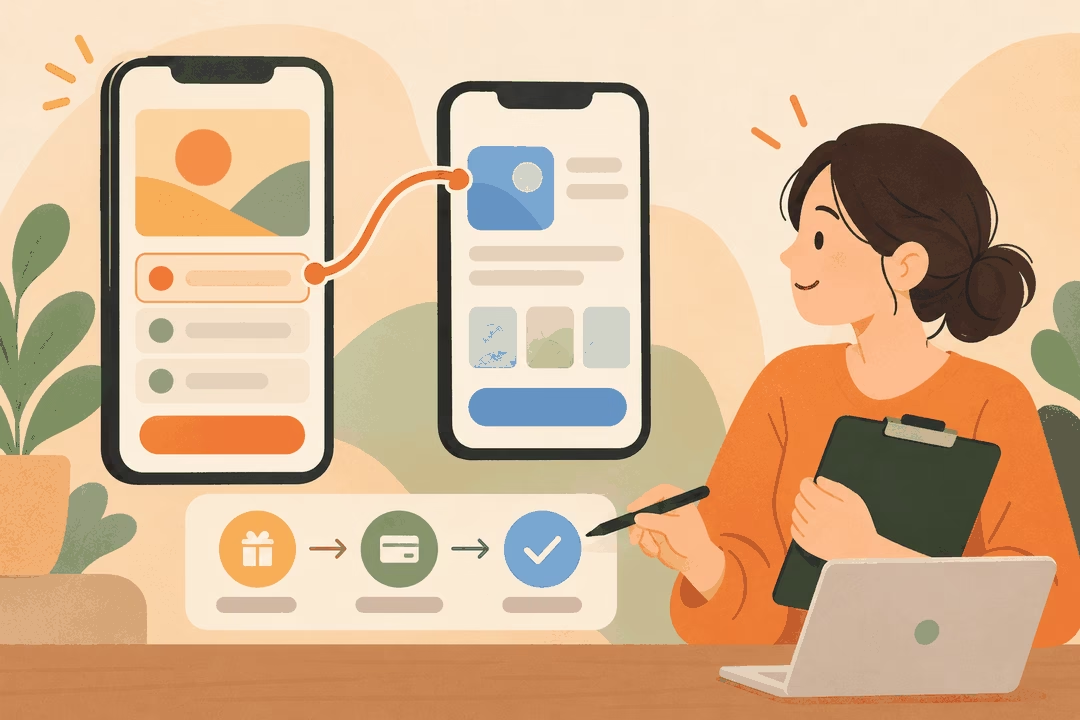
Give the language reviewer more than an English screenshot. A useful brief identifies every offer and the system that supplies each visible element. Include the target user, the preceding screen, the benefit the plan unlocks, the current product IDs, and the exact version to review on iOS and Android. Product IDs are internal identifiers, not text to translate.
- Offer inventory: Each monthly, annual, trial, introductory, and restore-purchase state that can appear to a Korean user.
- Copy ownership: Which strings live in the app, a remote paywall editor, App Store Connect, or Google Play Console.
- Commercial facts: The approved benefit, billing period, full amount, trial duration, renewal behavior, and eligibility for each offer. Obtain these from the product and commerce owners; do not ask a translator to infer them.
- Terminology: Approved names for the plan, features, account status, and any English brand terms that remain visible elsewhere in the app.
- Screen context: Images or recordings showing how the offer appears after onboarding, from a locked feature, and after a failed purchase.
- Approvers: One person for Korean language, one for product facts and pricing, and one for release or platform behavior.
Ask for a review copy of the complete screen, not only translated strings. If the Korean wording expands or changes emphasis, the reviewer must be able to judge the line break, price hierarchy, button label, and explanatory text together. Give the reviewer permission to flag a misleading offer or missing information, not merely edit spelling.
Which Korean subscription terms need human review?
Short labels carry large consequences on a paywall. “Free,” “trial,” “subscribe,” “continue,” and “restore” can describe different actions depending on the user’s eligibility and the next screen. Review the action the button really performs and use wording that matches it. A button must not imply immediate free access if the user will see a charge or another confirmation step.
The benefit copy should be concrete enough to distinguish the paid plan from the free experience. Translate the feature’s actual value, not an English slogan whose meaning depends on an unfamiliar idiom. Keep plan names consistent between the paywall, the store purchase sheet, settings, receipts, and support messages. A Korean term that looks elegant on a standalone card may confuse users if the operating-system sheet uses a different product name.
There is no universally correct Korean phrase for every subscription product. Tone depends on whether the app serves consumers or business users, and on what the plan genuinely includes. For teams still defining product terminology, our Korean localization service can help scope language review alongside the broader product experience.
How do you keep price and trial disclosures consistent?
Treat price and trial details as commercial facts with a named owner. Apple’s subscription guidance says that a subscription sign-up screen should make the renewal price prominent, identify the subscription duration and included service, and explain the price charged after a free trial. Use that as a platform check, not as a substitute for reviewing current Korean requirements with qualified legal and platform specialists.
Do not translate a price from a design mockup and leave it in an image or static string. Confirm what the active Korean storefront actually returns for each product and offer. If the screen compares monthly and annual plans, show the amount billed for the selected plan clearly; an annual total should not disappear behind an attractive weekly equivalent. Verify the plan period, trial end, and subsequent charge against the purchase sheet on the same test account.
Map three moments in plain language: what access starts today, whether and when a charge occurs, and what happens after any trial or discount period. The wording on the paywall should agree with the checkout sheet and with the follow-up account state. When the facts change, update the language and screenshots before relaunching a campaign that still promises the earlier offer.
How should teams test the Korean purchase journey?
Test an actual build with a Korean locale and the relevant storefront configuration. Changing the phone language alone may not reproduce the product data a Korean storefront returns. Ask engineering to document the test-account, region, eligibility, and product configuration used for each screenshot. The point is to know what was tested, not to assume one locale switch proves a complete market launch.
Run at least these paths when they exist in your product: a first-time visitor who sees a trial, an ineligible user who sees a standard price, a returning subscriber who needs restore purchases, and a user who cancels or exits before purchase. Check both iOS and Android because the store-controlled confirmation surfaces differ. Check the default-language fallback when a Korean string is missing, and inspect the paywall on a small phone with larger text settings.
At each step, compare the Korean message with the real action. Can a user identify the selected plan, full billing amount, period, and next step? Are plan names and prices consistent through the system purchase sheet? Are benefit claims supported by the product version in the build? Are Terms, Privacy, and support paths reachable where the platform requires them? Record findings by screenshot, product ID, locale, build, and owner so the fix reaches the right system.
For broader release checks outside the payment flow, use our Korean App Store metadata localization guide. Store-listing copy and the in-app offer should support the same promise, but they are different release surfaces.
What should you measure after launch?
Use measurement to locate confusion, not to claim that translation alone caused a lift. Track paywall exposure, plan selection, start of the store purchase flow, completed purchases, trial confirmation where applicable, and exits. Segment by platform, storefront, offer eligibility, and version. If the Korean paywall changes at the same time as pricing or onboarding, a before-and-after conversion difference does not isolate the wording.
Also review qualitative evidence: support questions about renewal timing, screenshots from customer reports, or repeated confusion about a plan’s included features. These can show where a sentence needs clarification even when the sample is too small for an experiment. Agree the success measure before writing variants, and avoid testing a clearer disclosure against one that hides material information.
How do you request a Korean paywall localization quote?
Send the current paywall screens, offer and product inventory, English source copy, Korean product glossary, iOS and Android test paths, target launch version, and named approvers. Specify whether you need copy adaptation only, store-product metadata review, screenshot review, or end-to-end language QA in a test build. State who will verify commercial facts and platform behavior; a language specialist should not silently become the owner of pricing or legal compliance.
Ask for deliverables that survive the next offer change: a versioned string list, decision notes for plan terminology, annotated screenshots, and a short issue log with owners. Agree which rounds of revision are included and how new offers will be priced. That makes vendor quotes more comparable than a word count alone.
Is machine translation enough for a Korean paywall?
It can provide a draft, but it cannot confirm whether a particular user is eligible for an offer, whether the live storefront price matches the screen, or whether the button leads to the action it promises. Have a Korean-language reviewer assess the assembled purchase flow and a product owner approve the offer facts.
Do you need a different Korean paywall design?
Not automatically. Start by correcting the offer facts, language, hierarchy, and overflow in the current design. Change the layout when the Korean copy or billing information cannot be understood clearly within it, then test the revised screen in the real purchase path.
Korean paywall localization for subscription apps is complete only when the translated promise, current offer, and checkout experience agree. If you are preparing a Korean launch, share one paywall screen, the offer inventory, and the target platforms through the form below. We can discuss a practical Korean-language review scope and flag which product or store decisions need your team’s approval.