

A Korean signup page can lead to an English verification email, an unclear setup instruction, or a help article describing an older interface. Korean localization for SaaS companies should begin with the complete journey to a defined first useful outcome.
That outcome might be creating a workspace, completing a first task, or requesting a relevant demo. Choose it from your product’s goals and observed friction, then connect the interface, onboarding, pricing information, emails, and support content needed along the way.
What should a Korean user be able to accomplish first?
Define an observable outcome before listing pages to translate. For a self-serve product, it may be completing a task after signup. For a demo-led B2B product, it may be understanding the relevant use case and submitting the right inquiry.
Walk through the selected path in order. Record the entry point, required decisions, confirmation messages, likely errors, and available help. Include the emails that bring users back to the product and any pricing or permission explanation they need to continue.
Keep the first scope small enough to review as a whole, with a clear endpoint and the assets needed to reach it.
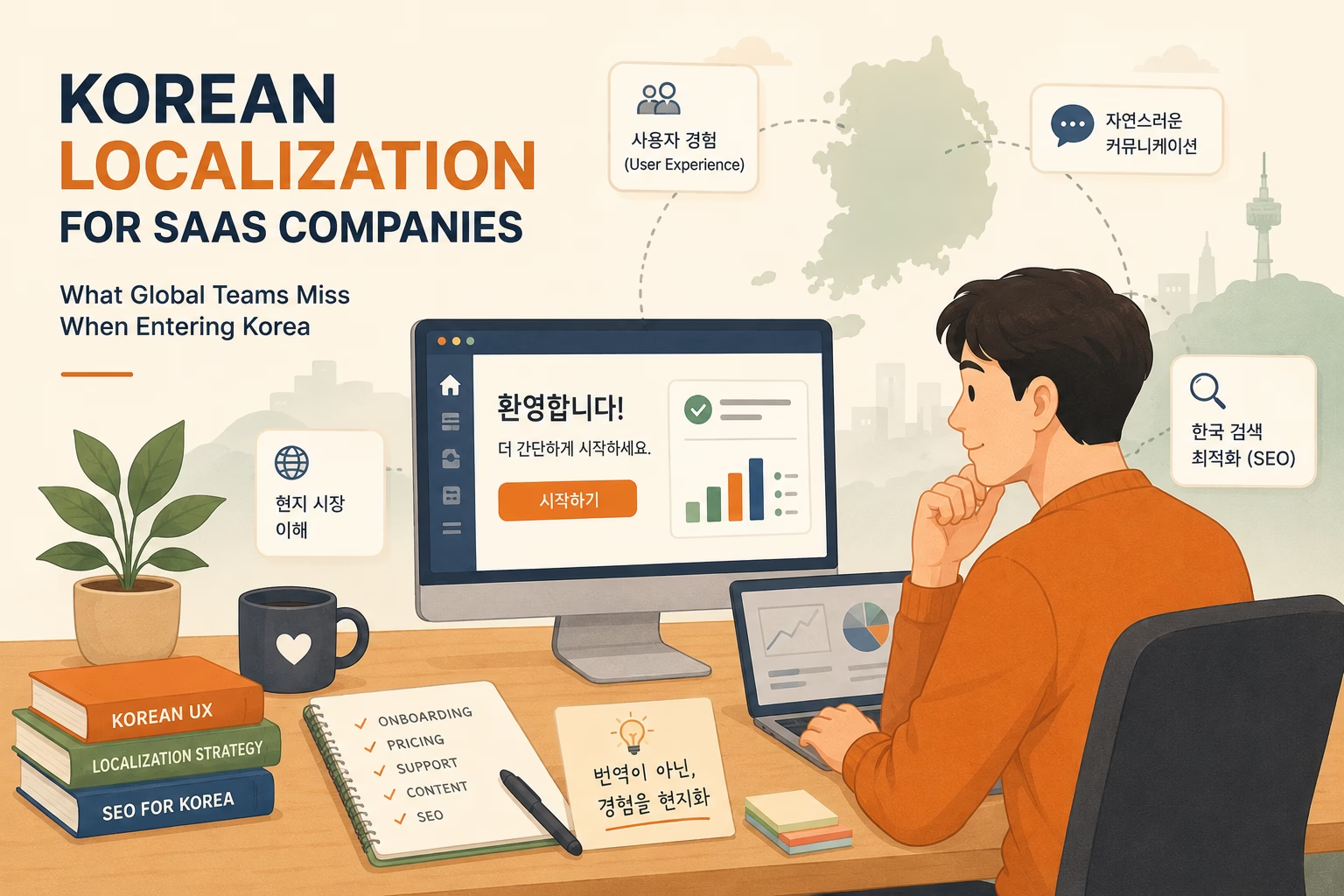
How do you prioritize Korean localization for SaaS?
Use product evidence or a specific launch requirement to choose the starting point. These scenarios are illustrative. A drop at a particular step warrants investigation; it does not establish that language caused the problem.
| Observed issue or requirement | Journey and assets to review | Inputs and review owner |
|---|---|---|
| Users do not finish verification | Signup, verification email, return link, expiration message, and recovery help. | Step-level data, support reports, and a working test account; product and engineering owners. |
| New accounts stall before setup | Workspace creation, permissions, the first task, and its onboarding guide. | Current build, setup requirements, and available user feedback; onboarding owner. |
| Buyers repeatedly ask about plans | Pricing, feature limits, billing explanations, and the relevant sales or support response. | Approved plan definitions and actual questions; commercial and product owners. |
| A Korean team rollout is planned | Seat invitation, role selection, invitation email, and administrator help. | Role definitions, rollout requirements, and test access; product and customer-success owners. |
Prioritize the assets needed to finish the chosen task, including a useful route out of an error. For detailed interface wording decisions, use the Korean UX writing guide alongside the product team’s terminology.
What does a Korean onboarding tutorial review involve?
Danny helped an app company produce Korean guide videos from an English reference and a supplied Korean script. The work included script adjustments, screen recording, voice-over, synchronization, and editing, with no on-camera appearance. The client’s identity and footage are not shared here.
The following workspace-invitation sequence is an illustrative tutorial, not a description of that client’s product:
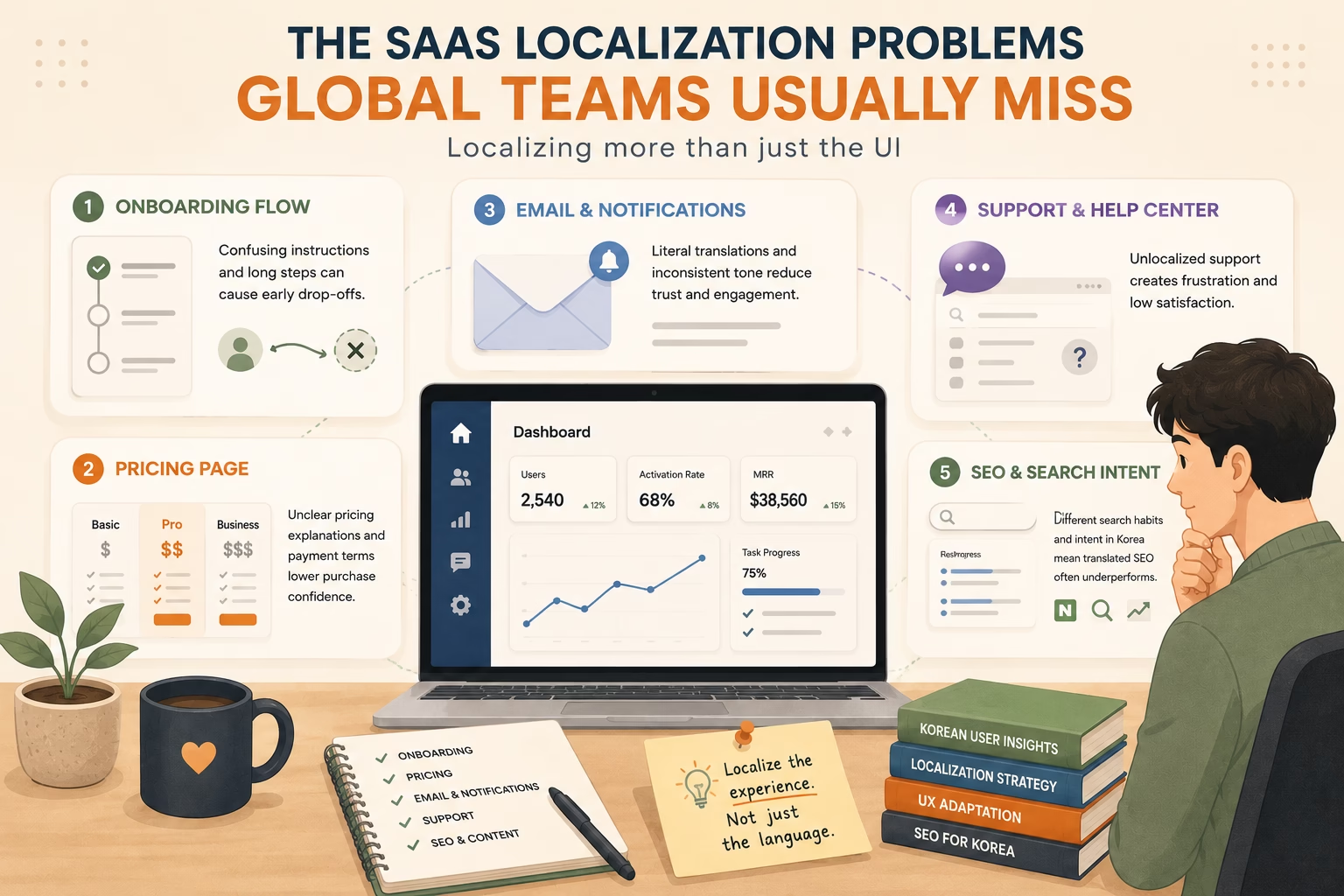
- Confirm the source and build. Identify the reference video, supplied script, current interface version, and account role needed to demonstrate the task.
- Align terminology. Match the spoken instructions to the actual Korean labels for the workspace, member roles, and invitation action. Flag labels awaiting product approval.
- Adjust the script. Check that it explains the action, the required permission, and what the user should see next. Resolve product questions with the owner before recording.
- Record and assemble. Capture the agreed screen sequence, record the narration, and align the voice-over and edits with the visible actions.
- Verify the finished guide. Have the product owner follow the steps in the intended build and confirm that the labels, roles, and resulting state match.
If the invitation dialog changes, review the affected script, recording, and help references together. Name the person responsible for reporting release changes so an approved tutorial does not quietly become outdated.
How do you judge whether the journey is ready?
The Korean reviewer assesses meaning, tone, terminology, and instruction clarity. The product team verifies behavior, permissions, plan rules, and the demonstrated flow.
Run the complete journey in the intended build, including its emails and help links. A correctly translated button cannot establish that an invitation arrives or that a permission rule works. The app localization scope and QA checklist provides a fuller framework for linguistic, visual, and functional review.
After release, track a defined completion event and the step-level questions relevant to this journey. Compare relevant cohorts and periods, noting changes in acquisition, product behavior, or pricing. Small samples and simultaneous changes limit what you can attribute to localization; a completed content project does not guarantee an activation or conversion increase.
What should you prepare for a first localization project?
Bring the selected user task, source copy and videos, current Korean materials, approved terminology, test access, required outputs, and release date. Identify who can answer product questions and approve the result. Engineering implementation and legal approval need their own owners.
To discuss Korean localization support, send that journey and the available materials. Korean localization for SaaS becomes easier to scope when the team can name the user outcome and its acceptance criteria.
SaaS localization questions
Do we need to localize the entire product before starting?
The initial scope can cover one complete journey if the team identifies the remaining English touchpoints and their effect on the task. Confirm what users will encounter before treating that journey as ready for release.
Who approves screenshots and tutorial steps?
A product owner with access to the intended release should verify them. Record the approved build and file version, and agree who flags interface changes that may require new screenshots, script revisions, or recording.