You are currently viewing Korean Voice Over for Anime and Games: Native Character Voice

Korean Voice Over for Anime and Games: Native Character Voice

  • Post author:
  • Post category:UGC

Anime and games depend on one thing more than most people realize: believable characters.

A line can be translated correctly, recorded clearly, and still feel wrong to Korean audiences. Maybe the character sounds too polite for a battle scene. Maybe the dialogue feels like a direct translation. Maybe the voice does not match the age, personality, or emotional weight of the scene.

That is why Korean voice over for anime and games is not just about finding someone who speaks Korean. It is about making the character feel alive in Korean.

This matters even more if you are trying to reach the Korean market. South Korea remains one of the world’s major gaming markets. According to KOCCA’s 2025 Korea Game White Paper, reported by Digital Today, Korea’s domestic game industry sales reached 23.8515 trillion KRW in 2024, and Korea maintained a 7.2% share of the global game market.

As a native Korean voice-over artist and content creator, I often see global teams focus on translation first and voice direction later. But for character-driven content, those two things should work together from the beginning.

In this guide, we will cover why Korean anime and game voice overs can sound awkward, what makes Korean character dialogue feel natural, and how to prepare a better brief before recording.

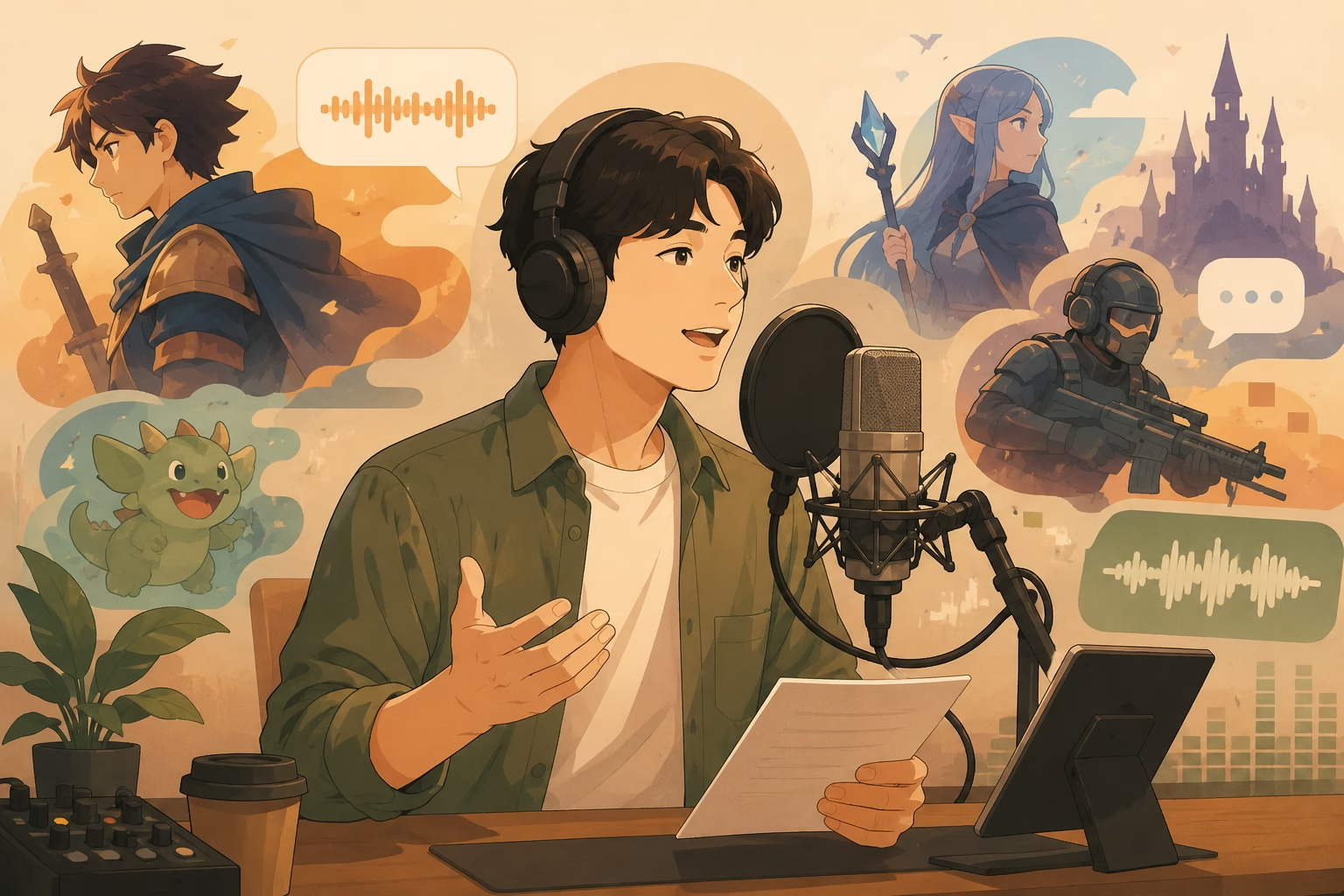
Korean voice over artist recording anime and game character lines in a warm studio illustration
Hire Korean localization expert for startups

Hire Korean localization expert for startups

Why Many Korean Anime and Game Dubs Sound Awkward

Many Korean voice over problems do not start in the recording booth. They start in the script.

When a line is translated too literally, the voice actor has to perform a sentence that a real Korean character would probably never say. The result may be technically correct, but emotionally weak.

For example, English dialogue often allows characters to sound casual, sarcastic, respectful, or aggressive through word choice and tone. Korean does this too, but with an additional layer: speech levels, honorifics, sentence endings, and relationship-based nuance.

That means the same English line can become very different in Korean depending on who is speaking, who they are speaking to, and what kind of relationship they have.

A young hero speaking to a mentor, a villain mocking a rival, an NPC guiding a player, and a magical creature talking to a child should not sound like they are using the same Korean sentence structure.

This is where many projects go wrong. They treat Korean voice over as the final step after translation. In reality, Korean voice over should be part of the localization process.
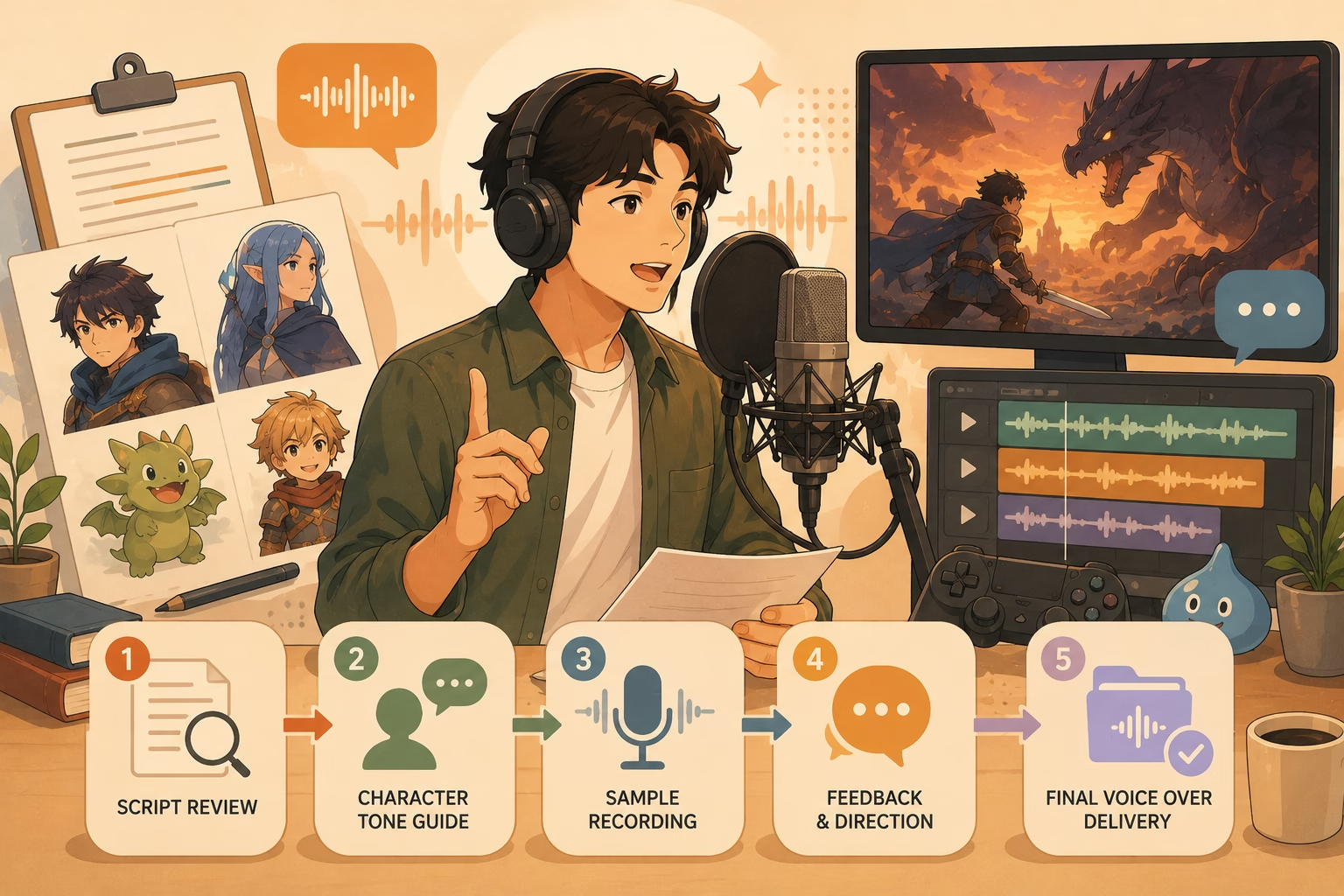
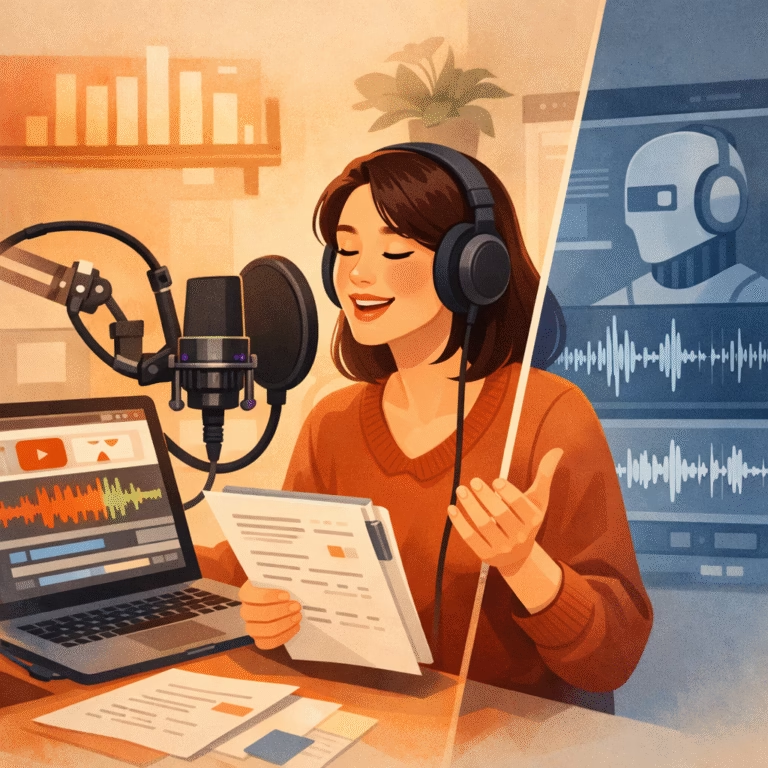
Illustration comparing awkward and natural Korean character voice over for anime and games
Hire Korean localization expert for startups

Anime Voice Over vs Game Voice Over: What Makes Them Different?

Anime and games are both character-based, but they do not use voice in the same way.

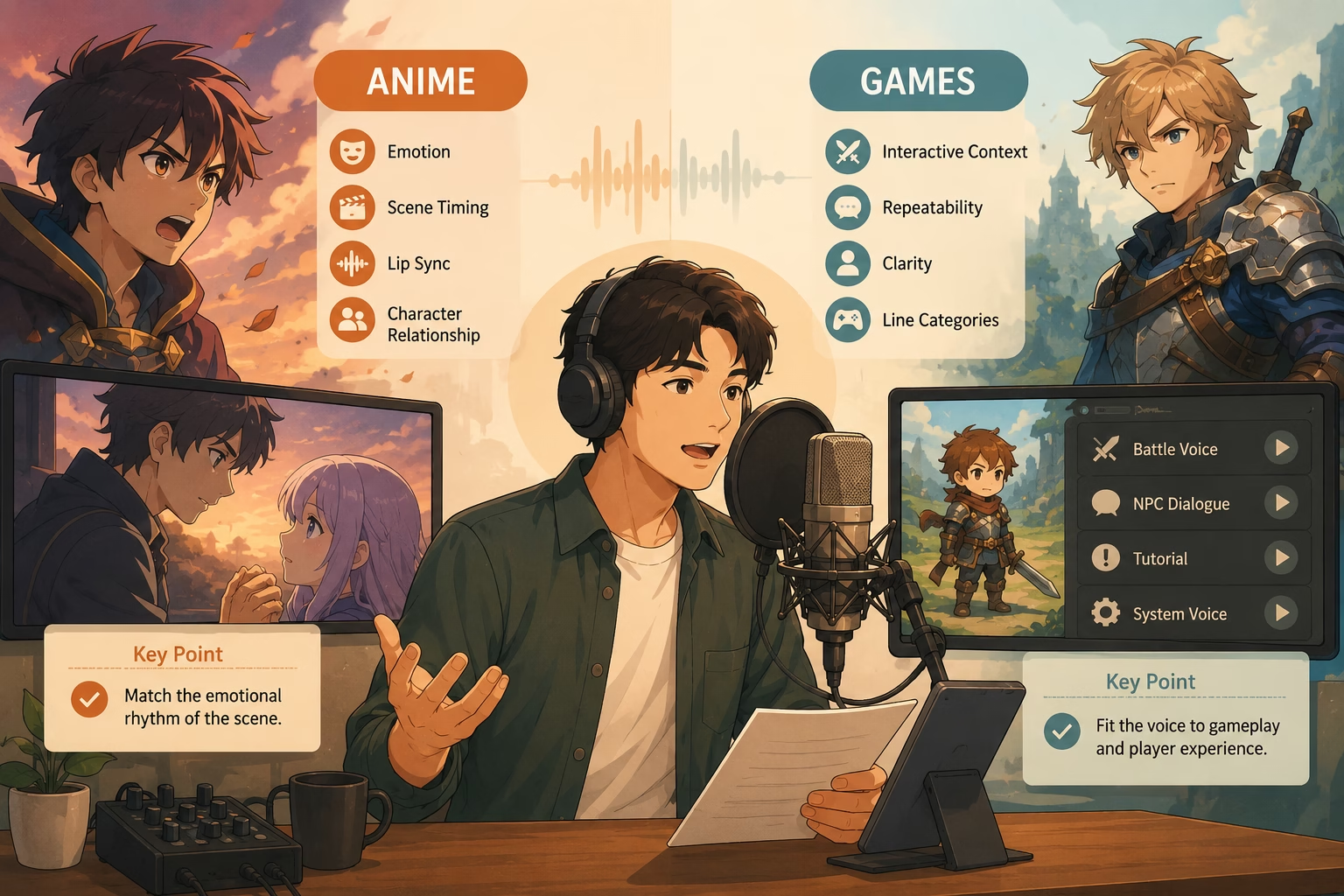
In anime, the viewer follows a fixed scene. The emotion, timing, camera angle, and character expression are already decided. Korean anime voice over needs to match the emotional rhythm of the scene. If the character is crying, hesitating, shouting, or hiding their feelings, the Korean line has to carry that same timing.

Game voice over is different because the player interacts with the world. A line might be heard once in a cinematic scene, or repeated many times during gameplay. That changes how the voice should be performed.

For example, a battle line must be short, energetic, and repeatable. A tutorial line must be clear without feeling robotic. An NPC line should fit the world but not distract the player. A character trailer line should be more dramatic and memorable.

This is why Korean voice actor for games is not the same search intent as general Korean narration. Game voice over needs performance, consistency, and an understanding of gameplay context.

Content TypeWhat Matters Most in Korean Voice Over
Anime sceneEmotion, timing, character relationship
Game cutsceneActing, pacing, cinematic delivery
Battle voiceEnergy, short impact, repeatability
NPC dialogueNatural world-building, consistency
Tutorial voiceClarity, friendly direction
Character trailerStrong identity and memorable tone
Mobile game adFast hook, emotional clarity, conversion

A good Korean voice over artist should not only ask, “What does this line mean?” They should also ask, “Where will the audience hear this line?”

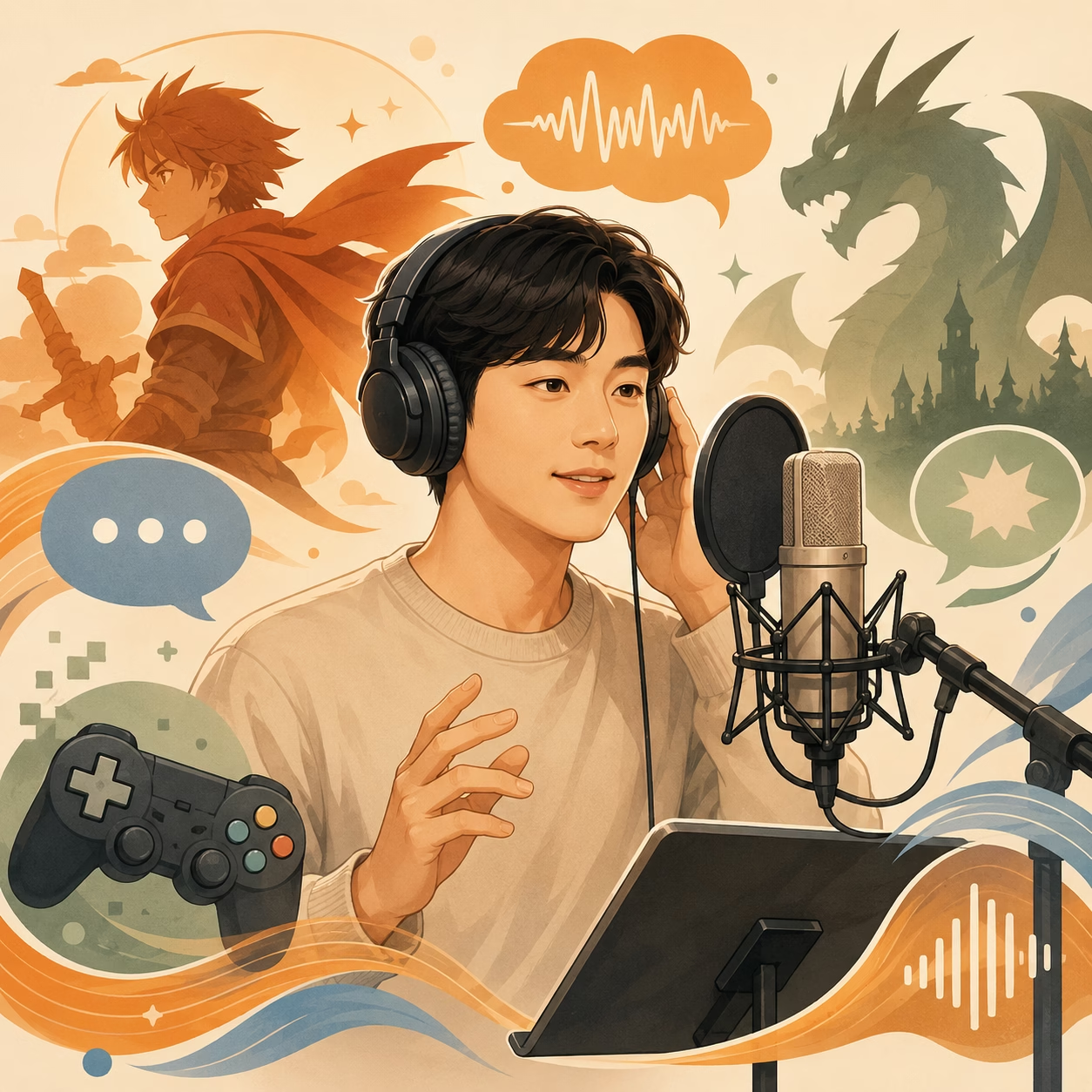
Korean voice actor recording anime and game characters with fantasy and game elements

Problem 1: The Korean Script Sounds Translated, Not Spoken

One of the most common issues in Korean audio localization is dialogue that sounds translated.

This happens when the Korean script follows the source language too closely. The sentence may be understandable, but it does not sound like something a Korean character would naturally say.

For anime and games, this problem becomes even more obvious because audiences are focused on emotion and character identity. Korean viewers and players can immediately feel when a line sounds stiff.

Korean also has a complex honorific system. Game localization specialists often point out that Korean dialogue must consider social hierarchy, relationship, and politeness level, especially in character interactions. Altagram also highlights honorifics and relationship-based language as one of the key challenges in Korean game localization.

For example, a line like:

“You came back.”

could become several different Korean versions depending on context.

It could sound warm, cold, romantic, sarcastic, respectful, angry, or threatening. The right version depends on the character relationship.

That is why Korean script adaptation matters before recording. A native Korean voice actor can often catch lines that are grammatically fine but emotionally unnatural.

What to Check Before Recording

  • Is the character using formal or informal Korean?
  • Does the speech level match the relationship?
  • Is the line too long for the scene?
  • Does the sentence sound like spoken Korean?
  • Is the emotional intention clear?
  • Are there fantasy terms, names, or special pronunciations?

This is especially important for anime, RPGs, visual novels, story-based mobile games, and character trailers.


Problem 2: The Voice Does Not Match the Character

A good voice is not always the right voice.

For Korean anime voice over and Korean game dubbing, casting should start with character identity. Age, personality, genre, emotional range, and relationship dynamics all affect the voice direction.

A soft and friendly voice might work for a casual mobile game guide. But it may not work for a dark fantasy villain. A bright anime-style voice might work for a young magical character, but not for a grounded military commander.

This is why a Korean character voice actor needs more than a clean recording setup. They need to understand the role.

For example, when I review a character script, I usually look at three things before recording:

First, I check the character’s social position. Are they a student, leader, monster, older brother, assistant, warrior, or narrator?

Second, I check the relationship. Are they speaking to a friend, enemy, player, mentor, or stranger?

Third, I check the emotional level. Should the line sound calm, desperate, playful, confident, or broken?

Without this context, even a high-quality Korean recording can feel generic.


Problem 3: Game Lines Need More Than Simple Recording

Game voice over has a unique challenge: the same character may need to sound consistent across many different situations.

A character might whisper in a cutscene, shout during combat, speak casually in a menu interaction, and deliver emotional lines during the ending. If those lines are recorded without a clear tone guide, the character can feel inconsistent.

Korean game dubbing also needs to consider repeatability. A line that sounds powerful once may become annoying if the player hears it 200 times.

This is why game voice over should be organized by line type.

Useful Line Categories for Korean Game Voice Over

Cutscene lines need acting and emotional pacing.

Battle lines need short, sharp energy.

NPC lines need natural delivery that fits the world.

Tutorial lines need clarity and friendliness.

UI or system voice needs consistency and clean pronunciation.

Character trailer lines need a stronger promotional tone.

Musai Studio’s discussion of Korean-dubbed games also notes that users who prefer Korean dubbing often mention immersion and high dubbing quality as reasons, while negative reactions can come from awkwardness between voice, screen, and translation.

That means Korean game voice over is not just a production asset. It can influence how local players experience the game.


Problem 4: Anime Dubbing Needs Emotional Timing

Anime voice over has a different kind of pressure.

The viewer cannot control the pacing. The line has to match the scene as it happens. If the Korean delivery is too fast, too slow, too flat, or too exaggerated, the emotional timing breaks.

This is especially important in scenes with close-up expressions, crying, shouting, hesitation, or silence.

In Korean anime voice over, the actor needs to pay attention to breath. A small pause can make a line feel more vulnerable. A sharper ending can make a character sound colder. A softer sentence ending can make the character feel more intimate.

For anime-style content, the Korean script also needs to avoid sounding too formal unless the character requires it. Some fantasy or historical characters may need more elevated Korean, but modern characters usually need a more natural conversational style.

The key is not to make everything sound “dramatic.” The key is to make the emotion believable.


A Better Workflow for Korean Voice Over Projects

The best Korean voice over projects usually do not start with “Please record this script.”

They start with context.

A better workflow looks like this:

1. Script Review

Before recording, the Korean script should be reviewed for naturalness, tone, length, and character fit.

This step can catch awkward expressions early. It is much easier to fix a line before recording than to re-record it later.

2. Character Tone Guide

Each major character should have a short tone guide.

It does not need to be long. Even a few lines can help:

  • Age and role
  • Personality
  • Relationship with other characters
  • Emotional baseline
  • Reference tone
  • Do’s and don’ts

For example:

“A calm but slightly sarcastic young warrior. He respects his mentor but speaks casually to friends. Avoid making him sound too heroic or too formal.”

This kind of direction helps the Korean voice actor make better choices.

3. Sample Recording

For character-based projects, a short sample recording can prevent misalignment.

This is especially useful when the client is not Korean-speaking. Instead of guessing from the final delivery, the team can approve the direction first.

4. Full Recording

Once the tone is confirmed, the full recording becomes smoother.

For games, it is helpful to record similar line types together. For example, battle efforts, damage reactions, UI lines, and cutscene lines should be grouped separately.

5. Review and Pickup

After delivery, small pickups may be needed for pronunciation, emotional intensity, or timing.

This is normal for anime and games. Character voice over is performance-based, so review should focus not only on audio quality but also on whether the character feels right.

Korean voice over workflow for anime and game localization from script review to final delivery

What to Send Before Recording Korean Voice Over

A strong brief can improve the final voice over more than most teams expect.

For Korean anime and game projects, the voice actor should not receive only the translated script. They should receive enough context to understand the character and the scene.

Korean Voice Over Brief Checklist

Brief ItemWhy It Matters
Character descriptionHelps match age, personality, and tone
Scene contextExplains emotional intention
Relationship notesHelps choose Korean speech level
Reference video or imageGives visual direction
Pronunciation guidePrevents name and term mistakes
Line categorySeparates cutscene, battle, NPC, UI, trailer, etc.
Audio formatAvoids technical issues
Usage detailsClarifies commercial scope
Deadline and revision policyKeeps the workflow clear

If the project includes fantasy names, invented terms, magic systems, character ranks, or special attacks, a pronunciation guide is especially important.

For Korean, it is also helpful to mark whether the character should use polite, casual, rough, royal, old-fashioned, or modern speech.

In game localization, even system messages can sound too formal if they are translated without gameplay context. Inlingo’s guide to Korean game localization gives an example where a mission-zone message sounds too formal and needs to be adjusted to a more appropriate in-game tone.

That same principle applies to voice over. The line should fit the moment, not just the dictionary.


When Do You Need Korean Voice Over for Anime and Games?

You may need Korean voice over if your project includes any of the following:

Character Trailers

A Korean character trailer needs a strong voice direction because it often becomes the first emotional touchpoint for Korean audiences.

The voice should communicate genre, personality, and story quickly.

Mobile Game Ads

For mobile game ads, Korean voice over needs to grab attention fast. The tone may be more conversational, emotional, or energetic depending on the ad concept.

This is where voice over and UGC-style delivery can sometimes overlap, especially for playable ads, story ads, and short-form video campaigns.

RPGs and Visual Novels

RPGs and visual novels rely heavily on dialogue. Korean speech levels become especially important because character relationships change across the story.

A character who starts formal may become casual later. A rival may speak politely in public but aggressively in private. These changes need to be intentional.

Anime-Style Shorts or Web Series

Short animation projects need efficient but expressive voice direction. Since every line has limited time, the Korean script should be adapted for emotional clarity.

In-Game Tutorials and Guides

Tutorial voices should sound clear, helpful, and natural. If the voice sounds too stiff, players may feel the game is poorly localized even if the information is correct.


Work With a Native Korean Voice Over Artist

Korean voice over for anime and games is not just about pronunciation.

It is about character.

The right voice should help Korean audiences understand who the character is, how they feel, and what kind of world they belong to. Whether you are producing an anime-style trailer, a mobile game ad, an RPG, a visual novel, or in-game dialogue, the Korean voice should feel natural from the first line.

If you are preparing a project for the Korean market, I can help with Korean voice over, character tone review, and natural Korean script adaptation so your characters do not just speak Korean — they sound believable in Korean.

Work with a native Korean voice-over artist