
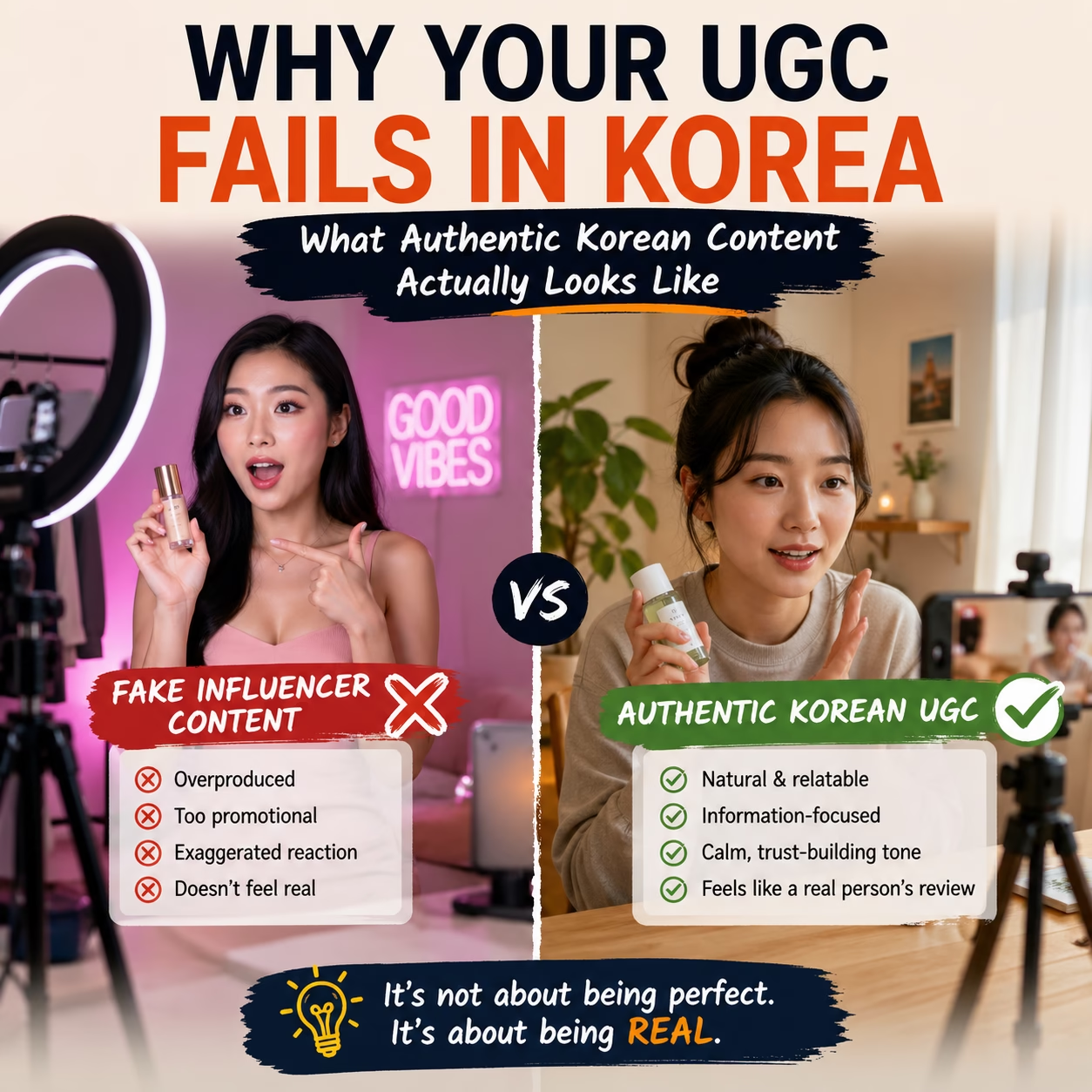
If your UGC performs in the U.S., Europe, or Southeast Asia but stalls in Korea, the issue is usually not that Korean audiences dislike creator content.
It is usually that the content feels imported.
The brief was global. The script was translated. The creator was asked to mimic “authenticity” instead of speaking in a format that actually makes sense to Korean audiences.
In Korea, authentic content does not simply mean casual filming, shaky camera angles, or a creator talking like they are not reading a script. It means the content feels useful, platform-native, locally relevant, and trustworthy.
As both a marketer and a Korean UGC creator, I have seen this problem from both sides. Brands want conversion, but creators know that forced global scripts often kill performance before filming even starts.
This article breaks down why global UGC often fails in Korea, what authentic Korean influencer-style UGC actually looks like, and how brands can fix their creator content strategy before wasting more budget.
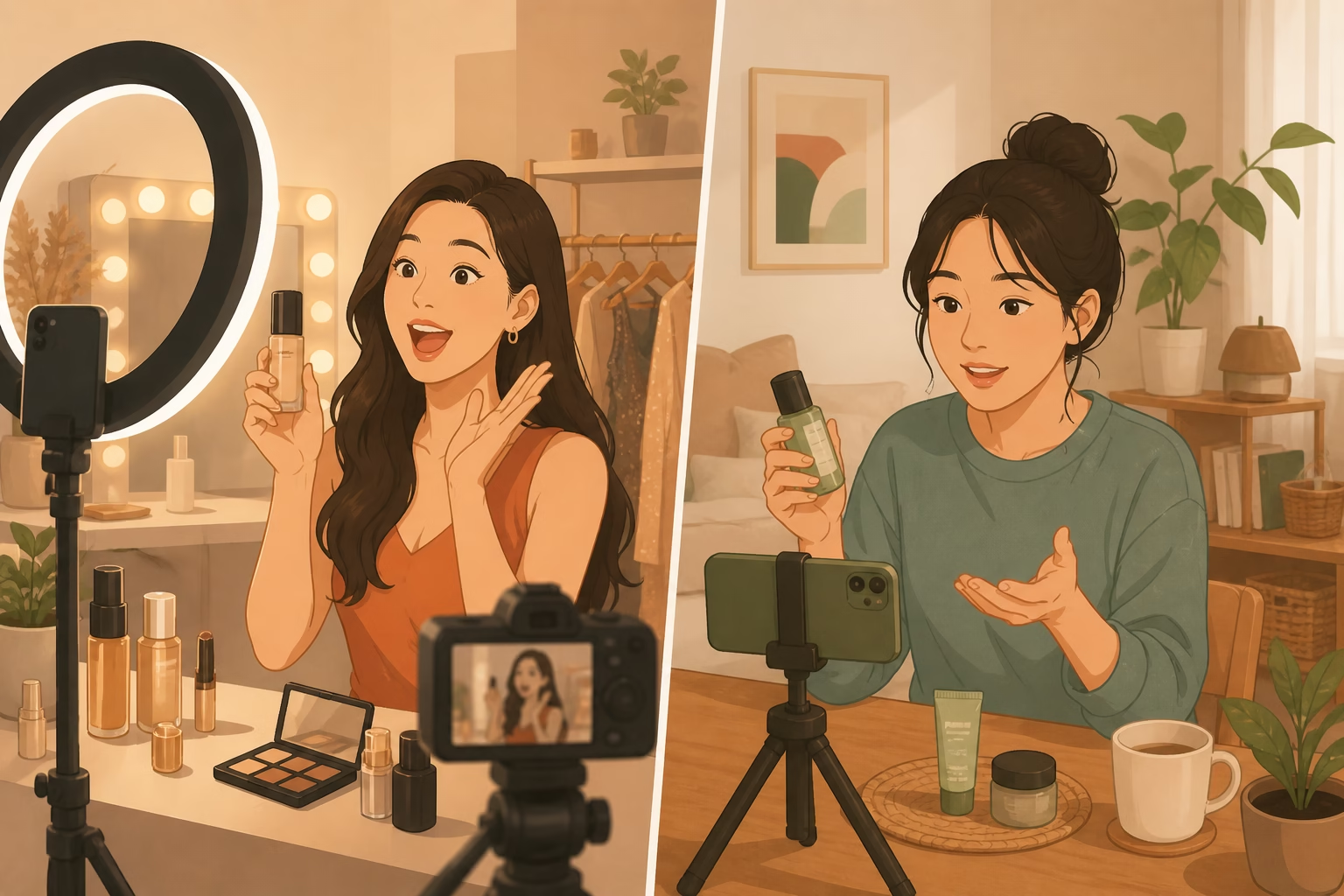
The Real Problem with Imported UGC in Korea
Many global brands assume that a winning UGC asset can simply be reused in Korea with translated captions or a Korean-speaking creator.
That approach often fails because Korea is not just another language version of the same campaign. It is a different media environment with different trust signals, different platform roles, and different expectations around creator content.
Korean users are highly active across platforms such as KakaoTalk, YouTube, Instagram, Naver, and short-form video services. But each platform plays a different role in the purchase journey. A video that works for TikTok-style discovery may not be enough for Naver search validation or KakaoTalk-based follow-up.
According to the Korea Press Foundation’s 2024 social media survey, KakaoTalk, YouTube, Instagram, Band, and Naver Blog all remain meaningful parts of Korea’s social media landscape. This matters because UGC in Korea does not live on one platform only. It often moves from discovery to review-checking to search to purchase.
That is why the real issue is not “Korean audiences do not like UGC.” The issue is that imported UGC often does not match how Korean audiences evaluate trust.
Why Global UGC Often Feels Fake in Korea
A common global UGC formula looks like this:
- Start with a loud hook
- Show a dramatic reaction
- Use fast cuts
- Make a strong product claim
- End with a direct CTA
This can work in some markets. But in Korea, it can easily feel too promotional, too exaggerated, or too obviously scripted.
Korean audiences often respond better when the creator explains a realistic situation, shows a believable use case, and gives practical reasons why the product matters. The content can still be short, engaging, and conversion-focused, but it needs to earn trust earlier.
Recent consumer research also shows that people discover brands through social media but still rely heavily on reviews before buying. This means UGC should not only attract attention. It should also help the viewer feel more confident about the decision.
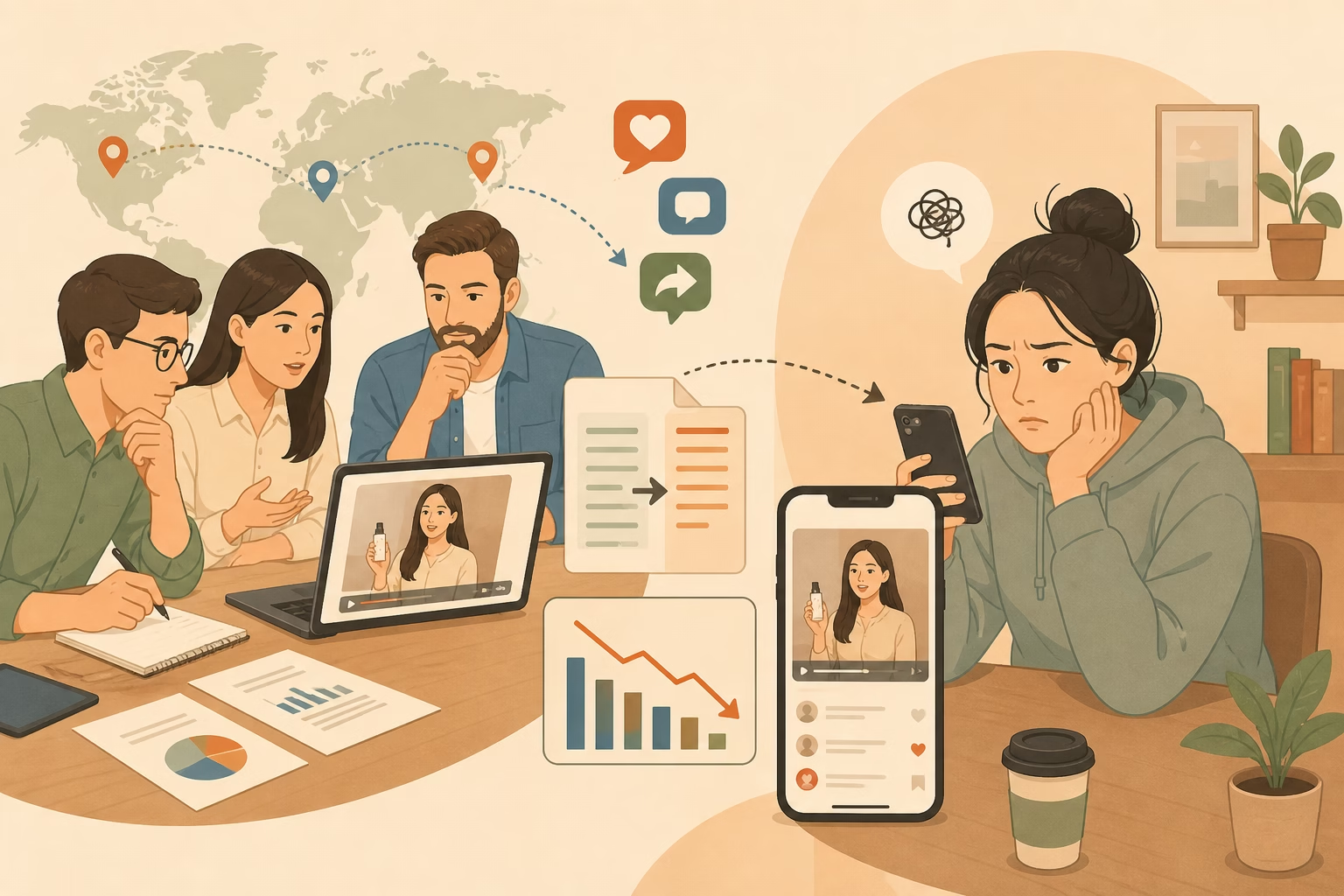
What Korean Audiences Expect from UGC
In Korea, authentic UGC is not just about looking natural. It is about sounding credible.
A Korean viewer is often asking these questions while watching:
- Does this creator actually seem like they would use this?
- Is the product benefit specific enough?
- Does this feel like a real review or just a paid script?
- Can I verify this later through search or reviews?
- Is the tone too exaggerated for the category?
This is why Korean UGC often needs more proof than global teams expect. Depending on the category, that proof might be texture, routine, before-and-after comparison, price logic, ingredient explanation, usage context, durability, convenience, or a side-by-side comparison.
The best Korean UGC does not scream, “Buy this now.” It makes the viewer think, “That actually makes sense for me.”
What Authentic Korean Influencer-Style UGC Actually Looks Like
Authentic Korean influencer-style UGC usually starts with a real situation, not a generic claim.
Instead of saying, “You need this product right now,” a stronger Korean-style opening might sound like:
“I tested this during a humid commute, and this is what actually surprised me.”
“I compared three options before choosing this one.”
“This is why I would actually re-buy it.”
The tone is still personal, but it is usually more grounded. The creator does not need to overact. The content feels convincing because the situation is specific and the explanation feels useful.
In other words, authentic Korean UGC is not about being messy or unpolished. It is about being natural, clear, and believable.
Global UGC vs Authentic Korean UGC
| Attribute | Global UGC Default | Authentic Korean UGC |
|---|---|---|
| Tone | Loud, emotional, urgency-heavy | Calm, specific, credible, peer-to-peer |
| Hook | Big promise or dramatic pain point | Local situation plus clear benefit |
| Proof | Often comes later | Appears early in the video |
| Creator role | Personality carries the asset | Creator fit, use case, and explanation build trust |
| Production | Intentionally casual or chaotic | Natural but tidy, with clear captions and close-ups |
| CTA | Generic “buy now” message | Platform-specific next step such as search, save, click, follow, or watch more |
Platform Fit Matters More Than Most Global Teams Think
One of the biggest mistakes in Korea is treating every platform as the same short-form channel.
TikTok, Instagram Reels, Naver, KakaoTalk, and YouTube Shorts can all support UGC, but they do not play the same role.
| Platform | Main Role in Korea | What Authentic UGC Should Do |
|---|---|---|
| TikTok | Discovery and trend participation | Feel native, creator-led, and fast to understand |
| Instagram Reels | Visual identity, social proof, and repeat exposure | Show routine, taste, lifestyle fit, and creator credibility |
| Naver | Search, review validation, and product comparison | Provide searchable detail, proof, and review-style explanation |
| KakaoTalk | Sharing, CRM, communities, and commerce follow-up | Make content easy to share and connect with offers or channels |
| YouTube Shorts | Short-form discovery connected to deeper content | Use short proof to lead viewers toward longer review or shopping content |
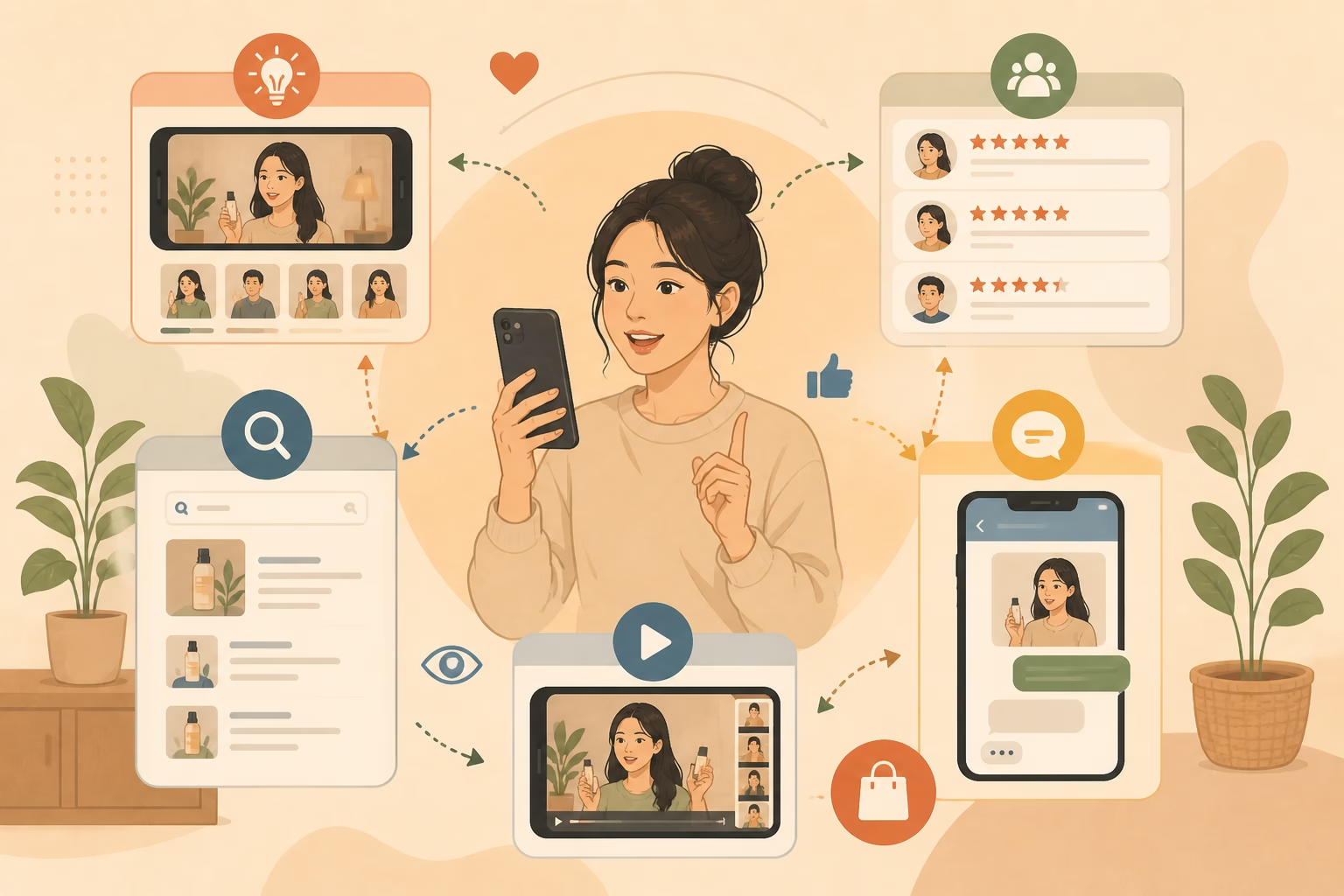
How to Fix a Failing UGC Campaign in Korea
The first fix is the brief.
A Korea-ready creator brief should not simply say, “Make a natural UGC video.” It should define the local use case, the platform role, the mandatory proof points, claim boundaries, disclosure requirements, and the CTA path.
For example, a weak brief says:
“Create a fun UGC video introducing our product.”
A stronger Korea-ready brief says:
“Show how this product fits into a realistic Korean workday routine. Explain one specific benefit, show the product clearly in the first few seconds, include a natural comparison point, and end with a platform-specific next step.”
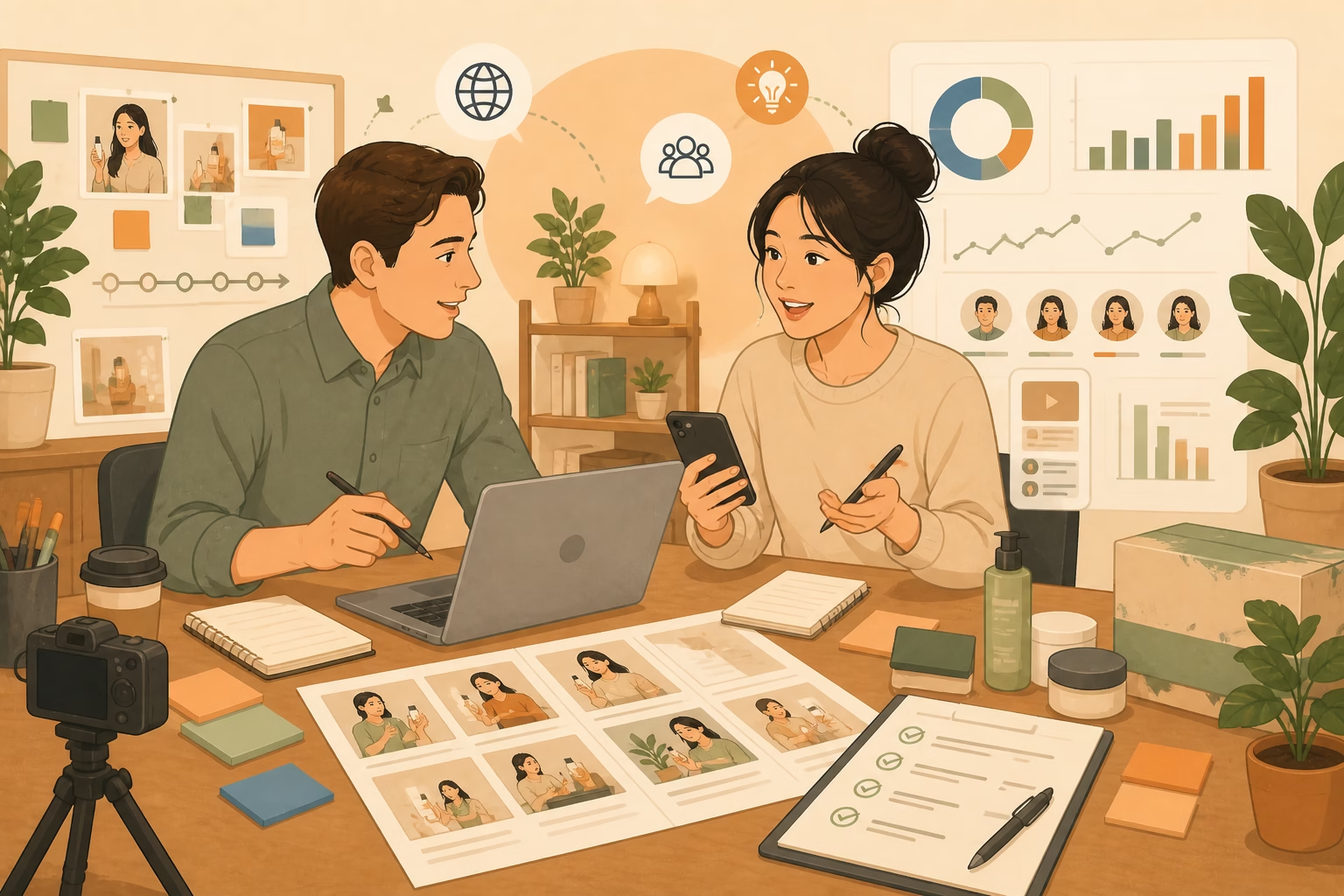
The second fix is creator freedom. Korean creators should not be forced to copy a global script line by line. The brand should provide the product truth, claim boundaries, proof points, and CTA, then allow the creator to translate the idea into a tone that feels natural for their audience.
The third fix is asset variation. Instead of one hero video, create multiple versions:
- A proof-led version
- A routine-led version
- A comparison-led version
- A creator-opinion version
- A platform-specific CTA version
This allows the campaign to test what Korean audiences actually respond to instead of relying on one imported creative assumption.
Do Not Treat Disclosure as an Afterthought
Trust is especially important in Korean influencer and creator marketing.
After Korea’s backdoor advertising controversy, disclosure rules became a major issue for sponsored content. Brands should make sure sponsorship disclosure is clear, visible, and appropriate for each platform format.
This is especially important for blog-style content, review content, and text-heavy formats where users may evaluate the content as a source of information before purchasing.
Authenticity does not mean hiding the fact that content is sponsored. In Korea, hiding sponsorship can damage trust much faster than being transparent from the beginning.
A Simple Checklist for Korean UGC
Before launching a Korean UGC campaign, check these five points:
- Local situation first: Does the content start from a realistic Korean usage moment?
- Proof before persuasion: Does the viewer see the product, result, or comparison early?
- Creator fit over reach: Does the creator naturally belong in the category?
- Disclosure and claim safety: Is the sponsorship clear and are the product claims realistic?
- Platform-specific CTA: Should the viewer search, save, click, follow, message, or watch more?
If the content cannot pass these five checks, it may look like UGC on the surface but still feel like an imported ad to Korean viewers.
FAQ
Does Korean UGC need to look more polished than Western UGC?
Usually, yes, but not in a glossy advertising way. Korean-facing creator content often performs better when it feels natural but still has clean captions, clear product shots, readable benefit text, and a tighter structure.
Should brands prioritize TikTok or Instagram for Korean UGC?
It depends on the campaign goal. TikTok can be strong for discovery and creator-native paid amplification, while Instagram is useful for social proof and visual identity. However, Naver, KakaoTalk, and YouTube Shorts can also influence the conversion path in Korea.
Can we just translate our winning English UGC script into Korean?
You can test it, but it should not be the default approach. Straight translation often preserves the words but loses the local buying logic. Korean UGC usually needs localized context, proof, tone, and platform routing.
What makes Korean UGC feel authentic?
Authentic Korean UGC feels specific, useful, and believable. It does not overact. It shows a real situation, explains the benefit clearly, and gives the viewer enough proof to trust the creator’s recommendation.
Need Help Creating Korean UGC That Actually Feels Native?
If your brand is trying to enter Korea, creator content should not feel like a translated version of a global ad.
It should feel like something Korean audiences would actually watch, trust, search, and act on.
I help global brands and agencies create Korean UGC that fits the local market — from script localization and creator-style content planning to Korean spokesperson videos and platform-ready UGC assets.
If you want Korean UGC that feels native, credible, and conversion-ready, let’s build the right content direction together.


Pingback: Korean Content Creator for Amazon Product Reviews