
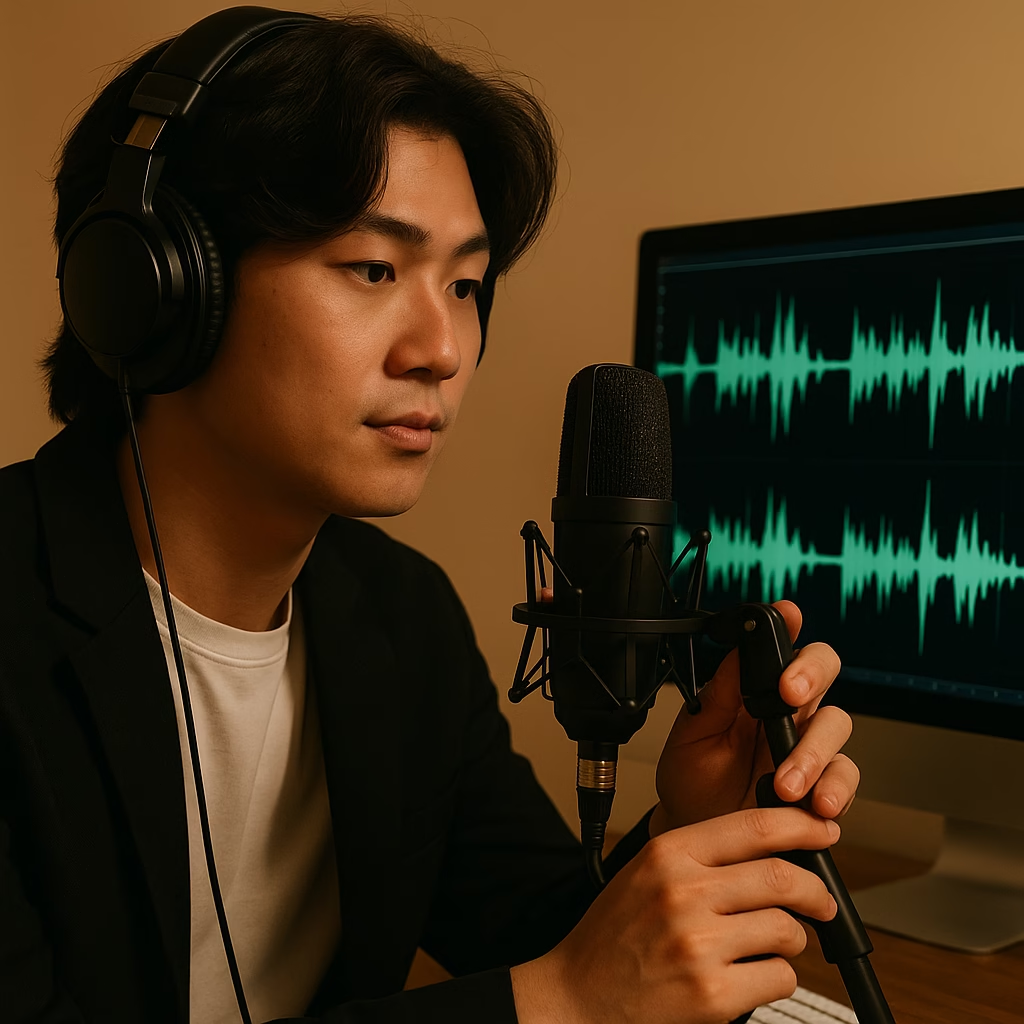

For a project with Korean and English audio, the first decision is whether the same speaker should record both versions. A bilingual Korean–English voice actor can provide a shared voice across the project, but each language still needs its own review for pronunciation, tone, and audience fit.
Start with the scripts, the role of each language, and the delivery style you want. Then assess samples in both languages before agreeing on recording and delivery.
Should one speaker record both languages?
One speaker may suit a paired product explainer, training module, or brand introduction when you want the audience to recognize the same voice in both versions. Separate speakers may be more suitable when the versions require different character performances, vocal qualities, or English accents.
Specify the intended English accent and delivery style instead of relying on the word bilingual. Review whether the actual performance fits that brief. The Korean version also needs a clear direction: the level of politeness, energy, pace, and relationship between the speaker and listener.
Keep the core message and approved product terms consistent across the two scripts, while allowing the wording and sentence length to work naturally in each language.
What should you confirm for recording and delivery?
Agree on the recording requirements before the session. If audio must match an existing video, provide the current cut and identify any fixed cues or maximum durations. Equal word counts do not mean the Korean and English versions will take the same time to read.
- Audio specification: Confirm the required format, such as WAV or MP3, along with sample rate, bit depth where relevant, and any processing requirements.
- File organization: Decide whether you need one file per language, separate lines, or files split by scene, with an agreed naming convention.
- Review and schedule: Confirm script approval, pronunciation checks, the scope of revisions, and the delivery date after the materials and recording requirements are reviewed.

How do you assess a bilingual Korean–English voice actor?
Listen to each language separately, then compare them as a pair. For an explainer, check whether the key terms are easy to follow. For a narrative piece, listen for pacing and how the delivery supports the story. Use the same brief to judge both versions without expecting identical sentence rhythm.
Ask the person responsible for each language to check pronunciation, meaning, and delivery. If a required style or accent is not represented in the available samples, discuss that requirement before booking.
Review the voice-over samples and service details, then identify which aspects of the delivery fit your Korean and English versions and which need further discussion.
What belongs in a bilingual voice-over brief?
- Language versions: Supply the Korean and English scripts, mark the approved version of each, and identify who will review them.
- Speaker and style: Say whether one voice must cover both languages, then describe the intended English accent and the tone, energy, and pace for each version.
- Pronunciation: Include product names, people’s names, acronyms, and spoken or written references for any required pronunciation.
- Length and synchronization: Provide word counts or estimated duration, the video if available, and any fixed timing cues.
- Usage: State the intended media, placements, territory, and usage period, including whether the recording is for paid advertising.
- Schedule and feedback: Give the preferred deadline, identify the final approver, and confirm revision scope before recording.
- Delivery files: List the required audio format, technical settings, file splits, and naming convention.
To discuss a bilingual Korean–English voice-over project, share the scripts, style references, intended usage, and preferred schedule through the form below. These details provide a starting point for confirming project fit, scope, and delivery requirements.