“YouTube views from Korea are low, even though your content is global.”
Many creators run into this same issue: even with good subtitles, Korean audiences don’t feel fully drawn in. Subtitles alone rarely create a sense of closeness. Korean viewers naturally prefer voice-first content, and when a video isn’t dubbed in Korean, it can feel distant or simply too much effort to commit to—even if the topic itself is highly relevant or interesting.
This guide breaks down why Korean dubbing makes such a measurable difference, how it solves low engagement, and the specific steps you can follow to prepare your videos for the Korean market, regardless of whether you work with a professional voice actor or not.
“Your YouTube Videos Don’t Reach Koreans — Here’s Why”
Subtitles Aren’t Enough for Most Korean Audiences
Korean viewers consume content quickly, often while multitasking, which means they rely heavily on audio rather than text. Subtitles help with understanding the message but don’t provide emotional tone or personality, both of which are essential for keeping viewers engaged. Content that uses a natural Korean voice track—especially for scripted videos—tends to hold attention far longer because it feels effortless to follow.
Without Localization, Your Message Feels Distant
Even if your content is globally relevant, the delivery matters. When everything is presented in English, Korean viewers must work harder to stay connected, and the information can feel less relatable. Localization ensures viewers feel like the content is meant for them, not simply repurposed for a wider audience.
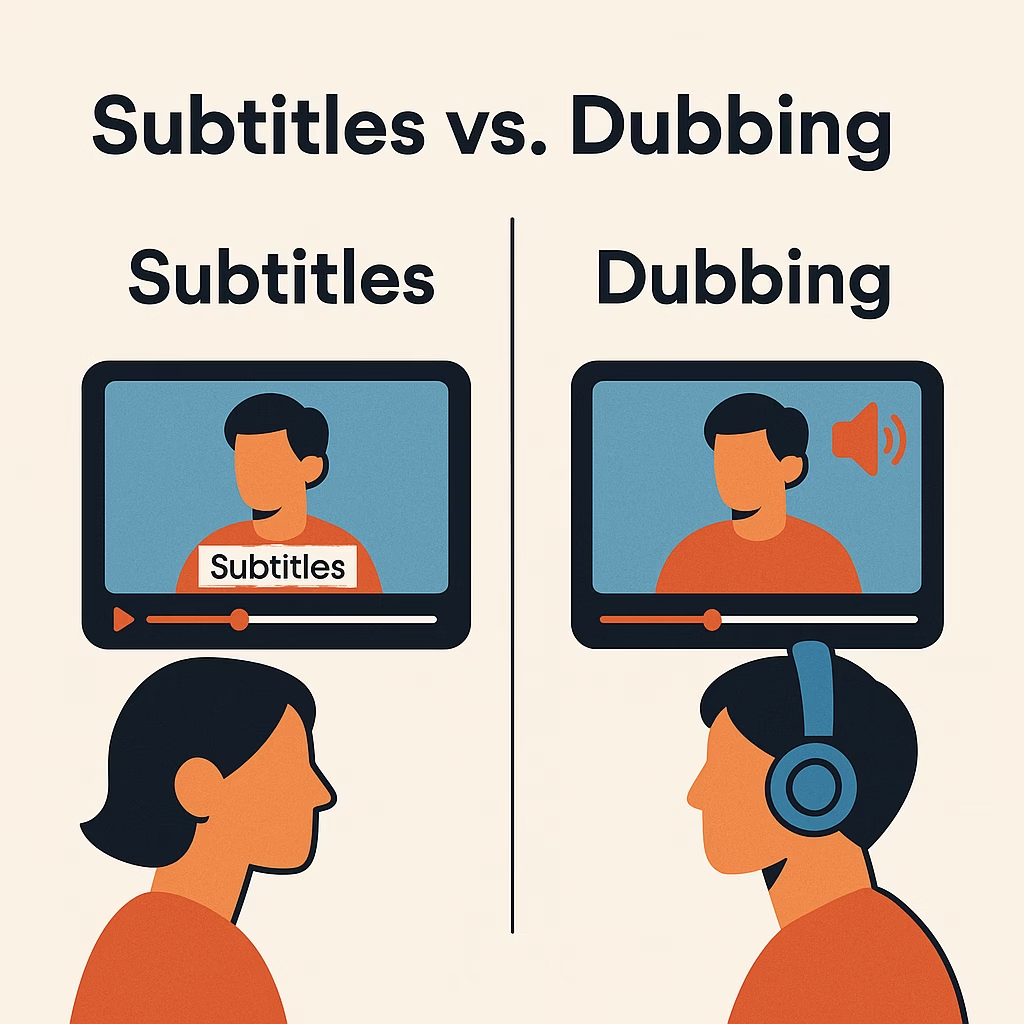
The Gap Between Subtitles and Real Dubbing
Subtitles = Information
Subtitles convey meaning, but nothing beyond that. They provide clarity but no emotional context.
Dubbing = Connection
A Korean voice adds the warmth, tone, and personality that subtitles can’t deliver. It immediately removes the language barrier, makes the video easier to concentrate on, and brings emotional nuance that makes long-form content more enjoyable. This is why videos that include Korean dubbing generally see higher watch time, stronger viewer retention, and more returning viewers.
How Korean Dubbing Fixes Engagement Problems
When a video includes a well-done Korean dub, several engagement metrics typically rise at once. Click-through rate increases when Korean titles and thumbnails align well with localized audio. Watch time improves because viewers feel less fatigue and more comfort listening in their native language. Shareability also increases when the phrasing sounds culturally natural rather than directly translated. AI dubbing can support certain use cases, but human dubbing still provides a level of authenticity, nuance, and emotional accuracy that AI voices struggle to match.
Step-by-Step: Turning Your Video into a Korean-Ready Asset
1) Translate + Localize the Script
The process begins with adapting the script for Korean viewers. This isn’t a word-for-word translation—it’s about adjusting tone, removing awkward phrasing, and reframing lines in a way that feels natural in Korean. For example, casual encouragement like “Guys, listen up” works better as a more natural Korean phrase such as “This part is really important.” Similarly, “Check this out” flows better as “Let’s take a look at this together.”
2) Record the Korean Voiceover
You can hire a professional Korean voice actor for a polished result, collaborate with a bilingual creator who understands both languages, or use AI voices when budget or speed is the priority. Each option has different levels of nuance and emotional delivery, so the choice depends on your goals and the nature of your content.
3) Synchronize With the Original Video
Once recorded, the Korean audio needs to be synchronized with the original footage. A good dub matches the pace, emotional flow, and—when possible—general mouth movements of the speaker. This ensures the dub feels like part of the video rather than an added layer.
4) Upload the Korean Audio (YouTube Multi-Audio Feature)
YouTube makes it simple to add additional language tracks. Under Subtitles, you can upload a separate Korean audio file as an extra track. Once uploaded, YouTube automatically categorizes the video as supporting Korean dubbing, which can increase discoverability among Korean viewers.
Should You Use AI or a Real Voice Actor?
AI voices are useful when you need to test an idea quickly, work with a limited budget, or simply require a neutral narration style. But when the content relies on emotion, branding, or consistent tone across multiple videos, a human voice actor performs far better. A real Korean voice brings personality, cultural nuance, and credibility—qualities that matter especially in storytelling, marketing campaigns, or any video intended to build a strong brand identity.
How to Maintain Quality Even on a Budget
You don’t need a large budget to create high-quality Korean dubbing. Many creators translate their scripts themselves and then polish the language using tools like ChatGPT. Recording can begin with an affordable USB microphone, and for longer videos, you can dub only the most essential sections rather than the entire piece. If YouTube’s Multi-Audio feature is unavailable, you can simply upload a separate Korean-dubbed version of the video.
Korean dubbing is more than a simple translation step—it’s a crucial shift that determines whether Korean viewers merely recognize your content or truly engage with it. If you need support with bilingual dubbing, script localization, or final audio syncing, I can help guide you through every part of the process, from adapting the script to delivering a polished Korean version of your video.
👉 Let’s grow your channel in Korea!!