Introduction
For many global agencies, entry to the Korean market faces a familiar challenge:
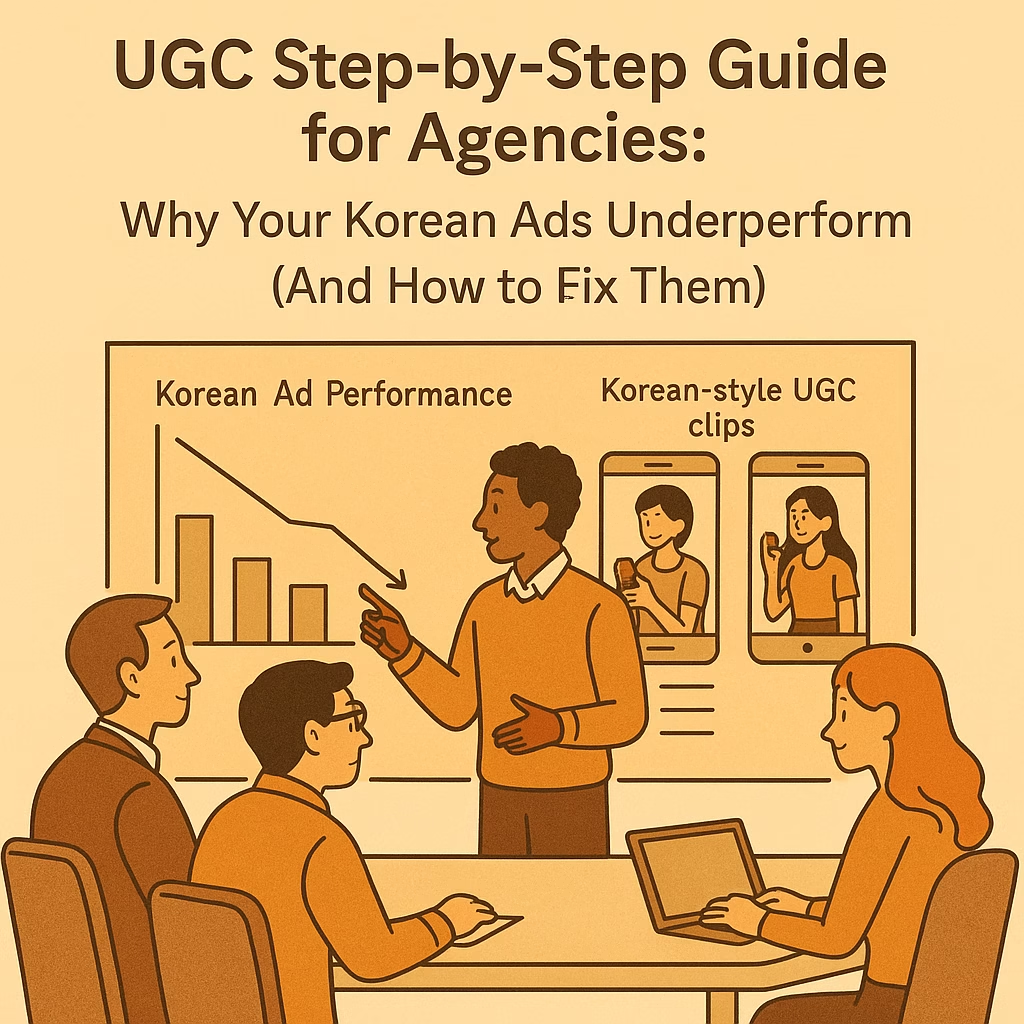
It’s targeted precisely, a healthy budget, good CPMs; however, CTRs and conversions are less than impressive.
The media plan is usually not the problem.
It’s the creative.
Korean consumers scroll faster, expect authenticity, and want their feed to feel natural and trustable. That is why UGC always outperforms traditional global creatives in Korea.
It centers around real pain points experienced by agencies themselves and provides a very hands-on, step-by-step roadmap on how to plan, produce, and scale UGC that actually works in the Korean market.
Pain Point 1 – “Our global creatives don’t work in Korea.”
Ads that do very well in Western markets quite often fall flat in Korea.
Korean audiences filter out anything that’s too polished, scripted, or “ad-like.” They respond much better to content mirroring their daily feed: natural pacing, conversational delivery, fast and purposeful editing.
UGC bridges that gap. A quick hook, realistic tone, and a sense of “real use” capture attention in a way that global creatives often fail to do.
The Gap Between Subtitles and Real Dubbing
Subtitles = Information
Subtitles convey meaning, but nothing beyond that. They provide clarity but no emotional context.
Dubbing = Connection
A Korean voice adds the warmth, tone, and personality that subtitles can’t deliver. It immediately removes the language barrier, makes the video easier to concentrate on, and brings emotional nuance that makes long-form content more enjoyable. This is why videos that include Korean dubbing generally see higher watch time, stronger viewer retention, and more returning viewers.

Pain Point 2 – “We don’t know how to find the right Korean UGC creators.”
Sourcing creators is usually the most frustrating process for agencies.
Success in Korean UGC relies more on the tone and nuances than on the number of followers or the aesthetic of the feed. Non-native teams very often struggle to evaluate whether a creator sounds natural, whether their delivery fits Korean norms, or whether they can follow detailed brand guidelines.
Some creators overact. Some misunderstand briefs. Some deliver content that seems more like influencer content, rather than performance-focused UGC.
Working with a bilingual Korean creator, who can understand the global ad standards and the local cultural cues, removes that friction. In effect, a creator like Danny can align the expectations of an agency with the emotional, linguistic, and stylistic requirements of Korean consumers.
Pain Point 3 — “We aren’t sure what UGC format actually works in Korea.”
UGC formats that work in the US or Europe don’t always translate in Korea.
Korean short-form culture is built around speed, clarity, and relatability. Audiences prefer quick hooks, concise benefit statements, and editing that mirrors the rhythm of Korean Reels, Shorts, and TikTok content.
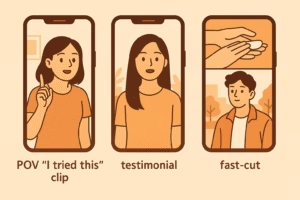
Formats that have consistently done well in Korea include:
POV-style “I tried this…” clips
Casual recommendation like “my Korean friend told me about this”
Problem → usage → result storytelling
Quick lifestyle montages
Simple, high-contrast Korean subtitle overlays
These are not just stylistic choices; they’re cultural. They reflect how Korean users naturally consume content.
Pain Point 4: “We need a scalable UGC workflow.”
Even agencies with the best creative teams struggle with scaling UGC efficiently.
Delays occur when creators misinterpret the script, edits are not varied enough, subtitles are not localized, or the feedback loop is too long.
A typical smooth Korean UGC pipeline looks like the following:
A KPI-driven creative brief
Script and shot list matched with Korean pacing
A short test clip to confirm tone
Full production
Edits and multiple variations
Korean subtitles and localization adjustments
Final delivery formatted for TikTok, Meta, and YouTube Shorts
When this workflow is in place, agencies can maintain consistent quality and fast production cycles, even across multiple campaigns.
Pain Point 5: “Usage rights and licensing are confusing.”
All this can become a serious licensing issue in countries like Korea, where short-form ads rotate across platforms quickly. A single misalignment of rights can lead to conflict or takedowns, or delay a campaign.
Agencies must clearly define:
Whether it is organic use or paid ads, or both
How long usage rights last: 30 / 90 days / 1 year
Regional rights (Korea-only or global)
Whitelisting/Spark Ads permissions
Ownership of raw footage
Getting these details right prevents disputes and allows for smoother scaling across campaigns.
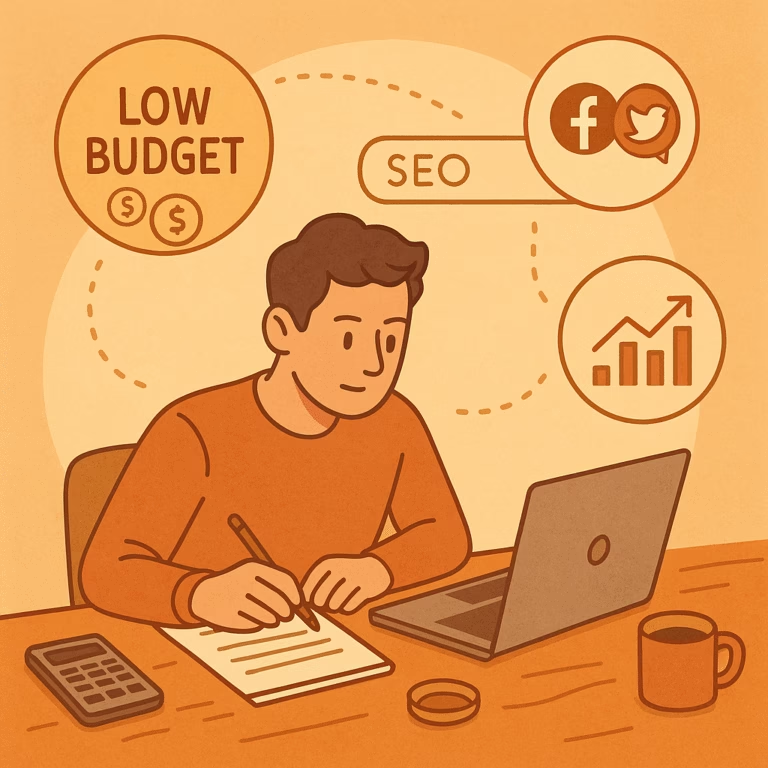
How to Maintain Quality Even on a Budget
You don’t need a large budget to create high-quality Korean dubbing. Many creators translate their scripts themselves and then polish the language using tools like ChatGPT. Recording can begin with an affordable USB microphone, and for longer videos, you can dub only the most essential sections rather than the entire piece. If YouTube’s Multi-Audio feature is unavailable, you can simply upload a separate Korean-dubbed version of the video.
Korean consumers respond to content that feels fast, familiar, and genuine. When global creatives underperform, it’s rarely because of the product—it’s because the creative is not meeting local expectations.
👉 If your team needs a reliable UGC pipeline built for Korea, I’d be happy to help.!