If your global brand is entering South Korea, one of the fastest ways to lose trust is to sound like you were not truly built for the market. In Korea, awkward copy is not a small detail. It shapes how people judge your product, your credibility, and your fit within seconds.
That is why Korean copywriting is not just about translating words. It is about building trust, reducing friction, and making your message feel natural in a Korean buying context.
In this guide, we will break down why direct translation often fails, what Korean copywriting should actually do, and how to choose between translation, localization, transcreation, and full Korean copywriting depending on your business goal.
Why Global Brands Struggle with Korean Copywriting
Most global teams do not struggle because they ignore Korea. They struggle because Korean marketing copy sits at the intersection of language, social tone, and persuasion. Those three things shift more dramatically in Korean than many teams expect.
English marketing often relies on direct, confident phrasing. In Korean, that same style can feel too aggressive, too stiff, or simply unnatural. Even when the grammar is technically correct, the message can still sound foreign. That gap matters because Korean users are constantly comparing your brand against polished local competitors across websites, ads, social content, app experiences, and customer messaging.
There is also the platform reality. Korean users move through a highly connected digital environment, and your homepage, landing page, CRM messages, and product microcopy all shape how the brand is perceived. In fact, South Korea has one of the world’s highest internet penetration rates, which means small messaging problems can scale quickly across the funnel. DataReportal’s Korea digital report is a useful reminder of just how connected the market is.
5 Common Copy Mistakes Foreign Brands Make in Korea
1. Writing headlines that feel too abstract
Many global brands lead with broad, brand-heavy messaging. But in Korea, readers often look for clarity first. They want to understand what the product is, who it is for, and why they should trust it.
2. Using direct English-style imperatives
CTAs like “Get started now” may work well in English, but in Korean, literal urgency can feel abrupt or overly forceful. The wording often needs to become softer, more natural, or more context-specific.
3. Mixing speech levels without intention
Korean is highly sensitive to tone and formality. If your website sounds formal in one place and casually conversational in another, the brand can feel unedited or socially misaligned.
4. Reusing Western trust signals without local adaptation
Global proof points still matter, but Korean audiences often respond better when trust is framed in ways that feel locally relevant. Reviews, customer stories, compliance signals, and platform familiarity all play an important role.
5. Treating every touchpoint as the same kind of copy
Not every message needs to be emotionally persuasive. Product UI, onboarding flows, forms, and help center content often need clarity-first localization, not creative rewriting. The wrong approach creates friction instead of confidence.
What Korean Copywriting Should Actually Do
Good Korean copywriting is not simply about sounding fluent. It should reduce uncertainty quickly, choose the right social tone, and match the specific job of each touchpoint.
First, it should make the product easier to trust. Korean users often evaluate practical credibility early, so your copy should answer core questions fast: what the product does, why it matters, how it works, and why your brand is worth considering.
Second, it should choose the right level of politeness and brand distance. In Korean, speech level is not a decorative style choice. It directly affects how respectful, professional, and trustworthy your brand feels.
Third, it should adapt to the role of the page or message. A homepage, a landing page, an ad, an app screen, and a CRM message all have different persuasion jobs. Strong Korean copywriting respects those differences instead of forcing one tone everywhere.
How Korean Copywriting Changes by Touchpoint
Website homepage
Your homepage should quickly communicate what you do, who you serve, and why you can be trusted. In Korea, clarity and proof often need to appear earlier than they do in English-first sites.
Landing pages
Strong landing pages usually follow a friction-reduction flow: problem, solution, proof, and clear next step. The copy should feel specific and conversion-oriented, not broad or overly conceptual.
Ads
Korean ad copy often performs best when it is concise, practical, and platform-aware. A translated sentence is rarely enough. What works better is a tightly compressed value proposition written in a Korean-native rhythm.
Social media
Social content needs sharper control of tone. It should feel relatable without becoming sloppy, and persuasive without sounding too promotional. This becomes even more important when working with creators or influencer-style content.
App and product UX copy
Here, usability matters most. Buttons, onboarding flows, notifications, and forms should feel instantly clear. In many cases, localization matters more than transcreation because the goal is smooth completion, not emotional impact.
CRM and email copy
Lifecycle messaging should sound respectful, clear, and easy to act on. Short messages often perform best when they reduce friction and avoid unnecessary pressure.
Examples: From Generic Translation to Korean-Ready Copy
Website headline
Source intent: “Manage projects faster with one dashboard.”
Awkward direct translation: “하나의 대시보드로 프로젝트를 더 빠르게 관리하세요.”
Korean-ready options:
- 프로젝트 진행 상황, 한 화면에서 바로 확인하세요.
- 여러 툴을 오갈 필요 없이, 대시보드 하나로 끝.
- 프로젝트 운영을 한 곳에서 표준화하세요.
These versions feel more natural because they focus less on direct command and more on benefit, clarity, and reduced friction. That persuasion shape is often more effective in Korean. This kind of rewrite logic was one of the strongest parts of the source draft. :contentReference[oaicite:3]{index=3}
Ad copy
Source intent: “Try free for 14 days. No credit card required.”
Awkward direct translation: “14일 동안 무료로 시도하세요. 신용카드 필요 없음.”
Korean-ready option: “14일 무료 체험. 카드 등록 없이 바로 시작하세요.”
CTA copy
Source intent: “Learn more”
Literal translation: “더 알아보기”
Better Korean-ready alternatives:
- 자세히 보기
- 지금 확인하기
- 기능 살펴보기
- 발견해보세요
The best CTA depends on context. The goal is not to translate the phrase exactly, but to choose the version that feels most natural for the user journey. The original file also emphasized that “Learn more” often needs a more context-aware Korean alternative. :contentReference
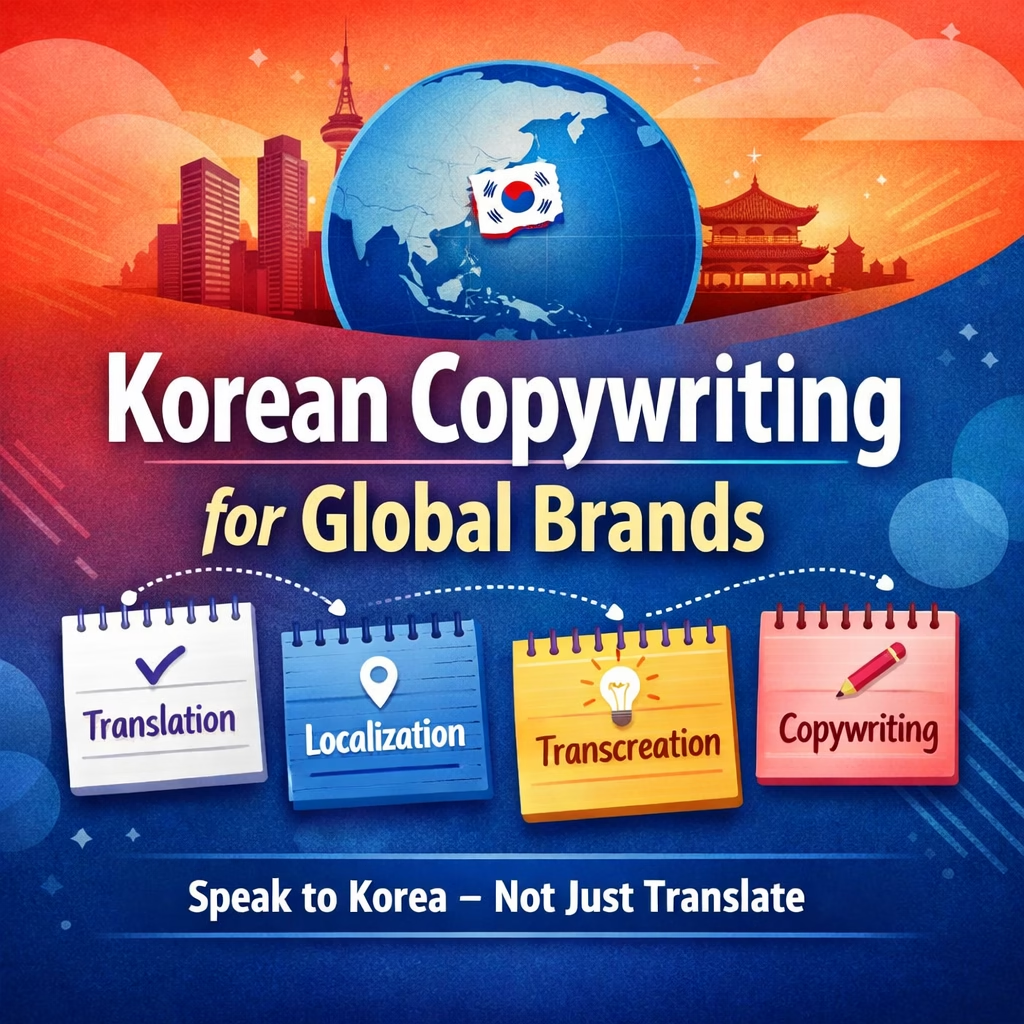
When You Need Translation, Localization, Transcreation, or Full Copywriting
A useful way to decide is to stop thinking in terms of file type and start thinking in terms of intent, risk, and persuasion load.
| Type | What It’s Best For |
|---|---|
| Translation | Best when meaning must stay exact, such as policies, legal content, technical specs, and compliance materials. |
| Localization | Best for functional UX content such as UI, onboarding, forms, help center content, and pricing pages. |
| Transcreation | Best for persuasion-driven content like campaign headlines, taglines, video scripts, and hero messaging. |
| Full Korean Copywriting | Best when the message needs to be rebuilt for Korea, including homepages, Korea launch messaging, and conversion-focused pages. |
A simple rule works well in practice. If the sentence must stay exact, use translation. If it must be easy to use, choose localization. If it must persuade, use transcreation or copywriting. If the Korean market needs a different argument order, proof strategy, or voice, full Korean copywriting is usually the stronger option.
There is also a strong commercial reason to take this seriously. Research from CSA Research shows that consumers globally prefer to buy when product information is available in their own language, which helps explain why English-first messaging often underperforms in localized buying journeys.
How to Choose the Right Korean Copywriting Partner
Many vendors promise native linguists and cultural nuance. What matters more is whether they can produce Korean that behaves like real marketing, not just converted text.
Look for a partner who understands that homepage messaging, campaign copy, UI localization, CRM messages, and creator scripts are different content categories. They should be able to explain how they adapt tone, structure, and persuasion strategy depending on the touchpoint.
They should also be able to manage tone systematically. If a partner cannot explain how they choose between formal and polite styles in Korean, your messaging will likely feel inconsistent across channels.
Most importantly, choose a partner who can connect copy to execution. If your website copy, ad messaging, voice-over scripts, and creator briefs are all developed separately, your brand can drift. The original draft also highlighted this as a key reason to work with a more integrated Korean market-entry content partner.
Final Thoughts
Korean copywriting for global brands is not just a translation upgrade. It is persuasion design built for a Korean language and Korean market context. The brands that perform well in Korea are usually the ones that decide, touchpoint by touchpoint, when translation is enough, when localization is necessary, and when the message needs full rewriting to feel truly local. That conclusion was already strongly supported in the source material. :contentReference[oaicite:7]{index=7}
If you are entering the Korean market, a smart place to start is with one focused messaging test: your homepage hero section, one landing page, and one ad set. That small bundle can quickly reveal whether your brand needs better translation, stronger localization, or a full Korean copywriting strategy.
If you need support with Korean-ready website copy, campaign messaging, voice-over scripts, or creator briefs that sound natural and convert, explore The Korean Voice Over and start building a message that actually feels made for Korea.