
Korean Accent English Voice Over: When Brands Need More Than a Native English Read
Korean accent English voice over is not just about pronunciation. For many global brands, agencies, and localization teams, it is about finding the right balance between clarity, authenticity, and market context. A script can be grammatically correct and still sound wrong once it is spoken. It may feel too flat, too foreign, too polished, or simply disconnected from the person or setting it is meant to represent.
That is why strong Korean-accented English voice work usually depends on more than recording alone. It often requires script adaptation, performance direction, audio editing, and in many cases timing or sync adjustments as part of the same workflow. Service providers ranking in this space often position their offer in exactly that way, combining translation, recording, editing, and sync support rather than treating voice recording as a standalone task. For example, Adelphi Studio’s Korean-accented English voice-over service page highlights translation, recording, audio editing, and dubbing sync as connected parts of the delivery process.
If you are producing a campaign for the Korean market, an explainer with a Korean spokesperson, an e-learning module, or a corporate video tied to a Korean team or brand story, the goal is rarely “perfectly native English at all costs.” The goal is usually believable English that still feels right for the context. That difference matters more than many buyers expect.
In this guide, you will learn when Korean-accented English works best, why direct translation is often not enough, how AI and human voiceovers compare, and what to prepare before hiring a voice talent or production partner.
What Is a Korean Accent English Voice Over?
A Korean accent English voice over is an English read performed by a Korean speaker whose delivery naturally carries Korean speech rhythm, pronunciation patterns, or tonal influence. In practice, though, clients are usually not buying “an accent” in isolation. They are buying a specific communication effect.
Sometimes that effect is authenticity. A founder message, a brand film, or a case study video may sound more convincing when the speaker sounds like the real person behind the company rather than an anonymous neutral voice. Sometimes the goal is local relevance. A campaign that is visually and culturally tied to Korea can feel mismatched if the voice sounds detached from that setting. And sometimes it is practical. A Korean English speaker may better understand name pronunciation, phrasing intent, and how to adapt a script that began in Korean or will live alongside Korean visuals and subtitles.
This is why many providers in this category position their offering as more than just a voice. On pages like this Korean-accented English voice-over example, the value is framed around translation, performance, editing, and sync-ready delivery together.

When Korean-Accented English Works Better Than a Fully Native English Read
There are many projects where a native English voice actor is the right choice. But there are also cases where a Korean-accented English read can outperform a more neutral delivery because it fits the real context better.
One clear example is founder, executive, or team-led brand communication. If the person on screen is Korean, or the story is rooted in a Korean company, product, or market perspective, an overly polished neutral voice can feel staged. The audience may not consciously say that the accent feels wrong, but they may still feel a mismatch between the visuals and the voice. A believable voice can support trust by sounding aligned with the actual speaker, team, or environment.
This can also apply to Korea-focused global campaigns. When a brand enters Korea, launches a localized product, or creates content around Korean customers, culture, or market behavior, the voice should support that context. This is especially true when the ad includes Korean visuals, Korean UI, Korean place names, or Korean on-screen text.
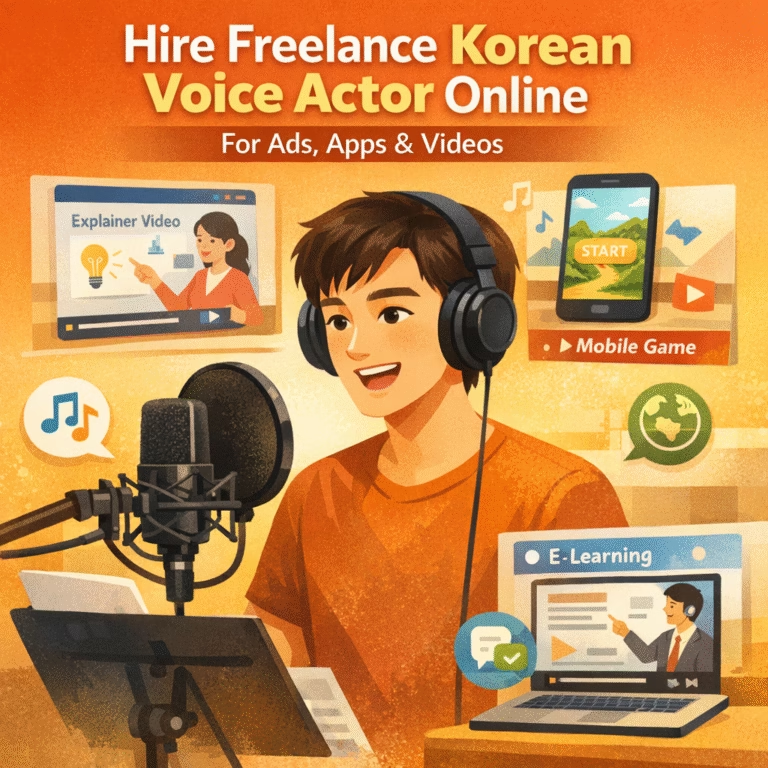
E-learning, training, and explainer content are also common use cases. Service pages in this category frequently mention corporate content, e-learning, localization, and dubbing as natural applications for accented English voice work. In formats like these, clarity matters, but so does comfort. A voice that feels approachable and context-appropriate can often be more effective than one that sounds generic. You can see that positioning in providers such as Adelphi Studio and in broader discussions around the demand for Korean-accent voice work, such as Matinee’s article on the rise of Korean-accent voice-over popularity.
Finally, bilingual or hybrid content often benefits from this voice style. Some projects sit between English and Korean. A script may start in Korean, be adapted into English, and still need to preserve Korean names, brand tone, or cultural cues. In that situation, buyers often need someone who can move naturally between both languages instead of treating English recording as a disconnected final step.
Why Direct Translation Is Usually Not Enough
One of the biggest mistakes in this category is assuming that once the script is translated into English, the voice actor can simply read it out loud. That sounds efficient, but it often creates exactly the problems clients later pay to fix.
A translated line may be correct on paper while still sounding stiff in speech. It may be too long for the scene. It may lose the original tone. It may over-explain, under-emphasize, or land awkwardly around product names and calls to action. This is where adaptation or transcreation becomes important.
Lionbridge’s explanation of transcreation is useful here because it describes the process as going beyond literal translation to preserve intent, tone, emotional effect, and market fit. That idea is highly relevant for voice over because spoken language is more exposed than text. If something feels unnatural in audio, the audience notices it immediately.
This matters even more when timing is fixed. On service pages like Adelphi’s Korean-accented English voice-over page, language length, timing, and dubbing sync are treated as practical production issues. In other words, the English version cannot just be accurate. It must also be speakable and fit the available time.
That is why the real workflow is often translation, spoken adaptation, recording, editing, and sync adjustment. This is a much better production model than treating voice as the last mechanical step.

The Workflow That Produces Better Korean Accent English Voice Over
Buyers often compare voices, but the stronger differentiator is the workflow behind the voice. Quality does not come only from a good speaking tone. It comes from what happens before and after the recording booth.
This idea is also reflected in professional dubbing standards. Netflix’s dubbing best practices treat adaptation, performance, editing, and mixing as connected parts of quality. Even if your project is not a dubbing production in the strict sense, the same principle applies to branded voice content. Performance quality is shaped by script preparation, delivery choices, editing, and final fit to the asset.
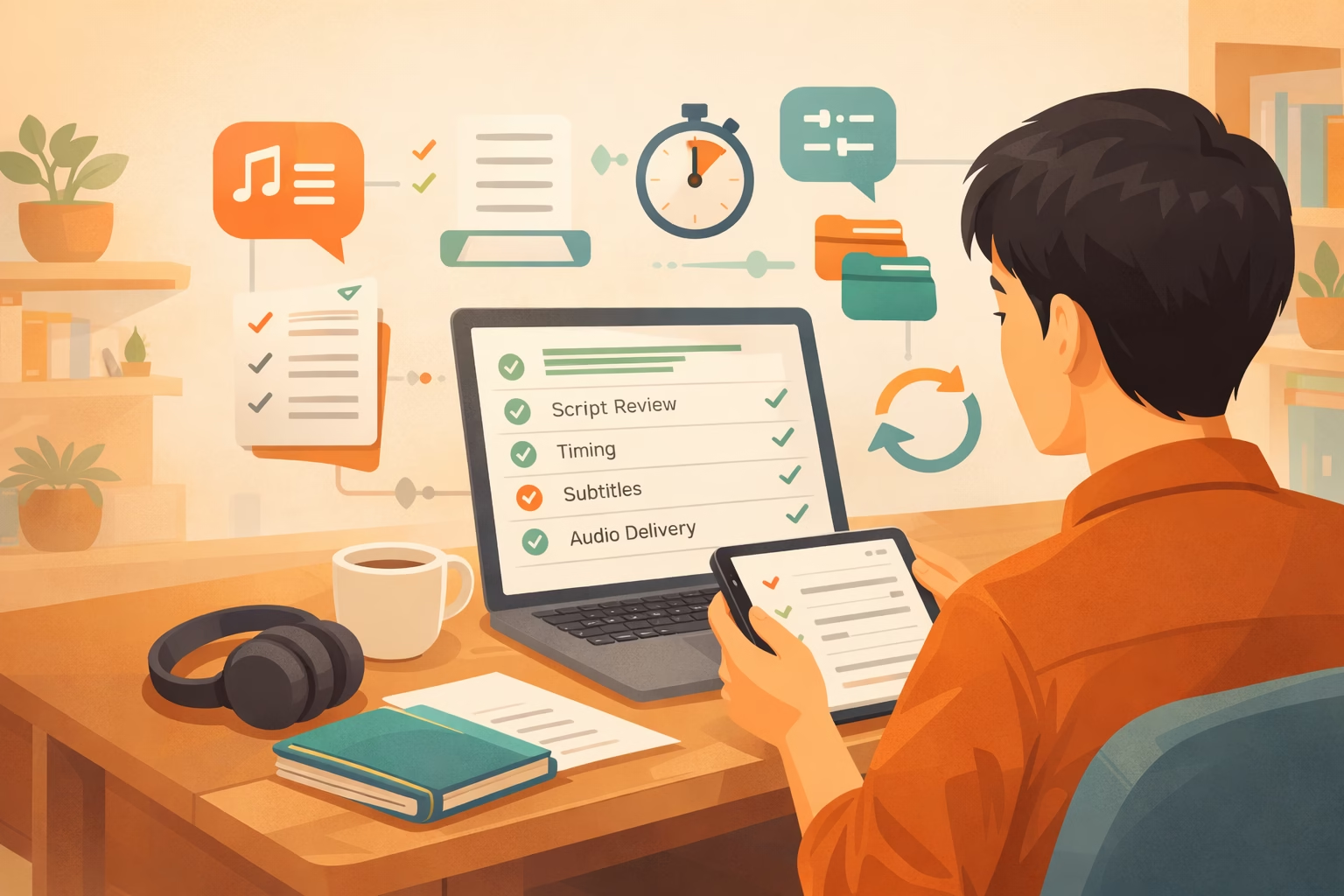
The first step is translation. Product claims, features, names, brand language, and tone must be accurate before recording begins. The second step is adaptation. This is where the script becomes natural spoken English rather than translated English. Sentence length may change. Word choice may soften. Repetition may be removed. Emphasis may move. This is often the difference between something that is technically fine and something that is professionally usable.
Then comes performance. Not every project needs a strong Korean accent. Some need only a light Korean tone in otherwise polished English. Others benefit from a more recognizable accent because the goal is realism, warmth, or local identity. The right performer should be able to control that balance rather than defaulting to one fixed style.
Editing also matters. Professional editing includes checking pronunciation, cleaning pauses, normalizing levels, splitting files correctly, and preparing delivery-ready assets. Again, this is why providers like Adelphi Studio present editing and dubbing support as part of the service rather than as optional extras.
Finally, sync matters. If your content includes animation, subtitles, fixed timing, on-screen text, or visible speakers, timing becomes part of the job. A good provider should be able to flag lines that are too long, propose shorter phrasing, and help make the voice fit the final asset.
Human vs AI: Where AI Helps, and Where It Still Falls Short
AI voice tools are attractive because they are fast and relatively affordable. That makes them useful for internal demos, early prototypes, low-risk content, and high-volume production. But branded audio is a different decision.
Recent research has examined how AI-generated voice can influence audience response in video advertising and other media environments. That matters because public-facing content is designed not only to inform, but also to persuade, build trust, and shape brand perception. Synthetic voices have improved dramatically, but as they become more realistic, expectations around nuance, disclosure, and emotional control become even higher.
In practical buying terms, the distinction is simple. AI is good for speed. Human voice is better for nuance.
If the job requires emotional control, subtle identity cues, brand safety, or adaptation from Korean context into natural spoken English, human performance still carries a clear advantage. This is especially true when the script itself is not yet production-ready and needs someone to shape it before recording.
So the better question is not whether AI or human voice is universally better. The real question is what level of nuance, risk, and performance your project actually requires. If it is a public-facing ad, founder message, premium product video, or localized launch asset, most teams should think carefully before replacing human direction with synthetic output.
What to Prepare Before Hiring a Korean-Accented English Voice Talent
A better brief almost always leads to a better result. Before requesting a quote, it helps to prepare a few practical points in advance.
First, define the project context clearly. Is this audio for an ad, a YouTube video, app onboarding, e-learning, internal training, an explainer, or website content? Second, provide tone direction. Do you want warm, professional, confident, premium, friendly, instructional, conversational, or energetic delivery?
Third, think about accent preference. Do you want a very light Korean accent, a moderate Korean-accented English tone, or a clearly recognizable Korean speaker identity? Fourth, check the script status. Is the script final? Has it only been translated, or has it also been adapted for speech? Does it need shortening for timing? Fifth, confirm technical needs such as whether you need one clean master file, split files, subtitle alignment, sync adjustments, or multiple versions.
This is also where bilingual capability matters. If the same person or team can review the Korean source, adapt the English, and then perform it, you reduce handoff errors significantly and make the revision process much easier.
Common Mistakes Brands Make With Korean Accent English Voice Over
The most common mistake is buying only the recording while leaving all the important decisions unresolved. That usually creates avoidable revision rounds later.
Another mistake is over-focusing on whether the voice sounds native enough instead of whether it sounds right for the project. A Korean founder’s message does not need to sound like a generic U.S. commercial narrator. It needs to sound credible, clear, and aligned with the person or brand behind it.
A third mistake is separating translation from performance too rigidly. If the translator never hears how the line will be spoken, and the voice talent receives a script that has not been adapted, you create friction at the worst possible stage of the project.
And finally, many teams underestimate timing. If the English line is even slightly too long, it can damage visual pacing, subtitle readability, or on-screen sync. This is exactly why better providers treat adaptation and timing as part of the service rather than leaving them to the client to solve alone.
FAQ
What is the difference between Korean accent English voice over and bilingual voice over?
Korean accent English voice over refers to English performed with Korean speech influence or identity cues. Bilingual voice over usually means the talent can work in both Korean and English. In many commercial projects, the second capability is just as valuable as the first.
Should I use Korean-accented English for ads?
It depends on the campaign. If the ad is tied to a Korean spokesperson, Korean brand identity, or a Korean market story, it can work very well. If the campaign is meant to sound globally neutral, a different voice style may fit better.
Can I use my translated English script as-is?
Sometimes, but often not. Spoken delivery usually improves when the script is adapted for rhythm, timing, and natural phrasing rather than read as a direct translation. For a broader explanation of why direct translation alone often falls short, Lionbridge’s transcreation overview is a useful reference.
Is AI voice good enough for this kind of project?
For drafts, internal use, or low-risk content, often yes. For high-visibility public-facing branded content, human voice is still the safer choice when nuance, trust, and context matter more.
Conclusion
A strong Korean accent English voice over is not really about “having an accent.” It is about making English sound believable in a Korean context without losing clarity, professionalism, or brand intent.
That is why the best results usually come from a workflow that combines translation, spoken adaptation, performance, editing, and sync support rather than from recording alone. The voice matters, of course, but the process behind the voice matters just as much.
If you need Korean-accented English that still sounds professional, natural, and market-aware, the fastest way to avoid revisions is to start with the right brief and work with someone who can handle both the language side and the performance side together.
Need help with Korean accent English voice over for ads, explainers, e-learning, or localized video content?
Send your script or rough draft, and I can help review whether it needs translation only, spoken adaptation, or full voice-over delivery with sync-ready files.