

Korean Transcreation for Advertising | Fix Translated Ads for Korea
Your campaign copy might be technically correct in Korean—yet it still feels foreign. The meaning is there, but the persuasion isn’t. And in a market where digital touchpoints are constant and expectations are high, “accurate” doesn’t automatically translate into “effective.”
I’ve seen global teams do everything right on paper: solid creative, clear positioning, strong proofs, perfectly localized landing pages—then watch performance stall after the Korea launch. The reason is rarely your strategy. It’s usually the last-mile messaging: tone, rhythm, implied relationship, and the kind of CTA Korean audiences are used to acting on.
Your ads are translated, but they still feel foreign in Korea
A Korean-speaking reader can tell within seconds whether ad copy was written in Korean—or merely translated into Korean. The difference shows up in subtle places: overly literal phrasing, unnatural sentence endings, stiff product claims, or CTAs that sound like a manual instead of a message.
That “foreignness” isn’t just a brand perception problem. In paid environments—social ads, search ads, landing page headlines—you’re paying for attention. If the first impression doesn’t land, you lose the click and never get the chance to explain your value.
What makes Korea especially unforgiving is how quickly users compare, scan, and move on. Your copy has to feel natural almost immediately. That is why many brands launch with messaging that is technically correct, but commercially weak.
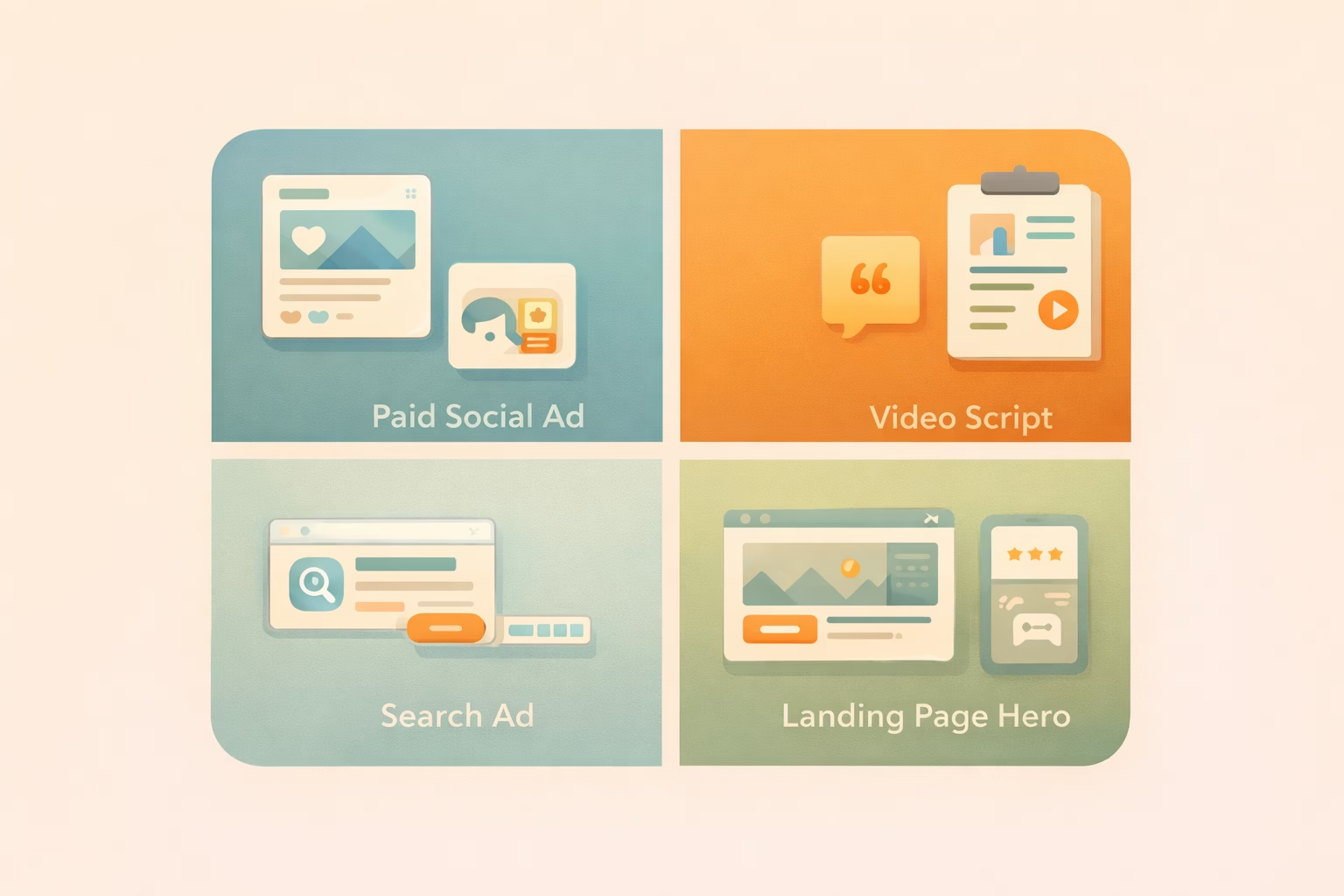
The real reason global ad copy underperforms in Korean
Most global teams assume the main risk of translation is losing meaning. In Korea, the bigger risk is losing the persuasive mechanism—the way the message signals trust, confidence, relevance, and the relationship between brand and audience.
1. Korean requires a tone choice, not just a word choice
Korean has multiple speech levels and politeness options. The same message can feel respectful, warm, distant, blunt, or awkward depending on how the sentence ends. That means a line cannot be evaluated only by lexical accuracy. It also has to be judged by how it positions the brand.
2. Accurate Korean is not the same as effective Korean
A sentence can be grammatically correct and still fail as ad copy. This happens when the message preserves the original meaning but loses the rhythm, emotion, or conversion logic that made the original work in the first place.
3. Korean persuasion often depends on nuance
Many English ads rely on direct, command-forward CTA language. In Korean, the stronger version is not always the most effective one. Often, softer phrasing, benefit-first wording, and culturally natural framing perform better. This is where transcreation becomes a strategic adaptation process, not just a language task.
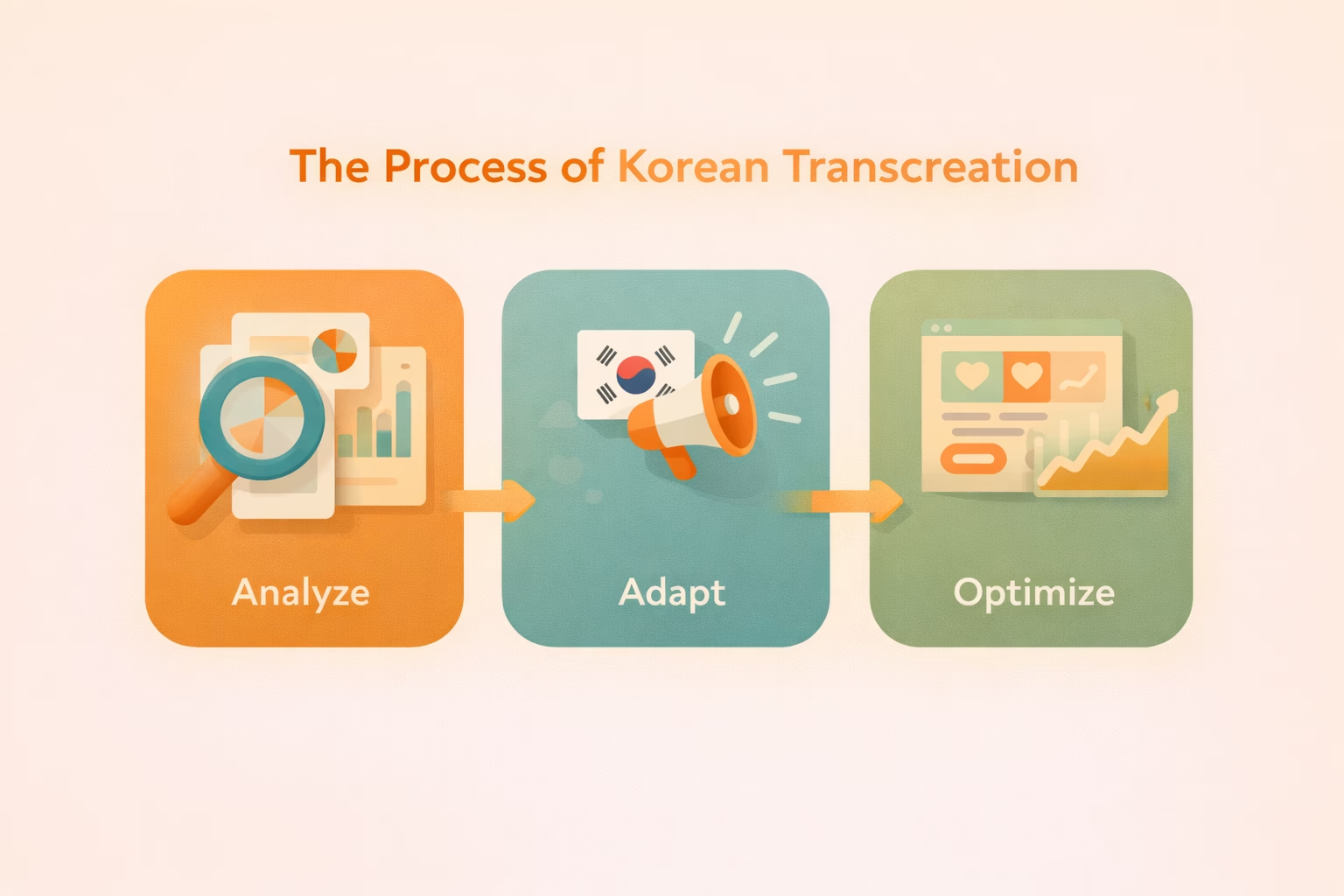
When translation is enough—and when you need transcreation
A simple rule helps here: if the asset must persuade, it usually must be transcreated. If the asset mainly needs to inform, translation or broader localization may be enough.
Translation is usually enough when:
- The goal is accuracy, clarity, or compliance.
- The content is functional rather than persuasive.
- The wording does not depend heavily on tone, rhythm, or emotional impact.
Transcreation is usually necessary when:
- The goal is to drive action or emotion.
- The message sits in a high-visibility position.
- The line must sound natural, branded, and conversion-ready in Korean.
This is why assets such as paid social ads, landing page headlines, app store copy, slogans, and video scripts are far more sensitive than support documentation or product specifications.
5 signs your brand needs Korean transcreation
If any of the situations below sound familiar, your brand probably does not have a translation problem. It has a transcreation problem.
- Your Korean copy is correct, but it sounds robotic.
The line may be understandable, but it does not feel like something a Korean brand would naturally say. - Your CTA sounds instructional rather than persuasive.
Instead of inviting action, it reads like a user manual. - You translated a slogan or tagline directly.
Wordplay, rhythm, emphasis, and emotional punch rarely survive direct transfer. - You kept the English structure too closely.
The idea may be the same, but the order and impact often feel unnatural in Korean. - Your review cycle keeps stalling with subjective feedback.
When stakeholders repeatedly say “it feels off,” it usually means there is no clear tone strategy or transcreation brief.
One of the most common questions global teams ask is: What is the difference between translation and transcreation in practice? The practical answer is simple. Translation protects meaning. Transcreation protects performance.
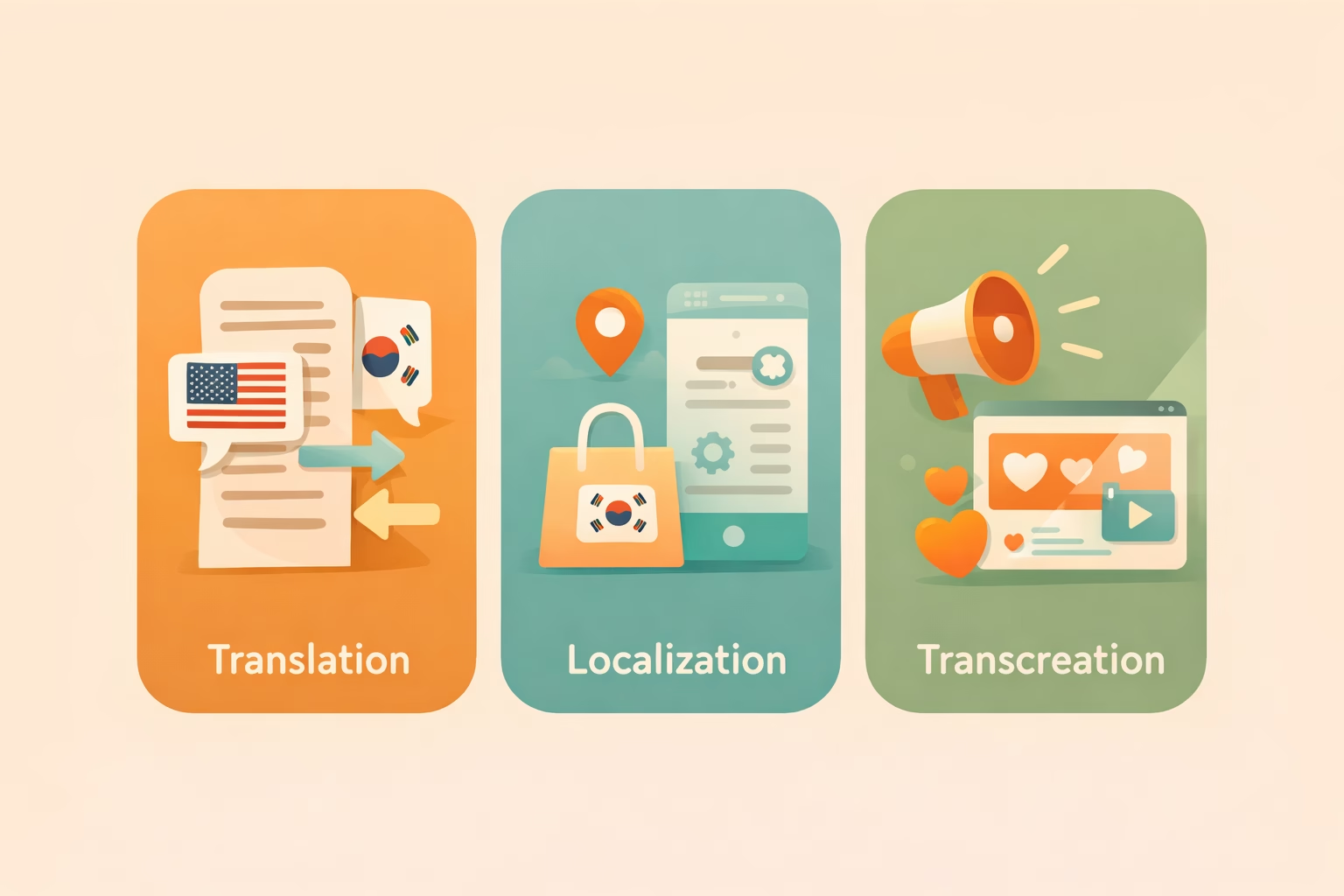
Real ad copy examples for the Korean market
Below are illustrative examples that show a familiar pattern: the direct translation keeps the meaning, but loses the sales mechanism.
Example A — Landing page hero CTA
English: “Upgrade your workflow. Start your free trial today.”
Awkward direct translation: “워크플로우를 업그레이드하세요. 오늘 무료 체험을 시작하세요.”
More natural transcreation direction:
“업무가 더 빨라지는 경험, 지금 시작해보세요.”
“오늘부터 더 가볍게. 무료로 먼저 써보세요.”
These Korean versions lead with the felt benefit and sound more natural in a commercial context.
Example B — Paid social headline
English: “One tool. Every team.”
Awkward direct translation: “하나의 도구. 모든 팀.”
More natural transcreation direction:
“팀이 달라도, 툴은 하나면 됩니다.”
“협업은 하나로, 속도는 더 빠르게.”
Korean often needs clearer relational logic to sound natural and persuasive.
Example C — App onboarding CTA
English: “Let’s get started.”
Possible Korean directions:
More formal: “시작해 보겠습니다.” / “시작해 보세요.”
More friendly: “시작해볼까요?”
This is not just a wording issue. It is a relationship issue. Tone selection shapes how the brand feels from the first interaction.
Example D — Video ad script
English: “Because you deserve better.”
Transcreation direction depends on category:
Beauty: “피부가 달라지는 건, 당연해야 하니까.”
B2B SaaS: “더 적은 시간으로, 더 확실하게.”
The emotional promise is preserved, but the Korean line is rebuilt around category-specific persuasion.
How global brands can build a smoother review process
Most Korea campaign delays do not come from the Korean writer. They come from unclear internal review rules. A strong transcreation workflow needs two things: a brief that protects brand voice, and a review system that protects speed.
1. Build a proper transcreation brief
Define the campaign goal, audience, tone, positioning, must-keep concepts, taboo words, competitor references, and channel constraints. Without this, the Korean copywriter is forced to guess the intended emotional effect.
2. Ask for options, not one “final translation”
Good transcreation often produces multiple valid routes. This is especially true for headlines, taglines, CTAs, and hero copy. Giving stakeholders options improves both speed and decision quality.
3. Add rationale notes
Instead of debating which version “sounds better,” evaluate each option by persona fit, tone, clarity, and channel suitability. A short rationale makes internal approvals much easier.
4. Add a quality control step
A second reviewer or optional back-translation step can reduce stakeholder anxiety, especially when multiple global teams are involved in sign-off.
5. Lock your Korean tone system early
Decide how your brand should sound in ads, landing pages, onboarding flows, and voice-over scripts. The more consistent your tone system is, the less friction you create during future launches.

successful Korean ad copy needs more than translation
If your ads are translated but still feel foreign in Korean, the answer is rarely to “find a better translator.” The real fix is to treat high-impact ad assets as creative adaptation, not simple language conversion.
That is the core value of Korean transcreation for advertising. It helps global brands preserve intent, protect brand voice, and create copy that sounds persuasive and natural in the Korean market.
If you are preparing a Korea launch, start with your highest-impact assets first: headlines, CTAs, landing page hero copy, app store messaging, and video script lines. Those are usually the places where direct translation creates the biggest performance loss.
Request Korean Transcreation Support



Pingback: Ad Message Match: Align Korean Ads and Landing Pages