
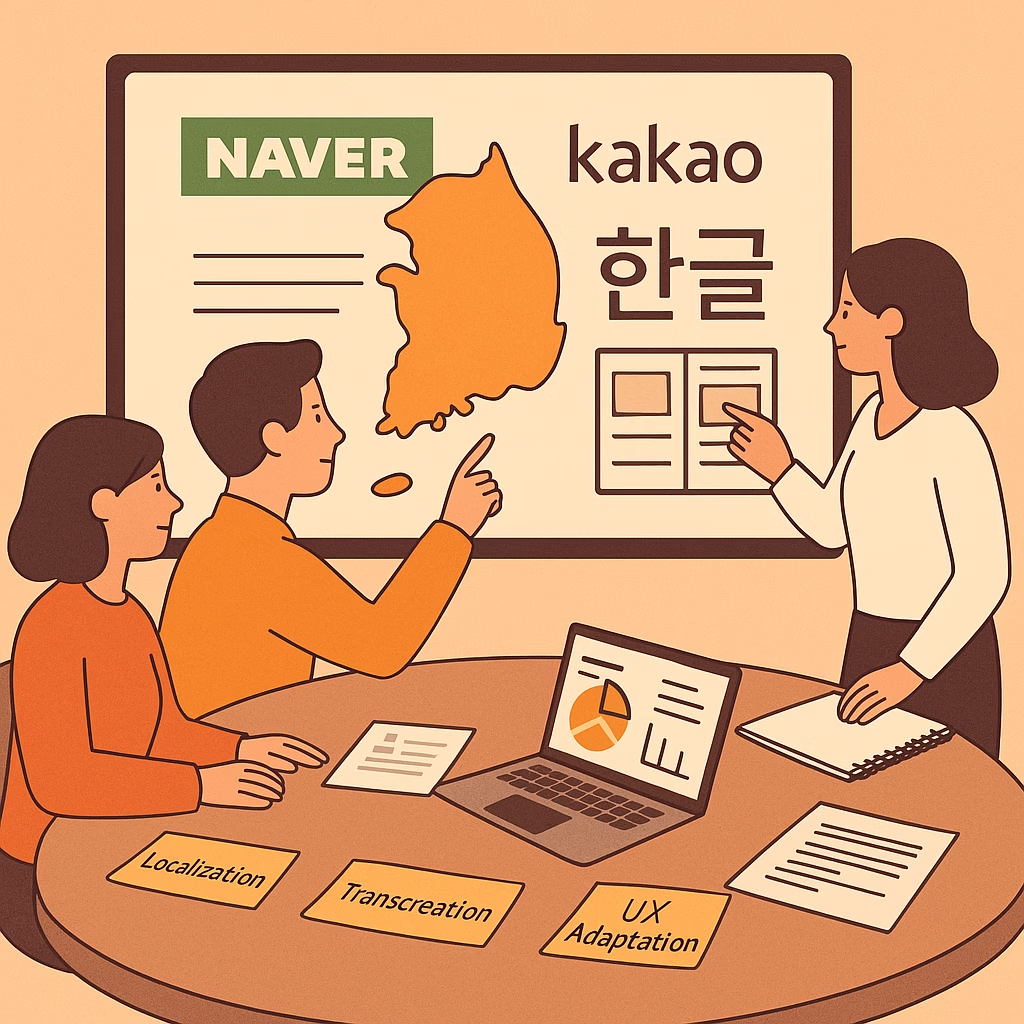
A Korean campaign can stall even when the translation is ready: the client has not approved a claim, the designer is using an older source file, or three reviewers request different tones. A Korean localization strategy for global agencies needs to make those decisions visible before production starts.
Use the brief, responsibility map, and approval sequence below to coordinate the client, agency, and Korean specialist. The aim is a clear path from the client’s intended message to an approved Korean asset, with ownership of each decision.
What belongs in a Korean localization brief?
Describe the audience and the action each asset should support. “Launch in Korea” leaves too much open. Specify whether the work introduces a product, explains a feature, or supports an existing customer’s next step. The channel matters when it changes the format, reading context, or delivery requirements.
A usable brief should include:
- Audience and objective: who will see the asset and what they should understand or do.
- Source package: asset inventory, editable files, reference links, and the version approved for adaptation.
- Message boundaries: required facts, approved claims, brand terms, prohibited wording, and any text that must remain unchanged.
- Production context: destination channel, layout or timing limits, requested outputs, and deadline.
- Decision owners: the agency contact, subject expert, feedback coordinator, and final client approver.
Flag missing inputs before estimating the work. An unknown asset count affects scope; an unapproved source affects revision risk. A sample asset can support an initial discussion, but a quote should identify the assumptions still awaiting confirmation.
Who owns the language, production, and final decision?
Assign responsibility by deliverable. The Korean specialist can explain a wording choice, while the client remains responsible for confirming product facts and authorizing claims. The agency coordinates the work and makes sure the approved language reaches the correct asset.
| Workstream | Korean specialist | Agency and client responsibility |
|---|---|---|
| Copy and terminology | Adapt the supplied message; explain significant choices and unresolved questions. | Provide approved source copy; confirm facts, claims, and brand requirements. |
| Design and channel assets | Review Korean wording in its intended layout and flag language-related fit issues. | Provide editable assets and specifications; implement and approve design changes. |
| Narrated video or app guide | Handle the agreed script, recording, and editing tasks. | Supply references and current product access; approve the script, screen sequence, and output. |
| Release and distribution | Deliver the agreed Korean files and outstanding review notes. | Own product implementation, legal signoff, publishing, and media placement unless separately assigned. |
For video, spell out whether the scope includes script adjustment, screen recording, voice-over, synchronization, or editing. “Localize the video” does not establish which of those tasks, source files, or output formats are included.
How should reviewers assess a Korean adaptation?
Give reviewers enough context to judge intent. A literal English back-translation can help explain the Korean, but it should accompany the source objective and the reason for the adaptation. Ask reviewers to distinguish a factual correction, a brand requirement, and a stylistic preference.
The following revision sheet is illustrative, not a client example. It shows how an agency might review the main button on a campaign page.
| Review field | Example entry |
|---|---|
| Source intent | Help visitors understand what happens after they click “Discover more.” |
| Korean options | 자세히 보기 (“View details”) for a general information page; 서비스 알아보기 (“Explore the service”) for a service overview. |
| Reason for the choice | The label should match the destination. A more specific label is useful only when the destination supports it. |
| Facts to preserve | Neither option should imply a free trial, immediate access, or an offer absent from the source. |
| Approval needed | The agency verifies the destination; the client approver selects or approves the final wording. |
Keep the accepted wording and rationale together. Later reviewers can then see why the choice was made instead of reopening the decision without context.
Which approvals should happen before final production?
Agree on review stages at kickoff. A practical sequence is source approval, terminology and tone approval, Korean copy or script approval, then review of the assembled asset. For narrated work, approve pronunciation and delivery references before the complete recording when the project requires them.
Have one agency contact consolidate feedback into a single version. Conflicting comments should return to the named decision owner before the next production pass. Record the asset version, requested change, and approval status so “approved” always refers to an identifiable file.
A source change after script approval may require new language work, recording, or editing. Agree how those changes affect the scope and schedule. For recurring releases, ongoing Korean content localization can be discussed around a defined update cadence and review owner.
What should accompany the project handoff?
Deliver the approved files with their source version, agreed terminology, and any unresolved items that still require action. Confirm the final Korean in its actual layout or video context; approved copy can still be placed in the wrong asset.
To discuss Korean localization support, send the source materials, asset list, intended audience, deadline, and final approver. Those inputs make a Korean localization strategy for global agencies concrete enough to scope and review.
Agency localization questions
Does the client need to approve every Korean sentence?
Agree on the approval level. The specialist can manage routine language choices within an approved brief; the client should resolve questions involving product meaning, claims, offers, or brand policy. Keep the final signoff owner explicit.
Can work begin before all source files are final?
Briefing and terminology review can begin if the available materials are identified. Any production based on unfinished source content needs an agreed process for changed copy, repeated work, and revised delivery dates.