Why Your App Fails in Korea (and How Proper Localization Fixes It)
If you have ever launched your mobile app in Korea and noticed poor results, even though you translated everything, you are not alone. Many global app developers make the same mistake: they treat localization as simple translation.
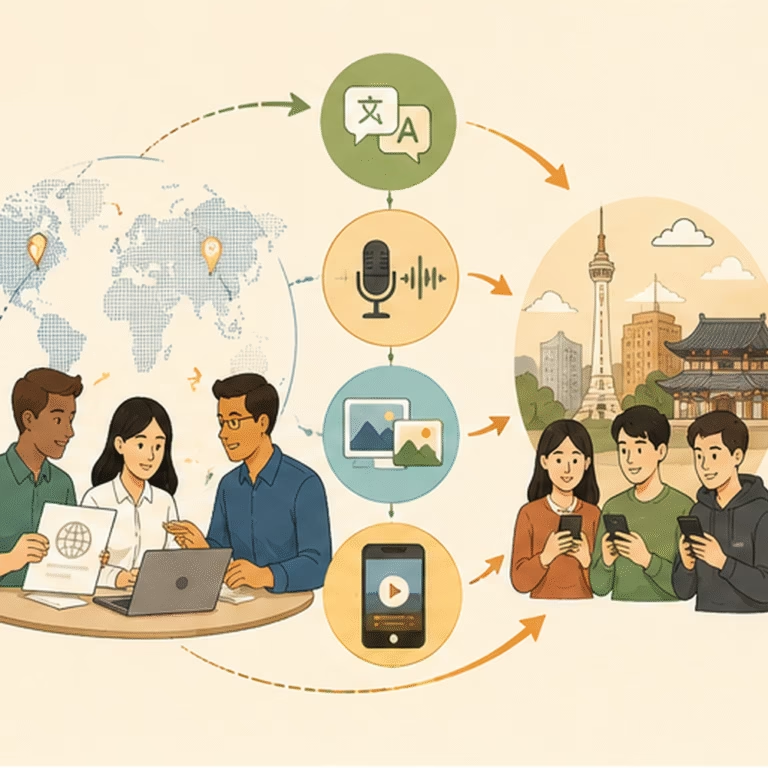
However, localization for Korea goes far beyond language. It is about adapting your entire app experience—text, visuals, payment systems, and even emotional tone—to meet Korean users’ expectations. This guide explains why apps fail in Korea and how to localize your mobile app effectively to succeed in one of the most competitive digital markets in the world.
Things we are going to cover
1. Why Apps Fail in the Korean Market
Translating Without Localizing
One of the most common mistakes is assuming that a translated app is a localized app. Korean users quickly notice awkward phrasing, unnatural spacing, and stiff or overly literal wording. Even small errors in tone can make your app feel untrustworthy.
Cultural and UX Mismatch
Design preferences in Korea differ greatly from Western markets. Korean users expect cleaner typography, compact layouts, and UI text that sounds friendly and polite. Colors and microcopy that appeal to Western users can feel overly aggressive or informal in Korea.
Lack of Local Integration
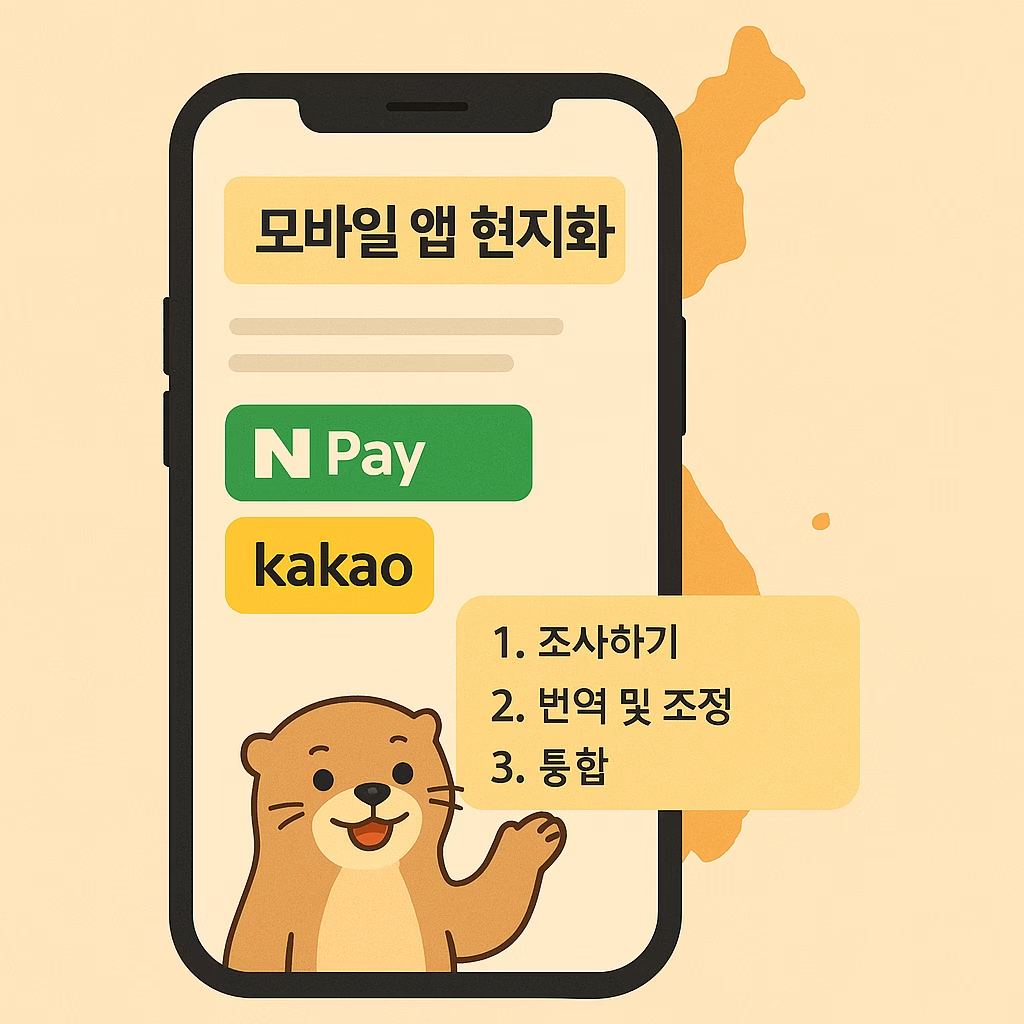
Korean users are deeply connected to local platforms such as KakaoTalk, Naver, and Toss. Without these sign-in and payment options, even a well-designed app may lose credibility and conversion opportunities.
Ignoring Korean ASO Practices
App Store Optimization (ASO) must also be localized. Korean search terms, such as “다이어트 앱 추천” (diet app recommendation), are structured differently from English. Apps that use untranslated English keywords or metadata will not appear in Korean search results.
2. How to Properly Localize a Mobile App for Korea
Step 1. Research Korean Market and User Behavior
Start by studying successful Korean apps in your category. Identify how they use visuals, text, and onboarding flows. Understanding what local users expect helps you avoid cultural or usability mistakes early on.
Step 2. Adapt Language and Tone
Hire bilingual localization specialists, not just translators. In Korean, polite endings such as “~요” or “~세요” make your app feel natural and trustworthy. Avoid direct translations from English; instead, rewrite sentences to match Korean sentence structure and emotional flow.
Step 3. Redesign UI and Visual Elements
Korean text generally takes up more horizontal space than English. Adjust your layout, spacing, and font choice—Noto Sans KR or Spoqa Han Sans are excellent options for readability. Test your interface with actual Korean text to avoid line breaks or misaligned buttons.
Step 4. Localize App Store Metadata (ASO)
Translate and localize your app title, description, and screenshots with Korean keywords that match local search intent. Show app previews that include familiar visual elements such as KR currency, Korean map locations, or local calendar formats.
Step 5. Integrate Local APIs and Payment Systems
Adding KakaoTalk or Naver login options builds trust immediately. Supporting payment platforms like Toss, Naver Pay, or Kakao Pay can significantly improve conversion rates. Korean users prefer apps that feel native to their ecosystem.
Step 6. Test with Real Korean Users
Once your app is localized, conduct usability tests with Korean speakers. Ask for feedback on tone, readability, and UX flow. Even minor cultural nuances can influence user retention and word-of-mouth growth.
3. Roadmap for a Successful App Launch in Korea
- Research the market: Study leading apps and identify local trends.
- Plan your localization: Define language, UI, and ASO adjustments.
- Execute the translation and redesign: Implement linguistic and design changes together.
- Integrate local systems: Add Korean logins, payments, and fonts.
- Test and iterate: Gather native feedback before full release.
By following these steps, you turn your app from a translated product into a truly localized experience that feels natural to Korean users.
4. Common Mistakes to Avoid
- Relying solely on machine translation tools
- Using English date, time, or currency formats
- Ignoring cultural tone or honorifics in UI text
- Launching without Korean ASO keyword research
- Skipping QA with native Korean testers
Each of these mistakes reduces trust and visibility in the local market. Addressing them early ensures a smoother entry and stronger performance in app stores.
Localizing your mobile app for the Korean market is more than translating—it is about making users feel like your product was built for them. When the tone, design, and user flow sound truly Korean, your app gains both trust and traction.
If you are preparing to enter the Korean market, I can help refine your wording, tone, and localization strategy so your app communicates naturally and resonates with Korean users. Reach out to discuss how we can make your app feel truly local.
👉 Contact me today for a free consultation on Korean app localization